Showing posts with label benny parsons. Show all posts

Tuesday, April 13, 2021

April 13, 1980 - Darlington's Rebel 500

Following a pit stop during the 1979 CRC Chemicals Rebel 500, the wheels fell off David Pearson's car. Because of a miscommunication, Pearson thought the Wood Brothers planned to change two tires whereas the crew actually planned a four-tire stop and removed the left side lugnuts. 

Pearson parted ways with the Woods a few days after Darlington - a reality few could envision. As it turns out, the wheels had apparently begun to also fall off the driver-team relationship well before the embarrassing incident at Darlington.

A year later, Pearson found himself on the positive side of a driver change. Car owner Hoss Ellington began 1980 with Donnie Allison as his driver for a fifth part-time season. After only three races, however, Allison was released with Pearson hired as his replacement. 

Source: Raleigh News and Observer
 The first race for the new combo was at Darlington - a track on which Pearson flourished and one where Ellington's cars had never won.

Source: Motor Racing Programme Covers
Benny Parson captured the pole, and Pearson slotted second in his new ride. Three-time and reigning Cup champion Cale Yarborough, Ricky Rudd in D.K. Ulrich's independent effort, and 1979 NASCAR Winston Cup Rookie of the Year Dale Earnhardt rounded out the top five starters.

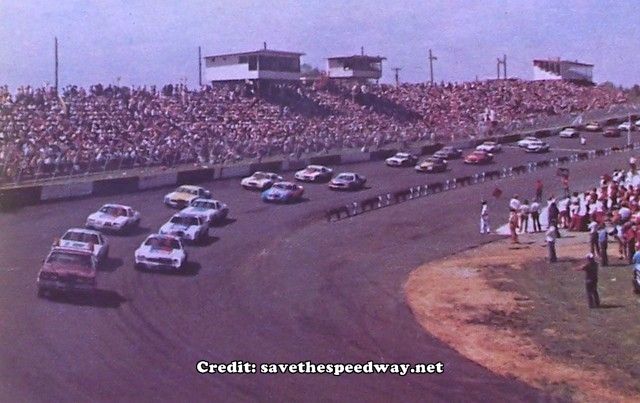
The race started as a bit of a cluster fudddggge. As the cars barreled into turn 1 of the first lap, seventh-place starting Richard Petty and Rudd made a move for the same real estate. And it didn't go well.

Source: Raleigh News and Observer
The tangle quickly ensnared second year driver Terry Labonte, Buddy Baker, James Hylton, and Neil Bonnett. All but Bonnett continued though Baker fell by the wayside seven laps later. Bonnett's DNF sent him home dead last. It was quite the coincidence since he was the driver to replace Pearson in the Wood Brothers Mercury a year earlier.

Source: Charlotte Observer
Following the clean-up on aisle four, Pearson got the jump on Parsons and led the first dozen laps. Earnhardt - a driver who eventually developed a mastery of Darlington nearly on par with Pearson - passed the Silver Fox to lead 14 laps of his own.

Drivers then and now will chirp - and rightfully so - that a race is won on the last lap and not the first one. During the 1980 Rebel 500, however, the drivers had a greater urgency to get to the front. Alll anticipated they'd likely be racing to halfway vs. the full distance for the win because of the threat of rain.

With dark skies and low clouds, Earnhardt, Parsons, Pearson, Waltrip, and Yarborough battled to get to the point. Once there, the next goal was to stay there as the rain loomed nearby. 

Sure enough, the moisture arrived near lap 90. After a few laps under caution, however, the race returned to green as the rain dissipated. Yet a few laps later, Mother Nature chuckled as she delayed the race once more. Again, NASCAR bowed up, waited it out, and restarted the race after only a few more laps under yellow. 

Then She reminded Bill France, Jr. that he only thought he was in charge on race day. Heavy rains began to pour, and the race went under the red flag. After more than two hours, however, the track caught a break. The showers moved out of the area, track drying began, and drivers returned to their steeds. 

As the green was unfurled, the new reality was darkness would determine the length of the race - particularly since DST was still two weeks away. 

Earnhardt lost the engine in his Rod Osterlund Chevy shortly after the race restarted. Yarborough made his way back to the front around lap 120 before fading and having his day doomed by the same fate as Earnhardt. 

With daylight fading, the race became a battle of the top two starters: Parsons and Pearson. Waltrip made it interesting by leading a few laps of his own, but he couldn't hang and eventually finished P4.

Pearson got back by Parsons on lap 158 and led an additional 30+ laps before NASCAR finally displayed the checkered flag. The rain and darkness resulted in the drivers completing only 189 of the scheduled 367 laps - just a few laps beyond halfway.

Few could have anticipated it at the time, but the win turned out to be the 105th and final career Cup win for the Silver Fox. Fittingly, his final win came at Darlington. AND he doubled-up after narrowily edging fellow Cup racer Dave Marcis the day before in the late model sportsman (pre-Xfinity Series) race. 

Audio of Universal Racing Network's radio broadcast of the race is available on Appalachian State's library website. 

Source: Raleigh News and Observer
TMC
Friday, March 5, 2021

March 5, 1978 - The Rock's Carolina 500

The 1978 Winston Cup season opened in January in southern California rather than in February at Daytona as has been the case since the late 1980s. Cale Yarborough won the season opener at Riverside's road course. Bobby Allison won the Daytona 500 after a mid-race wreck wiped out the fast trio of Richard Petty, David Pearson, and Darrell Waltrip. And Benny Parsons picked up a popular win in the season's third race at Richmond.

As the calendar turned to March, the Cup Series rolled into North Carolina Motor Speedway - Rockingham - The Rock - for the Carolina 500.

On the first day of qualifying and a cold one at that, Neil Bonnett picked up the pole in his Harry Hyde-prepared Dodge Magnum as folks hunkered down in mid 30s temps. The pole was his second in a row after also starting first at Richmond. Waltrip timed second and was again the bridesmaid for the start. For the third time in four races, Waltrip started from the front row - but without the benes of being the pole winner.

Allison, Yarborough, and Donnie Allison rounded out the top five starters. Richard Petty, the previous year's Carolina 500 winner, could muster no better than tenth and started alongside his perennial rival, Pearson. Petty raced his winning Dodge Charger for the final time at Riverside, but the Petty Enterprises team struggled to find the desired speed in the three races with its version of the Dodge Magnum. 

An overnight heavy snowfall postponed the second round of qualifying on Friday. NASCAR floated the idea that the back half of the field would be slotted based on practice speeds. Instead, track clearing efforts and "warming temperatures" in the 40s allowed the second round to be held on Saturday as well as the annual Union 76 Pit Crew Championship. Parsons' crew led by Jake Elder won the competition.

When the green fell on race day, Waltrip seized the lead from Bonnett and led the first 33 laps. Waltrip's friend, competitor, and future adversary, Bobby Allison, then went to the point and led for 119 of the next 136 laps. 

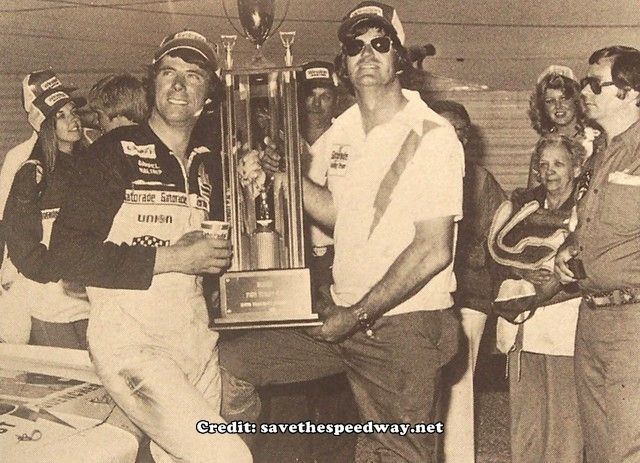
Though Allison was leading, Waltrip maintained a solid pace. When smoke began to trail from the #88 Gatorade Chevy around lap 65, however, NASCAR black flagged him. Ol' DW was none too happy about having to pit and blamed the smoke on a short-term problem with an overfilled transmission. He was convinced the smoke would soon dissipate. Nonetheless, he had to honor the black flag. After addressing the issue and losing several laps, he was no longer a factor and eventually finished 21st.

The next 100 laps or so saw multiple leaders. Bobby, Pearson, Cale, Parsons, and Dick Brooks in Junie Donlavey's Truxmore Ford all got time at the front. None held the lead for more than 20+ laps. 

As the race moved past halfway, however, Pearson's #21 Mercury seized the lead and clicked off a ton of laps. The Silver Fox led for 166 laps as others began their strategy as to how to retake - and hold - the lead in the waning laps.  

With about 60 laps to go, Bobby Allison wasn't feeling well and could race no further. His brother, Donnie, was summoned to relieve Bobby in Bud Moore's Ford. Though he quickly ran to Bobby's aid, he wasn't quite prepared to do so. Following the race, Donnie quipped:
When they told me Bobby needed help, it was almost too late. I had just opened a can of beer. I thought, boy, is this going to taste good. Then someone grabbed me and said Bobby was sick or something. I dropped the beer and took off. I couldn't turn Bobby down. 
As Donnie belted in to Bobby's #15 Ford, Pearson and Parsons began going toe to toe at the front. With about 40 laps to go and Parsons mirroring Pearson's laps, Benny decided it was go-time. Pearson arc'd into turn one, and Benny took more of a straight-line entrance into the corner. The minor difference was just enough, and Parsons nicked the corner of Pearson to send him spinning. Benny and a fast-closing Donnie in his brother's car slipped under the 21.

Pearson managed to avoid hitting the wall, gathered his car, and angrily set off in pursuit of Parsons' #72 Chevy. Seven laps later and with a calming heart rate, Pearson pulled back alongside Parsons and went back in front - and this time to stay.

For the first time since the 1977 Southern 500 at Darlington - six months earlier - Pearson was first under the checkered flag. The win was his first at Rockingham since sweeping both races in 1973. He also captured milestone Cup win number 100. 

Donnie got by Parsons to notch a P2 for Bobby, and the King finished fourth. The top five was easily his best finish so far in the Magnum after back-to-back poor finishes and DNFs at Daytona and Richmond.

Audio of Universal Racing Network's radio broadcast of the race is available on Appalachian State's library website. 

Source: Spartanburg Herald

TMC
Saturday, April 16, 2016

April 16, 1978 - Gwyn Staley 400

NASCAR's Winston Cup drivers arrived in North Wilkesboro, North Carolina for the eighth race of the 1978 season - the Gwyn Staley 400.

A number of story lines existed as the teams prepared to race for 400 laps on the 5/8 mile track.
  • Two-time defending Cup champion, Cale Yarborough, let it be known he was back for a crack at a third consecutive title. He won the season-opener in Riverside, California and banked five Top 5 finishes in the season's first seven races.
  • Bobby Allison won two of the season's first seven races - including the Daytona 500 - in his new gig as the driver of Bud Moore's #15 Ford.
  • Dodge finally retired its venerable 1974 Charger body style. The King, Richard Petty, was now at the wheel of a Dodge Magnum. Rather than compete for wins as he'd done for several years with the Charger, Petty had opened the season with only a couple of top 5s along with some really dismal finishes.
  • Benny Parsons, the 1973 Cup champion and 1975 Daytona 500 winner, won two early season races at Richmond and Darlington.
A unique qualifying format was used for the race. The line-up was set by the average of two qualifying sessions on Friday and Saturday. Parsons - who was from North Wilkesboro - had the quickest average over the two sessions. Darrell Waltrip timed second to join BP on the front row. Allison and Yarborough were side by side on the second row. Lennie Pond rounded out the top 5 starters in his #54 Harry Ranier Monte Carlo.

Twenty-nine drivers took the green flag. Not 43 - not 40 - not even 36. Just 29. Everyone was OK, and no one panicked about the state of the sport. Of course, Twitter, Facebook and FOX Sports RaceHub didn't exist back then either.

Credit: SaveTheSpeedway (Twitter)
Despite the strong start to 1978, Cale had a rough go of it at his car owner's home track. Junior Johnson took great pride in having his drivers compete for wins at Wilkesboro. He could not have been happy with engine issues in Cale's #11 Olds - especially with a DNF for the second race in a row.

Courtesy of David Staten
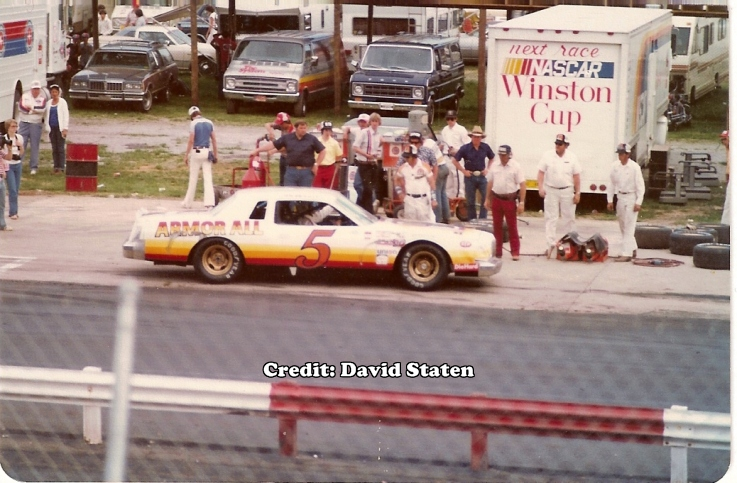
As with Richard Petty, Neil Bonnett's Harry Hyde-led Dodge team had changed to the Magnum. Following Yarborough's early exit, he returned to the pit area in street clothes to watch more of the race (in dark shirt and cowboy hat in following pic). Cale may have toted a black cloud around his head that day because Bonnett soon fell out of the race with engine issues of his own.

Courtesy of David Staten
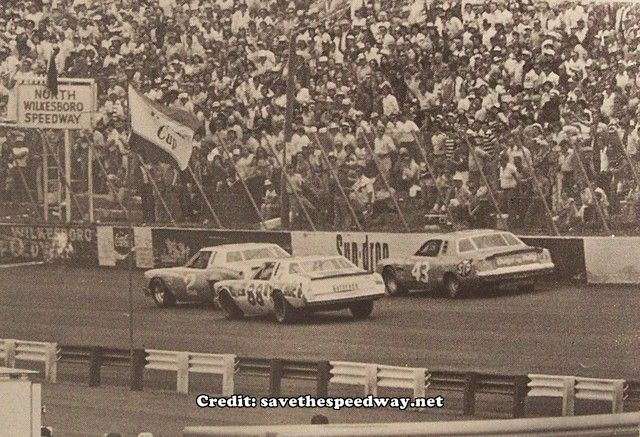
Though Petty's Magnum piled up several bad finishes and DNFs, the 43 was surprisingly strong at Wilkesboro. The fact the driver's performance was strong, however, was no surprise. With 15 wins at the track, King Richard knew how to hustle a car around it.

Petty, Parsons and Darrell Waltrip split time at the front of the field almost evenly. The bulk of Waltrip's lead laps, however, came in the final hundred laps of the race. He passed Petty and pulled the field around for almost 70 consecutive laps.

Credit: SaveTheSpeedway (Twitter)
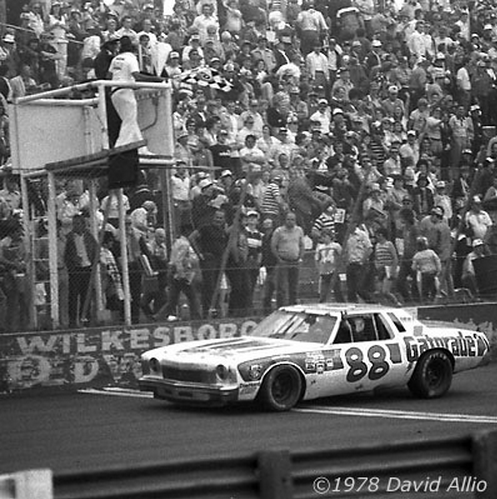
Waltrip gained a one-lap lead with about 70 laps to go when Petty made a pit stop. The King and his crew battled, however, to back get on the lead lap. He made up much of the ground, but a last lap caution caused by D.K. Ulrich allowed Waltrip to cruise to the the checkers and the win. Pole-winning Parsons hung tough, but he could only muster a third place finish - one lap down to Waltrip and Petty.

Credit: David Allio of Racing Photo Archives
The victory was Waltrip's second consecutive win at Wilkesboro and second of the season (first one coming at Bristol). When his career was done, he had piled up twenty-two wins just at those two tracks. Waltrip was met in victory lane by crew chief Buddy Parrott. Coincidentally, Parrott went to victory lane six years later with Petty at Daytona following his 200th career win.

Credit: SaveTheSpeedway (Twitter)
Petty's P2 matched the best finish of 1978 for the ill-fated, much maligned Magnum. He got another second place a couple of months later in the second road course race of the season at Riverside. By the summer, however, he'd had enough. The Dodge was dumped in favor of Chevrolet.


TMC
Tuesday, August 25, 2015

August 25, 1979 - Bristol's Second Night Race

One of the most celebrated races on the NASCAR Cup schedule is (or perhaps was) the Bristol Night Race. Until lights were added at Charlotte, Richmond, Texas, etc., Bristol had the only night race on the schedule from 1985 through 1991.

Nashville's Fairgrounds Speedway had the only night race on the schedule from 1972 through 1977. Bristol installed their gear in time for the 1978 Volunteer 500, and the two Tennessee tracks shared the distinction of having the only night races. When NASCAR dropped Nashville from the Cup schedule after 1984, Bristol continued solo for the next few years as the only lit speedway to host a Cup race (though fans at all Cup tracks continued to stay lit - both during the day and at night).

Cale Yarborough dominated the Volunteer 500 in 1978 and returned in 1979 to try for another. The second Bristol night race was scheduled for August 25, 1979.

Three weeks before Bristol, rookie Dale Earnhardt suffered a tough wreck at Pocono. He was airlifted to an area hospital with a broken shoulder. As a result, Earnhardt missed the next four races with Bristol being the third one in the string. Team owner Rod Osterlund and crew chief Jake Elder put veteran David Pearson at the wheel of Earnhardt's #2 car.

Pearson delivered in his relief role. He qualified and finished second at Talladega the week after Pocono. At Michigan, he won the pole and finished fourth. He then arrived in east Tennessee to race at Bristol - a track where he hadn't raced since 1971.

Source: Spartanburg Herald via Google News Archive
The King - Richard Petty - won his 127th and final career pole. Petty Enterprises brought an STP Chevrolet Caprice to the high banked half-mile. Bobby Allison put his Bud Moore Ford on the front row with Petty. Pearson kept his hot streak alive by qualifying third.

Photo courtesy of Jerry Bushmire
Source: Spartanburg Herald via Google News Archive
The trophy for Petty's final pole win was on display at the Petty Museum when I visited it in 2012.

A heavy summer shower delayed the start of the race by an hour. When the race began, NASCAR displayed the green and yellow flags together. The first 32 laps were counted but were run under caution - one of many head-scratching decisions made by race officials over the years. NASCAR made the same decision to start counting laps under caution in the legendary Daytona 500 in February of that year.

Petty was credited with leading those first 32 laps. When the full green was displayed, Allison raced ahead of the 43 to lead lap 33. Petty let it be known, however, he was there to compete and not just ride around. After yielding to Allison for a lap, the King went back out front to lead the next 37 laps.

Harry Gant started a handful of Cup races in the early to mid 70s. His official rookie season, however, was 1979 when he joined Jack Beebe's #47 team. Gant took the lead from Petty and pulled the field around Bristol's high banks for the next 18 laps.


The rest of the race was really competitive. The lead was swapped several times in the first half of the race between Petty, Gant, Allison, Benny Parsons and Darrell Waltrip in his #88 Gatorade Chevrolet. The second half of the race, however, was dominated by Parsons and Allison. Both led sizable chunks of laps and soon found themselves as the only two cars on the lead lap.

Though Pearson signed on as a substitute for Earnhardt, he too needed relief during the race. With about 150 laps to go and Pearson enduring significant neck strain, Lennie Pond took over for the Silver Fox in the Osterlund Monte Carlo. Pond did an exceptional job in bringing home Earnhar... err, Pearson's Chevy to a seventh place finish and just a few laps down to the winner.

Used with permission from David Allio
As the race neared its conclusion, that's racin' luck - of the bad sort - hit Parsons. With just over 20 to go, Parsons had a comfortable lead over Allison. He'd led 140 of the previous 141 laps and just needed to hit his marks and navigate lapped traffic to get the win.

Coming through turns three and four, Parsons ran upon the sandwich of Sandwich of Dick May in Henley Gray's #19 Chevy, Dave Marcis and Frank Warren.


Parsons was able to slip by the trio and tried to regain his groove. The next lap, however, he ran upon James Hylton and Richard Childress - who happened to run into each other. Parsons spun his Chevy to minimize the risk of clobbering either of them.

When the caution flew, Waltrip and Petty were able to regain their lost lap as Parsons headed for pit road following his spin. Allison found himself in the lead as the green flew for the final time. Seven laps later, however, Waltrip with new tires passed Allison to take the lead and brought Petty with him.

Waltrip extended his lead over Petty to a couple of seconds and held on for the win. The King couldn't go after Waltrip as hard as he would have liked because he was busy battling with Allison. Petty threw a final block on Allison as they came to the fine, and 43 left Bristol with a second place moral victory finish.


The one-two finish by Waltrip and Petty was critical for both of them. Waltrip was pursuing his first Winston Cup title, and the King was pressuring him week by week to claim his seventh title.

Source: Spartanburg Herald via Google News Archive
TMC

Sunday, April 8, 2012

April 8 - This day in Petty history - part 1

1971 - Starting fourth, Richard Petty wins the Sandlapper 200 at Columbia Speedway in South Carolina to score his 124th career victory. The race is the first NASCAR Grand National race on Columbia's paved surface after many years as a dirt-track.

Leon P., a fellow member at RacersReunion.com, remembers...
1971 was a long time ago, but if I remember correctly James Hylton was on the pole and Petty was like 5th or 6th (TMC: 4th). The race started, and James led a while. Then Benny Parsons got the lead and led for a long time. Then Richard got the lead and pulled away a good bit. I think with about 20 or so laps to go Benny started closing in on him. I could not believe it. I wanted a Ford to win. I could not believe Benny Parsons was going to win this race. I mean he was hauling ASS. With about 5 laps to go Benny was there, but on the last lap Benny spun up high in turns 3 and 4 and the rest is history. The King won, but it was a darn good race.
Perry Allen Wood, author of Silent Speedways of the Carolinas, agreed to let me share these two photos from the race. The first is of Perry with the King - a photo included on page 77 of this book ...

And the second is a close-up shot of writer Jim Seay interviewing Petty after his hard-fought victory. This photo was included on page 83 of Wood's book.

Photos courtesy of Perry Allen Wood
Perry dramatically recaps race day on pages 77-79 of his book:
April 8, 1971, was the night of the first Grand National race since the Columbia Speedway's paving. One race car unloaded that morning from its trailer hooked to the truck with a big silver box and blue cab. Written in blue on the sides of that silver box were the words "Plymouth by Petty." Richard was there hours before others teams, getting extra practice indicative of why he was to be The King.

... As the sun rose higher, the sounds of rattling chains and clanging and squeaking haulers and trailers coming in over the hump at the entrance to turn one filled the air ... Time trials began, and in a minor surprise, James Hylton put his yellow Ford 48 on the pole obviously with a new track record - almost 12 miles per hour faster than the dirt record.

... Just as the sun set, the green fell and Hylton took off, leading the opening 37 laps before (David) Pearson swiped it. Benny (Parsons) had his L.G. DeWitt Ford out front as Petty, (Dick) Brooks, (Bobby) Allison, Hylton, and (Charlie) Glotzbach hung close, swapping positions just behind ... With 81 laps to go, Petty passed Parsons and led for a few laps until Brooks slipped by for two. Petty got it back and held on for 74 rounds when Benny edged alongside with three laps to go. But Richard was not about to give the ex-Detroit cabbie from Ellerbe his first big league win and slammed back past him on the penultimate laps ... It was a memorable day and night for the last Thursday Grand National run here.
Source: National Speed Sport News
Article courtesy of Jerry Bushmire
TMC

Friday, March 16, 2012

March 16 - This day in Petty history

1975 - Starting from his second-place starting spot, Richard Petty leads almost half the race and wins the Southeastern 500 at Bristol by six laps over Benny Parsons.

The win was the King's 166th career NASCAR Grand National / Winston Cup win but only his second one at Bristol. Because of tough economic times for the sport - few big-buck sponsors to cover the increasing costs combined with flat race purses - NASCAR faced an on-going challenge in 1975 with short fields. Only 23 cars started the Bristol race, and only 20,000 spectators attended. Bristol - you've come a long way baby!


With a low-car turnout, the drivers weren't the only ones seemingly disinterested in trekking to east Tennessee for the race. It was difficult for me to find a ready supply of articles, photos or memories. However, I did find a solid 1975 column from The Times News in Hendersonville, NC (now known as BlueRidgeNow.com).

The piece, written by Buddy Chapman, focuses on what has made Richard a fan favorite - from his early 1960s beginnings to his heyday of late 60s through mid 70s to his waning years as a driver of the early 90s and to his role as a car owner today. The King has been consistently appreciative of his fans for over a half-century.

Buddy's coverage of the race in that edition of The Times News also included a few photos. The quality isn't the best in Google's archives, but they fit the bill when I had nothing else. The photos also gave me an idea. I contacted the current editor of the paper to see if he knew anything about Chapman - was he still alive? still with the paper? retired? living in the area?

Buddy is indeed alive and well. The editor put the two of us together by phone. He is now retired - and actually lives no more than about 30 miles south of TMC! He was also kind enough to dig back through his archives and scanned this photo of Petty in victory lane following his 1975 Bristol win. I'm hoping to meet with Buddy when the weather warms to learn more about his newspaper days in general and Bristol races specifically.


Credit to and courtesy of Buddy Chapman
Article courtesy of Jerry Bushmire
TMC

Monday, January 31, 2011

Old school decals: Entry 3 of a mini-series

This entry of my racing-related decals is focused on drivers.

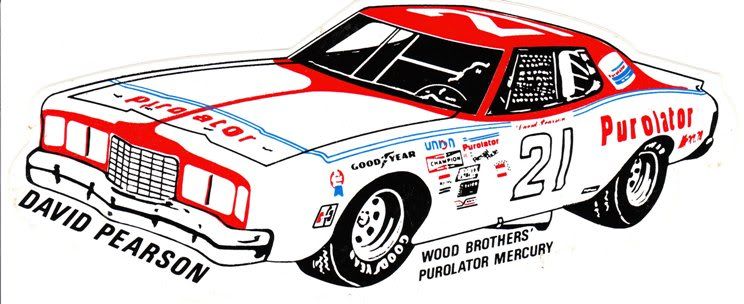
Here's one promoting David Pearson when he drove the Wood Brothers/Purolator Mercury. While I can't remember the exact year I got this one, it had to have been between 1976 and 1979 - the years the Silver Fox drove for them with this body style Merc.

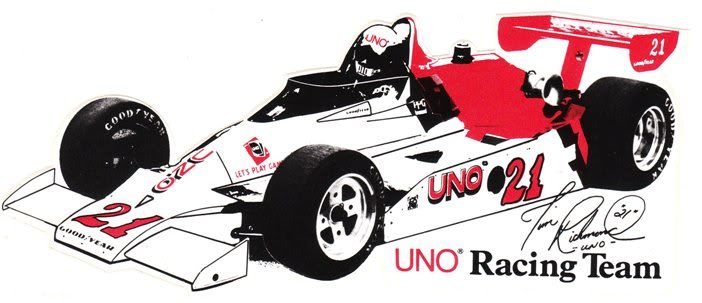
Before Tim Richmond came to NASCAR for a brief - yet successful - career, he spent a couple of years in Indy cars. He earned rookie-of-the- year honors in the 1981 Indianapolis 500. I got this decal by writing the manufacturer of the UNO card game.

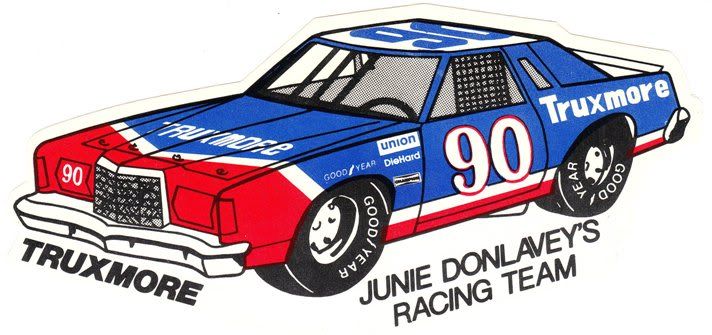
Junie Donlavey was a Virginia gentlemen and long-time car owner. Many drivers cycled through his car. Some of them were veteran drivers like Charlie Glotzbach, Dick Brooks, Jody Ridley, Benny Parsons, and Dick Trickle. And some were predicted to be up-and-comers at the time they hitched a ride with Donlavey such as Ken Schrader, Bobby Hillin Jr, Wally Dallenbach Jr, and Mike Wallace. (All predictions don't come true obviously.)

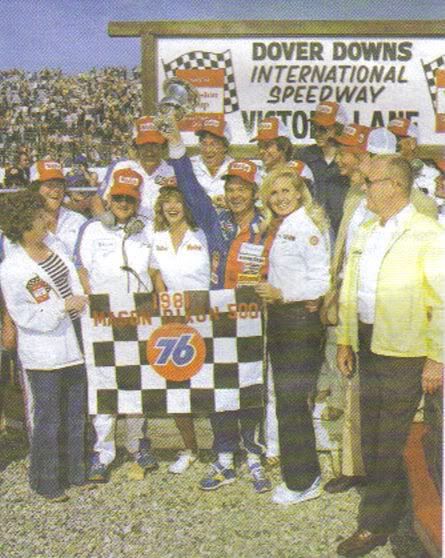
This decal is one for Ridley for the 1981 season. Coincidentally perhaps, Ridley gave Donlavey his only win as a car owner in 850+ starts in the 1981 Mason-Dixon 500 at Dover.

Many folks who became NASCAR fans in the late 1980s and into the 1990s think Dale Earnhardt was always the Man In Black. I've also heard many folks talk about his 7 championships with Richard Childress Racing and the #3 Monte Carlo. Turns out neither is true.

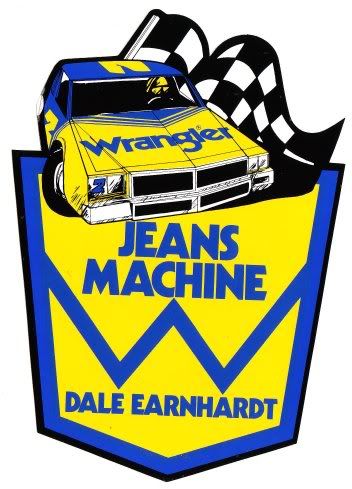
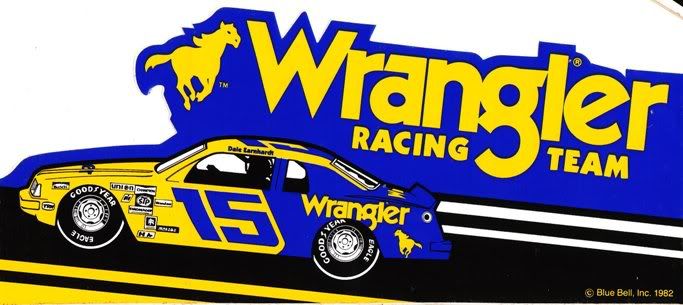
As Dale Jr. reminded folks in the 2010 Daytona Nationwide race, Dale Sr. raced much of the early 1980s in blue-and-yellow cars sponsored by Wrangler jeans. Also, his first Cup was won not with Childress but with car owner Rod Osterland in a #2 Chevy. In 1981, the year of this decal, Osterland Racing switched over to a Pontiac Grand Prix. Earnhardt left about 2/3 of the way through the season to join Childress.

The other thing Earnhardt fans often forget about is Dale Sr. actually drove a Ford in 1982-1983. After joining Childress in late 1981, they only stayed together the rest of that season. Childress encouraged Earnhardt to look elsewhere while he built up Richard Childress Racing. Dale Sr. went to Bud Moore's Ford team along with his Wrangler sponsorship for two years.

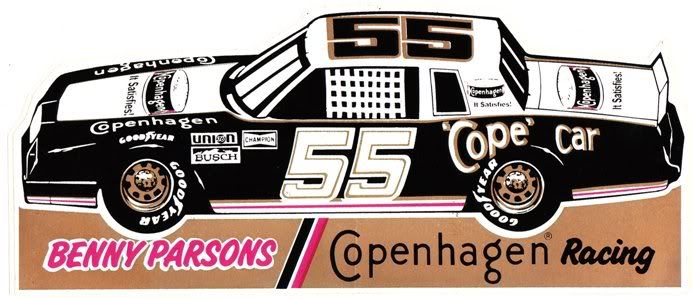
I'll wrap this entry up with a decal for the late Benny Parsons, the 1973 Winston Cup champion and 1975 Daytona 500 winner. Of the cars U.S. Tobacco sponsored, Harry Gant's Skoal Bandit was perhaps the most well-recognized. But I always thought BP's Cope car was a pretty cool looking car in its own right.

TMC