Showing posts with label junior johnson. Show all posts

Saturday, October 7, 2017

October 7, 1973 - National 500

The next to last event of the 28-race 1973 Winston Cup season was the National 500 at Charlotte Motor Speedway. The 1973 schedule is tied with 1985 for the fewest Cup races in the modern era.

The primary story line entering the race was the tight points battle going on between Richard Petty's pursuit of this third consecutive title, Cale Yarborough, independents James Hylton and Cecil Gordon, and the underdog contender Benny Parsons. But Charlotte's race weekend ended up having plenty of unexpected, supplemental story lines.

Fred Lorenzen abandoned Hoss Ellington's Chevrolet in late 1972 after deeming the car as non-competitive. Ellington phoned Charlie Glotzbach to offer him a handful of rides during the season, and Glotzbach accepted the challenge.

Chargin' Charlie wore out the field on the first day of qualifying day to claim the pole. David Pearson who may have held a bit back during practice ended up laying down the quickest lap before Glotzbach's run knocked him off the pole. Afterwards, Glotzbach said to the media "I didn't figure on Pearson running that fast. I thought the man I had to beat was Cale. That Pearson must have been sandbagging." Yarborough qualified third followed by Bobby Allison and Petty.

Rapid fire, up-to-the-minute, news blurbs are available at our fingertips today via Twitter. Back in the day, however, folks (at least South Carolinians) had Gene Granger’s notes columns – including an ooh that had to hurt yet funny update on Marty Robbins.

On Saturday as final tech inspections and qualifying began, NASCAR uttered the words made famous by Lee Corso on ESPN: Not so fast my friend. Inspectors determined Ellington's team had monkeyed with the required carburetor restrictor plate.

Glotzbach's pole-winning time was disallowed, and he was forced to re-qualify in the last session. Though fastest in the session, he had to start his #28 Chevy in 36th position.

Source:  Spartanburg Herald-Journal via Google News Archive
David Pearson was elevated from second to the top starting spot with Cale alongside him. With Pearson up front, he and the Wood Brothers' #21 Purolator Mercury began a streak of 11 consecutive poles at Charlotte stretching to the 1978 National 500. Bobby Allison was moved to third and Richard Petty to fourth.

Starting 17th in Junie Donlavey’s #90 Truxmore Ford was an established Carolina late model hot shoe making his Cup debut: Handsome Harry Gant. As Gant readied for his first Cup start, another legendary driver was making his final one.

Wendell Scott made a return from a savage wreck at Talladega several weeks earlier to make one final start. He put Doc Faustina’s #5 Kmart Dodge Charger in the field in 38th starting spot.

The field lined up and ready for the green.

Glotzbach's weekend went from good to bad to worse. After winning - and then losing - the pole, he then crashed coming out of turn 4 on lap 47. Pearson plowed right into Glotzbach, and the pole winner's day was done. Darrell Waltrip who was still looking to make a favorable impression upon car owner Bud Moore also found himself collected in the melee. Cale and Richard dodged the accident and continued on to the finish.

Cale dominated about two-thirds of the race in Junior Johnson’s #11 Kar Kare Chevy. He led 257 of the race’s 334 laps. Though he and Petty swapped the lead from time to time, The King led only 52 laps and finished second to Yarborough – the only other car on the lead lap.

Cale held on and went to victory lane. Colbert Seagraves, son of R.J. Reynolds' executive Ralph Seagraves, joined the Junior Johnson team in victory lane and got the opportunity to hold the winner’s trophy.

Source: Colbert Seagraves
Gant finished a respectable 11th in his Cup debut, and Wendell Scott went out on a high note. He rallied from 38th starting spot to finish 12th. Parsons finished fourth and held a slim points lead heading into the final race of the season at Rockingham - a race in which he experienced a career of highs and lows in one day.

Dick Trickle finished fifth in his only Cup start of 1973 and just his third career start. He raced a #1 Richard Howard-owned Chevy and a teammate of sorts to Yarborough.

Long-time hard charger Buddy Baker completed 228 of 334 laps. During the race, NASCAR officials informed Baker's crew chief Harry Hyde that they planned to inspect the #71 Dodge's restrictor plate after the race. Hyde and car owner Nord Krauskopf said "nope". They ordered Baker to park the car, and the team left CMS. Consequently, NASCAR DQ'd Baker and placed him 41st, last in the running order.

Source:  Spartanburg Herald-Journal
Allison finished third in his self-owned Chevy but raised a ruckus as soon as the checkered flag fell. He paid a $100 fee and protested the cars of Yarborough and Petty. Allison believed their engines may have been oversized or something else was amiss allowing them to generate more HP than his engine. NASCAR insisted all cars were going to be checked despite Allison's protest.

Source:  Spartanburg Herald-Journal
CMS president and promoter Richard Howard was very vocal in his support of Cale as the winner. His support was certainly expected. After all, Howard just happened to be the listed car owner of Yarborough's Chevy (as well as for Trickle's fifth-place car).

A day later, NASCAR conceded its inspection process could use some improvements. Yet, they refunded Allison his protest fee and said the finishing order would stand. The race was the tenth of 31 times that King and Cale finished in the top two spots.

Source:  Spartanburg Herald-Journal
TMC

Tuesday, April 4, 2017

April 4, 1976 - Gwyn Staley 400

Richard Petty ripped through the 1975 Cup season like a Ginsu knife through a mater. He nabbed 13 wins as well as his sixth championship. The Petty Enterprises / STP team had every reason to believe they'd keep the mojo rolling in 1976.

David Pearson notched 18 wins for the Wood Brothers' famed #21 team over the two-year stretch of 1973-1974. He only won three races, however, during 1975 in the Purolator Mercury. The team was ready to prove the single digit number of wins was an anomaly vs. the new norm.

Cale Yarborough began 1975 as his third season with Junior Johnson's Chevy team. Like Pearson, he bagged a double-digit number of wins in 1974 - but slipped to only three victories in 1975. Cale, Junior, and Herb Nab were ready for another shot at knocking King Richard off his throne in 1976.

The Winston Cup drivers rolled into North Wilkesboro in early April for the Gwyn Staley 400, the seventh race of the 1976 season.

Clearly, the story line of the season to-date was the amazing finish between Richard Petty and David Pearson in the Daytona 500. Pearson backed up his superspeedway Daytona win with two more victories at Riverside's road course and then at Atlanta.

The King rebounded nicely from Daytona. The crew thrashed on the wrecked 43, towed it to Rockingham two weeks later, and celebrated as Petty won the Carolina 500 in the rebuilt Dodge. Dave Marcis nabbed a win at Richmond, and Cale put a whuppin' on the field at Bristol.

Wilkesboro was slotted as the third short-track event in the first seven races of the season. The scarce number of short track races now compared to the abundance of them then has robbed today's fan base of some legendary racing facilities, rivalries, and driver skills.

Dave Marcis' #71 K&K Insurance, Harry Hyde-prepared Dodge Charger was fast in qualifying just as it was at Richmond. Marcis captured the top starting spot - his third pole of the season. Benny Parsons - who was born in Wilkes County, NC - qualified on the outside of the front row. Darrell Waltrip timed third, and Dick Brooks notched a surprising 4th in Junie Donlavey's Ford. Yarborough rounded out the top five starters.

On race day, a thunderstorm kept many folks in their cars and trucks until closer to race time. Once the weather moved to the east, folks headed for the gates. Track employees were stubbing tickets as quickly as they could. Assisting them was NASCAR's president, Bill France Jr. - on his birthday no less!

Prior to the start of the race, track officials recognized Wilkesboro legend, former driver, and car owner Junior Johnson by renaming a new section of backstretch grandstands in his honor.

Source: High Point Enterprise
Credit to & courtesy of Keith Hall
Petty started seventh in his rebuilt Dodge and was still sporting the beard he'd grown to commemorate America's bicentennial.

Credit: Mickey York
Parsons got a good jump at the green and led the first dozen laps. Yarborough then took the lead and dominated the rest of the way. He allowed Parsons to lead another dozen or so laps and spotted the 43 the lead for about a baker's dozen of his own. Otherwise, it was all Cale all day. He punished the field and won by a full lap over second place Petty.

The race was the 21st of 31 times Petty and Yarborough finished in the top two spots.

Source: High Point Enterprise
When Cup racing began its rapid ascent in the 1980s, North Wilkesboro expanded its seating. Fans continued sitting in the Junior Johnson Grandstand, but many more seat options became available. Then...racing was gone. The track has remained silent for 20+ years. It has deteriorated to the point of being an unusable facility - despite the cries from well-meaning and hopeless romantic fans that continue to proclaim "NASCAR ought to return to Wilkesboro!" A few years ago, the remnants of the Junior Johnson Grandstand were finally demolished - about 35 years after being named in his honor.


TMC

Thursday, March 9, 2017

March 9, 1980 - Rockingham's Carolina 500

The 1979 NASCAR Winston Cup season was one for the ages. Richard Petty won his sixth Daytona 500 to end a losing streak that spanned a season and a half. The King then battled Darrell Waltrip for the top points position in the second half of the season, and he ultimately prevailed to claim his seventh title.

Waltrip and his Gatorade DiGard team did not hang their heads after losing the title to Petty. The 88 bunch came out of the chute hot in 1980 by winning the season-opening race in Riverside, CA and the third race of the year at Richmond - both from the pole. Buddy Baker's 1980 season also started off in grand fashion. After years of fast cars and frustrating luck, he finally won his prized race - the Daytona 500. As Waltrip had done, Baker won the 500 from the top starting spot.

With races on a road course, superspeedway, and half-mile short track in the books, the grind of the season moved to Rockingham for the annual Carolina 500.

As often seems to happens with NASCAR, the larger story of  the race weekend happened off the track. When the teams rolled in to the North Carolina sandhills, many eyes turned to an unexpected team.

L.G. DeWitt was a long-time car owner. He fielded Chevrolets for Benny Parsons for most of the 1970s - including for Parson's Cup title in 1973 and Daytona 500 win in 1975. Second year driver and 1979 rookie-of-the-year runner-up, Joe Millikan returned as his driver in 1980. DeWitt also owned the tracks in Atlanta and Rockingham.

The garage buzzed when word got out that the FBI was investigating members of DeWitt's #72 race team for dealing in stolen cars. The seriousness of the allegations was magnified by the embarrassment of having the news released when DeWitt was hosting a race at his own track.

Credit: Spartanburg Herald-Journal
Though I'm uncertain how the allegations eventually played out, DeWitt's team was all but done. Millikan had a miserable finish at Daytona, flipped his car over the guard rail at Richmond, and lost an engine for a third consecutive poor finish at Rockingham. A few races later, the team folded leaving Millikan without a ride.

Source: Rockingham Speedway by Rick Houston and Bryan Hallman
Teams and fans also faced the news former driver Lee Roy Yarbrough had been committed to a mental institution. Yarbrough was a genuinely successful driver in the mid to late 1960s. A series of bad accidents in NASCAR and Indy cars shortened his career. Yarbrough likely suffered a series of serious concussions - and CTE likely followed. Around the time of the Daytona 500, Yarbrough tried to kill his mother and was declared incompetent by a court.

Credit: Spartanburg Herald-Journal
In qualifying, Darrell Waltrip had a ton of Robert Yates horsepower yet again. He won the pole - his third top spot in the first four races of the season. Despite the noise of the FBI investigation hanging in the air, Millikan put DeWitt's car on the outside of the front row.

Cale Yarborough puked a motor and wrecked his Junior Johnson-owned, Busch Beer-sponsored Chevy Monte Carlo during final practice before qualifying. Johnson rallied his guys to head back to the shop and return with the Olds 442 Cale had raced in the Daytona 500. Yarborough was unable to lay down a lap on the first of two days of qualifying. In the second round, however, he was the quickest car despite his concerns the Olds wouldn't hustle around The Rock as well as the Monte Carlo.

A third storyline involved the race itself. As noted on the program, the race was originally scheduled for March 2. After qualifying was completed, however, a winter weather system arrived. Snow and ice scuttled the plans of all to race for a week.

The race was delayed by a week though the line-up from qualifying was retained.

Credit: Spartanburg Herald-Journal
When the green flag fell, Waltrip set sail. He led 77 of the race's first 78 laps. After winning Daytona, Buddy Baker's Ranier Racing team skipped Richmond. Baker laid down a solid qualifying lap, started third, and led a chunk of 100+ laps after taking over the top spot from Waltrip. After giving up the lead to others, however, his day ended prematurely - as it often did in his career - when he skidded through a patch of oil and popped the wall.

Source: Decatur Daily Review
Yarborough didn't count himself among the favorites to win the race. His finishes in the first three races of 1980 were lousy - and he had wrecked his preferred Monte Carlo at Rockingham - and he had to start deep in the field - and he was nursing a leg injury after having been kicked by a calf before the Richmond race. Yet after Waltrip and Baker had their initial turns up front, Cale led significant chunks of laps during various points of the race.

The King was pretty sporty at one of his favorite tracks. Petty followed up his 1979 championship season with P3s at Riverside and Richmond. He had a lightning quick Olds at Daytona; however, a burned clutch ended his day with a DNF and rotten finish. With a little over 100 laps to go at Rockingham, Petty had worked himself up to the point as he pursued yet another Rockingham trophy.

Cale's #11 Olds, however, had a nose for the front. Despite his moaning about how the 442 would likely pale in comparison to his preferred Monte, Junior Johnson likely spent the second half of the race with a wry smirk on his face as he leaned on a jack.

Petty hounded Yarborough for much of the final 100 laps. He hit a slick spot of oil as Baker did, wiggled, recovered and continued. He didn't stick his 43 Chevy in the fence, but he did lose his momentum in birddogging Cale.

Source: Rockingham Speedway by Houston and Hallman
Yarborough kept his foot to the floor and built a sizable enough lead that he was able to make his final pit stop without losing the lead. He cruised to a relatively comfortable win over second place Petty.

Speaking of Petty, the race was also the first Rockingham start for Kyle Petty. Kyle made his first five Cup starts in 1979 and had a disappointing 1980 Speedweeks. His Dodge Magnum was wiped out in a qualifying race wreck, and he DNQ'd for the Daytona 500. He qualified deep in the field at Rockingham, lost an engine, and returned to Level Cross with a poor finish. About a decade later, however, he and crew chief Gary Nelson (who coincidentally worked with Waltrip at DiGard) dominated the field for a win at The Rock.

Source: Greenville News
The race was the 29th of 31 times Petty and Yarborough finished in the top two spots.

Source: NCMarrk on Twitter
TMC

Friday, September 9, 2016

September 9, 1966 - Buddy Shuman Memorial

As the 1966 Grand National season began to wind down, a couple of story lines stayed in the news week-to-week.
  • David Pearson's incredible season - Through 42 races of the 49-race schedule, Pearson had tallied 13 wins. He was well on his way to winning the first of his three career GN titles.
  • Curtis Turner as a fans' favorite - In a limited schedule with multiple car owners, Turner continued to thrill fans on and off the track - and give his fellow competitors, owners, and NASCAR officials the same treatment. Fireball Roberts was gone, and Richard Petty's popularity continued to climb. Despite his career headed well on the downside, however, Pop Turner was still one of the biggest drawing cards for race promoters.
Hickory Speedway hosted the 43rd event of the season - the annual Buddy Shuman Memorial race. The 250-lap race on the 4/10-mile dirt track honored the memory of Buddy Shuman, a NASCAR pioneer who perished in a 1955 hotel fire.

Fans and likely the Hickory management were looking forward to round 3 of a feud between Turner and newcomer Bobby Allison. The two started on the front row five races earlier at Columbia and danced a couple of times during the event. Three races later, Pop and Bobby hammered the snot out of each other at Bowman Gray Stadium. Turner believed he deserved respect, and Allison was trying to bank some of his own.

Source: Statesville Record and Landmark
Turner was slated to make yet another start for owner Junior Johnson. After trashing Junior's car at Bowman Gray and wrecking again at Darlington, however, Turner didn't make it to Hickory. Johnson fired him and came out of retirement to drive his own car.

Source: Spartanburg Herald via Google News Archive
Petty, the defending winner of the race, won the pole. Pearson qualified for the front row alongside Petty's #42 Plymouth. For six consecutive short-track races late in 1966, Petty sported #42 on his Plymouth in place of his customary 43.

East Tennessee's Paul Lewis started an impressive third, and Elmo Langley started beside Lewis. Allison rounded out the top five starters.

Pearson put a whuppin' on the field. When the green flag fell, Pearson jumped Petty from the front row, seized the lead, and led the first 15 laps. Driving the car originally scheduled for Turner, Johnson then led for a stretch of 55 laps in his car before having to pit to pull a wrinkled fender off a tire.

More bad luck fell Johnson's way. When he pitted, a safety truck was still on pit road tending a pit fire. Junior's pit exit was blocked by the truck, and he lost two laps just trying to get back on the track. Thirty laps later, Johnson was gassed. He retired as a driver after the 1965 season, and Hickory was only his second start back. He turned his car over to relief driver Dick Hutcherson who then turned the car over ... on its roof! ... about 100 laps later after rallying Junior's Ford back to 4th place.

Once Johnson made his first stop to pull the fender, Pearson went back to the point and led the remaining 180 laps to claim his fourteenth trophy of the year. Petty hung around to finish second - albeit one lap down to the winner. The race was the 17th of 63 times Pearson and Petty finished in the top two spots.

Source: Spartanburg Herald
TMC

Thursday, August 7, 2014

August 7, 1966: A day of Blue and Yellow

Three years ago, I began a year-long project of blogging about each of Richard Petty's 200 wins. As I routinely reference many of the entries, I realize how little detail I included about the races as I began the series as compared to my content as I started winding down the series 10-12 months later. I've continued to tweak many of the blog posts as I learn new info, correct errors, find another photo or two, etc. - but I leave the original posted date "as is".

One of my posts was for Petty's win on August 7, 1966 in the Dixie 400 at Atlanta International Raceway. The victory was the King's 48th of his career but his first at Atlanta. I've got much more info I now want to include and decided to blog an entirely new post.

Source: Motor Racing Programme Covers
The combo of blue and yellow at the race track could be interpreted in a few ways such as...
  • The blue flag with yellow stripe move-over flag often displayed to slower drivers as leaders approach them
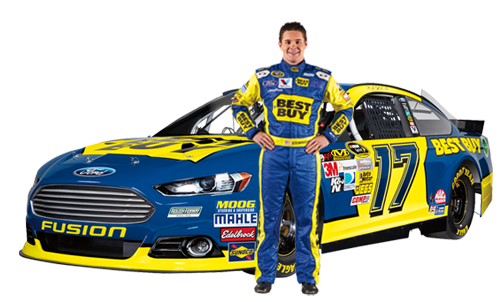
  • Ricky Stenhouse's Best Buy Ford in contemporary times
  • Jim Vandiver in the good ol' days. 
But on August 7, 1966, the two primary storylines at Atlanta were Richard Petty's Petty Blue Plymouth and Junior Johnson's infamous Yellow Banana Ford driven by Fred Lorenzen.

NASCAR made several rules changes to slow Chrysler's hemi engine that dominated many races in 1964. As a result, Chrysler parked its Dodge and Plymouth teams for over half the 1965 season. With stars such as David Pearson and Richard Petty on the sideline, NASCAR finally compromised so the money drawing starts would return.

The compromise didn't sit well with the brass at Ford Motor Company so they sat their factory-supported teams for much of 1966. Cooler heads again prevailed, negotiations were held, some backs were scratched I'm sure, and eventually Ford returned to the series.

Meanwhile, FoMoCo clearly wanted cars on the track to help sell ones in the show room. While the finer points of the rule book were discussed behind closed doors, John Holman of Holman-Moody apparently approached independent car owner and retired driver Junior Johnson about building a car for H-M superstar Fred Lorenzen to race. Junior built a Ford alright - but it didn't measure up against its street counterpart at all.

Source: Ray Lamm collection
Long-time NASCAR journalist Tom Higgins wrote in 2012 for ThatsRacin.com:
Junior and his crew arrived at the track with a car that immediately ignited a barrage of fireworks and howls of protest from rivals. The car was supposed to be a Ford, but its profile looked like nothing that had come out of Detroit.

The front sloped downward, the roof was cut very low and the rear end was raised. Because the car carried sponsor Holly Farms’ yellow paint scheme, it was likened to a banana. 

Smokey Yunick, another imaginative car builder, had brought an equally strange-looking Chevelle to Atlanta for driver Curtis Turner.

A ruckus raged over both cars, but they were cleared to race by NASCAR, which rejected three other machines, including those of Ned Jarrett, Bernard Alvarez and Cotton Owens, fielding a Dodge for David Pearson. Owens’ car was rigged with a device to lower the vehicle from the cockpit after the race started.

Turning away Jarrett, Alvarez and Owens – while clearing the cars of Junior and Smokey – further fueled an already incendiary situation.

“I realize that Lorenzen and Turner are valuable drawing cards,” said an irate Owens. “But that doesn’t make what’s happening right.”

The discord doubled, both among fans and competitors, when Turner won the pole at 148.331 mph. Lorenzen qualified third fastest.

“I built the car because John Holman was a friend and he asked me to help him out,” a smiling Junior Johnson said years later. “He said, 'Build me something that will run,’ and I did.

“We had a heck of a time getting through inspection. We took that car to body shops all around Atlanta, making changes before we got it close enough for NASCAR to approve.”

Read more here: http://www.thatsracin.com/2012/03/08/83199/junior-johnsons-one-off-draws.html#storylink=cpy
Though the two primary storylines may have been the Petty and Lorenzen cars, they weren't the only ones. As referenced in Higgins' article, Curtis Turner won the pole in Smokey Yunick's #13 Chevrolet. Earl Balmer in Nord Krauskopf's Dodge timed second. The Banana started third - right behind Turner's car.


Turner had raced only a limited GN schedule since Bill France reinstated Turner in 1965 from a 'lifetime ban'. And Smokey had fielded cars in less than a dozen Grand National races - total - since 1961. Yet here was the pairing with the quickest lap at Atlanta. Many believe Holman wanted that Junior Johnson specially-built Ford to run as a counter to what was expected to be a similarly tricked-up Chevy out of Smokey's Best Damn Garage in Daytona Beach.

The race had a double-helping of Petty Blue as Marvin Panch drove a second Petty Plymouth. It was Pancho's second of four starts for the Pettys in 1966. Unfortunately he lost the clutch, ended up in the fence, and finished 28th.

Ol' Blue and the Yellow Banana side by side - albeit in Black and White.


Schaefer Ring of Honor member "Bruton" (also known to many as as GaPettyFan) recalls:
The 1966 Dixie 400 - my first race and I had yet to even turn three. I don’t remember the events prior to the race, but my grandfather told me later that on the pace laps he picked up one of us while my Dad hoisted my twin brother. They pointed out Ol’ Blue and told us, “See that blue car? That’s Richard Petty. That’s who we pull for.” The King won my first time out! He started fifth, led 90 laps, and earned $13,525 for his efforts. [TMC: dang good memory for a kid who was three at the time!] My Dad had a brand new, bright red ’66 Chevelle that was gorgeous. He got good and drunk that day. After the race some poor schmoe backed into it. My Dad immediately jumped out of the car (my Grandfather was driving) and wanted to fight the guy. Yes, I come from impressive stock. I was so scared I peed all over myself. Sadly, I remember that part.
The big personalities of the race, however, didn't deliver. Turner lost a distributor in Smokey's engine around the halfway point of the race. Then a few laps later, Lorenzen blew a tire, slipped on a peel, and wrecked Junior's Yellow Banana. After starting first and third, the two cars finished 23rd and 24th.

Meanwhile, who spent the most time up front? The Mopars - the brand that dominated in 1964 - routinely flexed its muscle again in 1966. The Petty Blue 43 Plymouth paced the field for 90 of the race's 267 laps, and Buddy Baker led 62 laps en route to a second place finish in Ray Fox's Dodge.

Petty flashes across the finish line as he takes the checkers.


Time in victory lane never sucks - especially when you're the King.

Source: The Tennessean
Article courtesy of Jerry Bushmire
TMC

Monday, May 12, 2014

May 12, 1984: Nuttiness At Nashville

My introduction to stock car racing was at Nashville's Fairgrounds Speedway in 1974. While I won't swear to it, I think the evening's feature was a 200-lap NASCAR late model sportsman race featuring drivers such as Jack Ingram, L.D. Ottinger, Harry Gant, Morgan Shepherd and Butch Lindley. The date, the race, who won, etc. have all been forgotten, but I do remember my eyes being wide open and my heart pumping.

The first time I got to see Cup cars live was during qualifying for the 1976 Nashville 420. My first Cup race to attend was naturally at Nashville - the 1978 Music City 420. During the second half of the 1970s, I was a bigger fan of the local favorites such as Steve Spencer, Alton Jones, Sterling Marlin, Mike Alexander, Tony Cunningham, P.B. Crowell III, etc. than I was of the Cup series. After leaving for college, however, I found it harder to keep up with the local guys and really went all-in as a Cup fan.

The original ownership group sold to another in the late 70s, and the track was renamed Nashville International Raceway. California real estate developer and racing outsider Warner Hodgon bought into the ownership group (as well as stakes in Bristol and North Wilkesboro), and 'International' was dropped from the track's name. Yet then (and now) I always just referred to the track as 'the fairgrounds'.

After being known as the Music City USA 420 through the 1970s, the spring race took a title sponsor coinciding with the ownership change. In 1984, the race was branded as the Coors 420 - though a car with Po' Folks restaurant was featured on the program. Go figure. (One of the local guys was sponsored by Po' Folks ... I think.)

Coors sponsored the race as well as a car in the race - the #9 Harry Melling Ford. The team's driver, Bill Elliott, was still a season away from exploding in the NASCAR consciousness with his dominating 1985 season. A different beer brand, however, sponsored the two cars that became the story of the race - Budweiser.

In 1982, Junior Johnson announced two sport-shaking deals. One, he announced Hodgdon was investing in his team. Also, he planned to expand his operation to a two-car team in 1984. Outside investors and multi-car teams in NASCAR were both rarities up to that point. Generally speaking, the second car was way off the primary car.

Darrell Waltrip was already on board with Junior's championship winning #11 team. Neil Bonnett joined him in 1984 in a matching Chevrolet after spending a transition year in 1983 with Rahmoc Racing and 'sponsorship' by Hodgdon. Both cars were sponsored by Budweiser and Kentucky Fried Chicken, and the team was quickly dubbed Double Thunder.

The team should perhaps have been nicknamed Double Trouble. Though the two teams had common ownership, sponsors, and car makes, the 11 and 12 bunch did not function as a team as is the model for contemporary NASCAR racing. Led by crew chiefs Jeff Hammond (for Waltrip) and Doug Richert (for Bonnett), the two cars were perhaps more competitive with one another than with other cars on the track.

Yet - they were quick. On short tracks where Junior's cars historically had run well, they raced even better with DW and Neil behind the wheel.

As the Winston Cup series rolled into Music City for the 10th race of the 1984 season, Waltrip was ready to race with a high level of confidence.
  • He was a two-time late model champion at the track in 1970 and 1973.
  • Waltrip earned his first Cup win at the track in 1975.
  • The 11 team was the defending champion of the race having won the Marty Robbins 420 a year earlier.
  • DW had two wins and eight Top 10s in the first 9 races of the year. 
Sure enough, the 11 team laid down the quickest qualifying lap on Friday night to nab the pole. Ricky Rudd qualified alongside Waltrip in his Wrangler Jeans Bud Moore Ford. A couple of unsponsored drivers made up the second row: Geoff Bodine in Rick Hendrick's Chevy and Ron Bouchard in Jack Beebe's Buick. Dale Earnhardt rounded out the starting five in a second Wrangler ride, Richard Childress' Chevy.

Bonnett qualified 15th, about mid-pack, but a quick, single-lap wasn't his measurement of greatness for the weekend. Two weeks earlier, he wheel-hopped the curb at Martinsville. Doing so caused his steering wheel to spin quickly to the right - so quickly that he didn't have a chance to loosen his grip. The spin snapped Bonnett's wrist and dislocated his thumb. He incredibly popped his thumb back into place while at speed, and finished the race in fifth place. Only after returning home to Alabama was he able to have the bones set and a cast applied. The awkwardness of the cast and persistent pain when racing were challenges he had to face, yet Neil did not miss a start.

When the green flag flew on Saturday May 12, Neil spent the first 20 percent of the race working himself methodically towards the front. He finally went to the point on lap 87 and led sizable chunks of laps throughout the race. When the night was done, he'd led 320 of the 420 laps - with a broken, throbbing right wrist.

With about 10 laps to go, Neil was being hounded by the #5 Chevy of Geoff Bodine. Two weeks earlier at Martinsville, Bodine won the first Cup race for himself and Hendrick Motorsports - the race in which Bonnett had broken his wrist. Bodine got past Bonnett, but Neil fought back in an effort to reclaim the lead. Instead, he spun himself out with seven to go.

Remarkably, Bonnett was able to gather his car and pit without losing too much track position. Bodine ducked in the pits as well knowing he'd have to race Neil hard again. The race resumed with three to go with Waltrip out front (who chose not to pit). Then all sorts of a mess broke out. Cup upstart Rusty Wallace trashed his Gatorade Pontiac coming out of turn two. Bobby Allison, the reigning Cup champion, got collected, caught fire, and drove in reverse down the backstretch through three and four and then down pit road.

Bonnett was humping it on the high side as he tried to catch Waltrip. Then the King inexplicably spun his STP Pontiac and Kyle Petty looped his car into the inner wall to avoid t-boning his father's 43.

Waltrip flashed under the starter's stand taking the white and yellow flags. He checked up some to make it through the debris from the wrecks yet maintained good speed. Bonnett still went full bore, caught DW in turn four, and nipped the 11 at the line. Waltrip, his crew, and the TV announcers initially believed DW was the winner because the caution had flown a lap earlier. Bonnett believed the track was essentially still 'green' because the yellow flew as the last lap started vs. at the end of the next to last lap. In that era, cars raced back to the line when a caution happened vs. the 'frozen field' model used today.

NASCAR's officials then went into Keystone Kops mode. They directed Bonnett to victory lane. Within a minute or so, they had Waltrip drive to victory lane and had Bonnett leave. But again within a few minutes they switched back to Bonnett as the winner. The collective set of officials seemed unable to determine when the yellow flag flew and what was permissible in terms of racing back to the finish line.

As the crowd left the stands and TV left the air, Bonnett was indeed in victory lane as Waltrip's team was left fuming.

Source: Gainesville Sun via Google News Archive
Interestingly, Warner Hodgon (in slacks and buttondown shirt and getting Waltrip's glare) was part of the winning and losing end of it all. He was a partial owner of both Bud teams as well as an investor in the track whose reputation was getting dinged because of NASCAR's ineptness. But the disputed finish would soon be the least of his concerns.

Waltrip wasn't finished. He defiantly protested the finish. Junior Johnson had the unenviable position of protesting the victory by his own car. (Such a protest by a car owner against another of his own cars wasn't unprecedented. Lee Petty protested his own son's win in 1959 at Lakewood Speedway.)

Three days later, NASCAR sided with Waltrip's protest and declared him the winner and moved Bonnett back to second.

Source: Hendersonville NC Times-News via Google News Archive
 
A young Dave Despain - with hair on his head but not on his face - featured highlights of the controversial race on his weekly racing magazine show, Motorweek Illustrated.

I remember the confusing finish, but I don't remember if I saw the race on TV or listened to it on MRN. I'm thinking it was likely the latter. I was away at college, and we didn't have a TV in our dorm room. We had a TV in the rec room, but I know no one would have allowed it to be dominated by a race on a Saturday night. The guys had more important things to watch ... such as music videos on MTV.

The Coors 420 is available as part of MRN's Classic Races Podcast series. The original broadcast can be heard below, at MRN's site, or streamed through MRN's iTunes channel.


Nashville Speedway put its hooks deep into me 40 years ago, and it's amazing to think 30 years have passed since this particular race was run. Back then, I toted fewer pounds and bigger dreams. I had visions of spending many future years watching Cup racing there. No way it could ever end ... or would it?

Hodgdon's non-racing financial situation took a quick tumble in the mid 80s. His fall was so precipitous that his racing interests were drawn into the abyss. Suddenly, Junior Johnson was faced with losing his two teams and life's work as a car owner. He was able to craft a deal to buy back Hodgdon's equity and get him out of the picture.

The fairgrounds track wasn't as fortunate. The track hosted its annual summer race in July. Bodine won the Pepsi 420, but his win turned out to be the final Cup race in Nashville. With many questions surrounding Hodgdon's finances, the long-term viability of the track, and other legal complications between the track and its landlord, the city of Nashville, NASCAR chose to withdraw its sanction after the 1984 races.

Racing continues to this day at my home track - and it's truly hard to believe three decades have passed since the final year of Cup racing. But at least The Fairgrounds' Cup days went out with a bang as two teammates had to scrap like foes to settle the score.

Big thanks to Russ Thompson for many of the photos and video clip! 

TMC

Friday, September 20, 2013

September 20, 1959 - Lee Petty Hauls in Hillsboro

September 20, 1959: Starting seventh in his #42 Plymouth, Lee Petty wins a 100-mile, 110-lap race on the .9 mile dirt Orange Speedway in Hillsboro, NC. Richard helped make it a good time for the Level Cross team with a third place finish in his #43 Plymouth (albeit with a wounded car).

Lee finished one lap ahead of second place Cotton Owens. Junior Johnson was originally flagged as the third place finisher but was subsequently disqualified to 22nd and last place. Richard, who limped home on a bum rear axle, was elevated from 4th to 3rd.

Jack Smith and (future) King Richard started on the front row. Junior Johnson arrived to the track late, and he had to start out back in the 22-car field. NASCAR would later reunite him with his starting spot in the race's final, official rundown.

The Pettys went on a pretty good hot streak winning three in a row at the central North Carolina speedway about 70 miles east of Winston-Salem and about 40 miles north of Raleigh.
Perry Allen Wood vividly recaps the race in his book, Silent Speedways of the Carolinas:
The second visit of 1959 was September 20, the day after Khrushchev was barred from Disneyland. Twenty-two speed merchants appeared at Fantasyland on the Eno for 110 laps, with Jack Smith putting a Chevy on the pole. He rocketed away for the first 50 laps until an axle snapped and Tiger Tom [Pistone] put his tired, but twice-victorious T-Bird 59 on the point. Junior Johnson...was late arriving, starting at the rear. However, he screamed through the field from 22nd and was challenging for first when he was taken out in a crash... Johnson got the goat going again and soldiered on. With 21 left, Pistone broke a spindle and Papa Lee got his 38th career win by a lap over Cotton [Owen's] 1959 T-Bird. Third was Richard Petty despite retiring with a broken axle. ~ p. 111
Source: Spartanburg Herald-Journal via Google News Archive
Note the final paragraph of the race report article - especially if you have a hand in promoting races or know someone who does. What a cool event that must have been to watch - a match race of father-son teams of Lee and Richard Petty vs. Buck and Buddy Baker. Imagine the fun that fans could experience if track promoters still had such ideas: Kurt vs. Kyle Busch, Gibbs teams vs. Roush cars, Darrell and Michael Waltrip vs. Terry and Bobby Labonte, etc.

TMC