Showing posts with label pocono. Show all posts

Friday, January 25, 2019

History Springs Back to Level Cross

The King, Richard Petty, is unarguably the most successful individual in NASCAR history. His record in totality is unmatched: 200 wins, seven titles, 127 poles, over 500 top five finishes in nearly 1,200 starts, and a first-year inductee to the NASCAR Hall of Fame.

That success, however, included some tough accidents and injuries as well including:
  • 1961 Daytona: Sailing over the wall during his 100-mile qualifying race for the Daytona 500.
  • 1970 Darlington: Pounding the turn four wall and then nailing the pit wall during the 1970 Rebel 400.
  • 1978 Daytona: Walloping the earthen berm in the 1978 IROC race followed by a savage lick a few days later in the Daytona 500.
  • 1988 Daytona: Flipping against the catchfence during the Daytona 500.
  • 1991 Sonoma: A head-on hit with the concrete wall and tire barrier during the Banquet Frozen Foods 300. 
Another accident that really took the wind out of the King's cape occurred during Pocono's Coca-Cola 500 on July 27, 1980. 

As Petty sailed into turn two, his right front wheel broke sending  him on a direct trajectory to the wall. After the first lick, the STP Monte Carlo ricocheted into the air for a moment before landing hard. Chuck Bown spun to avoid him, but Darrell Waltrip had nowhere to go and centerpunched the driver's side door.

The King exited the car in obvious pain.Interestingly, rescue crews didn't bother putting a neck brace on him or lay him on a backboard. He simply limped to the ambulance with his head tossed back and agony on his face.

Petty returned one week later to start the Talladega 500. Little clinical information was released beyond his having a sore neck. The truth, however, was King had fractured his neck in the crash. Though it was common in that era - and perhaps for another 25 years or so - for drivers to race hurt, King's willingness and ability to belt into the car with a broken neck was remarkable.

Back to Pocono though. The hit destroyed the right front of the car - and Petty's opportunity to notch his eighth Cup championship. 

Long-time Petty fan and licensed paramedic, Brian Hauck, attended the race that day. He occasionally assisted the medical response team for Pocono's Indy Car races; however, he chose not to do so for Cup races so he could watch as a fan.

Hauck, therefore, had no choice but to watch the track's medical crew work on his favorite driver from a distance and ask around about his condition later.

When he returned to work Monday, he was still uncertain about King's condition - and bent about the casual way the medical staff handled his neck. Meanwhile, a co-worker began holding court with stories about his weekend trip to the Pocono race. Hauck's ears perked up when he heard the co-worker mention having a piece from Petty's car.

As medical crews attended to Petty and safety crews cleaned the track, Hauck's co-worker foolishly (?) sprinted from his infield position onto the track and retreated hastily with the 43's right front coil spring. 

Hauck apparently all but demanded the guy turn over the spring - but got a hell no in return. Some time later, the guy left the company. Hauck fumed he didn't get the spring, and he lost contact with the guy to boot.

In 2018, a mutual friend reconnected the former co-workers. Hauck knew the first question he had to ask - Do you still have that spring? Sure enough, the guy still had it. With the passage of time, he was also willing to part with it for the right reason and to the right person. After nearly 40 years, the coil spring changed hands.

Once Hauck got the spring last October, I received a series of texts and photos from him about it along with a single request: Don't mention this to anyone for now. 

On January 24, 2019 - Hauck's birthday - he celebrated a bit differently. Instead of receiving a gift, he gave one. After driving from his home in Trenton, New Jersey to North Carolina, he presented the spring to an unsuspecting Petty and Dale Inman. 

Both immediately recognized what Hauck had and couldn't believe he was willing to return it to Level Cross. Inman in particular was flabbergasted the spring still existed. He mentioned the team looked for it in the turn area after the race but never found it. He noted that particular spring had been a good one for set-ups in 1979-80 and joked "I was more concerned about finding that spring than I was Richard's neck."

Initially, King thought Hauck may want his umpteenth autograph to tie to the spring. Once he realized the spring was again his, he held onto it during the remainder of their conversation.

As Hauck wrapped up his visit, King placed the spring atop the Monte Carlo on display in the Petty Museum until a more permanent exhibit spot can be arranged for it.


TMC

Sunday, July 30, 2017

July 30, 1979 - Coca-Cola 500

From 1974 through 1981, Pocono Raceway hosted only one Winston Cup race per season. The track was a bit ahead of its time in that Pocono signed title sponsors for its races. The first three were sponsored by Purolator, and then Pocono signed a multi-year deal with Coca-Cola.

The 1979 Coca-Cola 500 was scheduled for Sunday, July 29. As has been the case on multiple occasions over the decades, however, rain caused a postponement of the race until Monday, July 30.

Harry Gant won the pole for the first time in his Cup rookie career. He was driving the #47 Jack Beebe Monte Carlo and was still about 18 months from joining Hal Needham's Skoal Bandit team. Harry's car sported McCreary tires which delivered a lot of speed for qualifying but generally fell off on long race runs.

Cale Yarborough started second in Junior Johnson's Busch Beer Chevy. Rookie Dale Earnhardt lined up third in Rod Osterlund's self-funded Chevy, and Bobby Allison flanked Earnhardt in Bud Moore's Ford - a ride Earnhardt would drive in 1982 and 1983. Benny Parsons rounded out the top five starters.

Darrell Waltrip originally qualified third fastest. In a post-qualifying practice session, however, Waltrip crashed his #88 Gatorade Chevy, and the car had to be withdrawn. Waltrip was in tight points battle with Richard Petty, and he simply could not afford to miss a race.

Waltrip's DiGard team worked a deal to rent the ride of Al "A.J." Rudd, Jr., Ricky Rudd's brother. A.J. had qualified 18th for his Cup debut in a Chevy fielded by his father. DiGard leased the car, the Buddy Parrott-led crew replaced just about every thing but the paint and number, and Waltrip lined up Monday in Rudd's 18th starting spot.

A.J. later made his first Cup start - and as it turns out his only one - about a month later at Michigan. The Michigan car likely had a boocoodle of quality DiGard parts under it from the Pocono race.

Cale grabbed the lead at the green and held it for a lap to grab a few bonus points. On the second lap, however, Gary Balough, Al Holbert, and Roger Hamby collided. Holbert's car caught fire, and safety crews had a tough time fully extinguishing it. Fortunately though, all drivers exited their cars without significant injuries.

Earnhardt passed Cale on the second lap as the yellow flag was displayed, and he held it after the race went green again through lap 14. Darrell Waltrip then took the lead for a couple of laps in the Rudd-to-DiGard converted Chevy. 

And so it went for about the first half of the race. Earnhardt, Cale, DW, Bobby Allison, the King, Buddy Baker, Neil Bonnett, and Gant all got their time on the point. But any lead was short-lived and lasted only a handful of laps.

The lead changed hands a remarkable 55 times during the day. The rookie Earnhardt led 43 laps in the 200-lap race's first half.

On lap 98, however, Earnhardt's Chevy blew a tire and crashed driver's side first into the steel barriers in turn two. He was choppered to the local hospital with fractures of both collar bones along with several cuts and bruises.


Tom Higgins reported about the injuries in the Charlotte Observer:
He was first taken to the track infield hospital, then transported by helicopter to East Stroudsburg Hospital, where his injury was diagnosed as a bilateral fracture of the clavicle (both collarbones).

"Dale was in extreme pain...they put him on the helicopter on a board because the doctors felt there might be some back injuries, and they felt an ambulance ride would be too excruciating for him," a team member said. "The seat and steering wheel were wrenched a good bit to the left. He took quite a lick."

Earnhardt's girlfriend, Teresa Houston of Hickory, talked briefly with Earnhardt, who was sedated heavily. She said all Earnhardt could remember was the tire blowing. He did not remember hitting the wall.
The second half was every bit as competitive as the first half - albeit without Earnhardt in the mix. Fans were pumped for the next lead change and the next and the next - particularly if one could happen on the last lap.

With a handful of laps to go, however, Cale Yarborough had pulled out to a three seconds lead over Waltrip's #22. Waltrip seemingly caught a break when independent owner/driver Nelson Oswald, running several laps behind, blew an engine in the third turn bringing out the caution.

Second place Waltrip and third place Bonnett in the Wood Brothers Mercury both hit the pits for fresh tires. Their teams were certain the race would go back to green with one or two laps left. Yarborough's team, however, elected to leave Cale on the track. Junior Johnson knew, fresh tires or not, passing Cale on the last lap of a race would not be an easy thing to do.

But the green flag never waved again. NASCAR allowed the race to finish under yellow with Cale cruising behind the pace car and Richard Petty holding down second. The assembly of fans erupted with a chorus of "boos" as the checkered flag was displayed to Cale.

Waltrip finished seventh and blasted NASCAR saying "Isn't that some southern fried chicken feathers? I ain't no sore loser, but they should've started it back again." When told of Waltrip's comments in the winner's press conference, Yarborough smiled and said "Looks like he's a sore loser to me."

Gant found his McCreary tires were fast, but they lasted only a few laps before blistering. He finished 15th, five laps off the pace.

The race was the 28th of 31 times Petty and Cale finished in the top two spots.

Source: Spartanburg Herald Journal
Using the current rule of The Overtime Line to finish a NASCAR race, the outcome of the 1979 Pocono race may have been different. For decades, NASCAR ended races at their advertised distance - under green or yellow. Then after several years of complaints sparked by finishes such as the one at Pocono in '79, NASCAR implemented the Green White Checkered rule to end a race.

After many complaints about that rule, The Overtime Line rule was adopted for 2017. Now, it seems to be in vogue for many to simply end races at the advertised distance - as it was originally. It's as if fans and media have come full circle - such as that one can make a circle out of Pocono's triangle.

Following the race, Osterlund tapped David Pearson to drive his #2 car as Earnhardt healed. Pearson had a great run in four starts with one pole, one win, no starts worse than fifth, and top 10 finishes in all four races. Osterlund, however, almost needed a B alternate. Pearson considered declining the offer to race because of a possible conflict with a commitment to work as TV color analyst.

Source: Spartanburg Herald-Journal

TMC

Tuesday, July 25, 2017

July 25, 1982 - Mountain Dew 500

NASCAR's 1981 season saw a ton of change.
  • A reduction in the wheelbase of Cup cars to 110 inches. 
  • A non-aero friendly notchback rear window on all but one model.
  • Several notable driver / team changes including Darrell Waltrip from DiGard to Junior Johnson, Cale Yarborough from Junior's team to M.C. Anderson, and Bobby Allison from Bud Moore to Ranier Racing.
It took several races before most teams adapted to their new teams and cars. One team that seemed to gel right away, however, was Waltrip and his new Mountain Dew Buick team. The team banked a dozen wins and Waltrip's first title in 1981. 

Another team that fared pretty well without a driver change was Richard Petty. The King banked three wins in 1981 - the Daytona 500 plus wins at North Wilkesboro and Michigan.

When 1982 arrived, Waltrip still had his mojo. With two-thirds of the season in the books, Waltrip and Junior's team had piled up another gaudy six wins. Allison left Ranier after one season and moved to DiGard - the team vacated by Waltrip when he joined Junior Johnson in 1981 - and notched four wins by mid-season. Petty's STP team, meanwhile, was scratching his head as he fought through a winless dry spell dating back to August 1981..

After Waltrip won the Busch Nashville 420 on his home track, the NASCAR circuit headed for Pocono. Next on the schedule was, perhaps fittingly for DW, the Mountain Dew 500.

Cale Yarborough scored the pole in his #27 Valvoline Buick. Harry Gant qualified alongside him in the Skoal Bandit Buick. Ricky Rudd lined up third in his #3 Richard Childress Racing Pontiac. (Yes, RUDD in the #3 folks.) Allison started fourth in the Gatorade Buick.

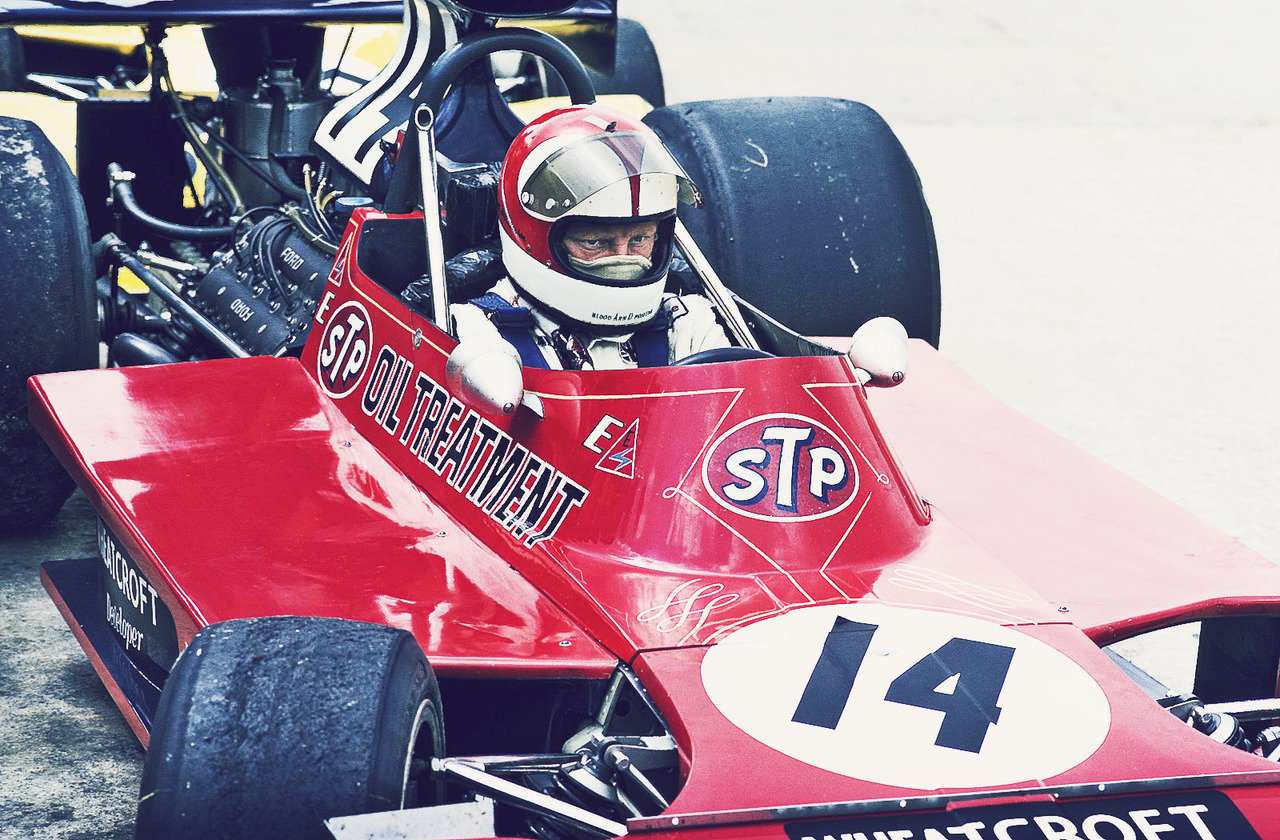
Kyle Petty started 17th in Hoss Ellington's #1 STP/UNO Buick. Today, Kyle is a retired driver and an NBC commentator. In his second season as a full-time Cup driver in 1982, however, he still struggled to keep a toehold in Cup. The finances in Level Cross were stretched then in an effort to field two full-time cars.

At mid-season, the team announced a novel alternative. Kyle would continue to race short-track races for the family team. For superspeedway races, however, he would race for Ellington. The experiment ended later in the season, but all parties thought it worth the risk to help both organizations.

Yarborough got the jump at the green and led the first half-dozen laps. Allison and Dave Marcis then led the next six. Then Marcis and Gant split the next six. And on it went for the rest of the race. In addition to the early leaders, many others grabbed their opportunity to be on the point - even for a few laps, which is all most leads lasted. Waltrip, Petty, Dale Earnhardt, Tim Richmond, and a couple of young, emerging drivers - Bill Elliott and Mark Martin - all saw their number posted in the top spot for one or more laps.

Mark Martin had issues with his exhaust or firewall. The heat inside the car became so intense that he had to pit the car for a relief driver. Long-time independent driver Ronnie Thomas took over to spell Martin a while.Yet Martin knew Thomas couldn't last long either and eventually re-entered the car. The tandem survived to notch a 10th place finish for Martin's #02 Apache Stove Pontiac.

Though the racing at the front was exciting, the race is perhaps best remembered for an incident with just under 70 laps to go. Earnhardt drafted Richmond as they barreled into turn 1. But they then touched. Richmond spun, but Earnhardt took a tough right turn into the wall. He pummeled the boilerplate, got up in the air, and rolled over as he slid a good distance before coming to rest upside down.

Long-time motorsports photographer Jack Kromer got a shot of the #15 Wrangler Ford after it was righted and hauled back to the garage.

Greg Moore, Bud's son and long-time team crewman, recalled the incident in the book Bud Moore’s Right Hand Man: A NASCAR Team Manager’s Career at Full Throttle by Moore and Perry Allen Wood:
Earnhardt and Richmond were battling, and you had to use a little bit of brakes back then, but Dale didn't use brakes much. They wrecked, and I can remember hearing the fans reacting and seeing Richmond go out of sight. There was a car upside down with a gray bottom. I knew that was us. Daddy's on the radio saying, "Caution! Caution! Come on in. We're going to change all four." I hadn't even had a chance to say anything to Daddy, and Earnhardt was on his damn roof. Earnhardt keyed the mic and said "Yeah Bud. If you come down here to turn one and two, it'll be real easy to change them because all four wheels are off the ground." That's how conscious he was. Earnhardt went to the infield care center, and we flew back to Spartanburg on a private plane together. We played cards on the airplane, laughing and talking about it.
Dave Fulton, director of Wrangler's NASCAR marketing program, has memories of the wreck as well:
I was standing next to car owner/crew chief, Bud Moore on pit road at Pocono. The blue & yellow T-bird climbed the old boiler plate steel wall and rode for a distance on its roof before coming back down on the track. The car almost cut down the "Winston Pack" MRN radio booth with Eli Gold inside - a very scary moment for Eli.

Those were the days of racing back to the flag and very slow emergency response times. Dale was being inundated with hot oil from the oil cooler as he struggled upside down to get free. A photographer ran across the track to assist, along with Richmond, who helped Dale to the ambulance that finally arrived at the crash scene. I always remember Tim helping Dale that day.

The late Don Naman called me in Greensboro at Wrangler headquarters on Monday morning after the crash to see if I could get Bud to donate the car to the International Motorsports Hall of Fame Museum in Talladega as a "safety" display. Bud, who had no use for wrecked cars and had lost drivers Joe Weatherly and Billy Wade in crashes, politely declined the request.
With Earnhardt and Richmond having survived the wreck with only minimal injuries, one was then allowed to wonder. Were either of them perhaps distracted by the Schaefer Beer logo on the wall? Maybe they lost focus momentarily when suddenly hit with a thirst for the one beer to have when having more than one.

With 43 laps to go, all of the lead lap cars made stops under another yellow. The timing of the stop challenged each crew chief and driver to carefully manage their fuel mileage over the remaining laps.

The King had led the most laps of the race and was having one of his most fortunate days of the season. He could seem to go back to the lead when he wanted. Waltrip ran second, and Allison was content to follow the other two cars in third.

With just 7 laps to go, however, Petty's Pontiac had to make a quick stop-and-go for gas. His time out front, though impressive, burned more fuel than Waltrip and Allison running behind him.

Darrell Waltrip took the lead as Petty hit pit road, and Junior's team planned to go the distance and finish on fumes. Allison drafted Waltrip, and Petty returned to the track and made his way back to third.

With three to go, Waltrip's car began to burp. He rolled out of the throttle in an effort to manage his remaining fuel. Allison blew by him and stretched a bit of lead. On the last lap, Waltrip's #11 Buick consumed its last drop of dew. Despite jostling his car, he fell away from Allison. Petty made up some of his lost ground and sailed by Waltrip to take second.

Waltrip faded to a sixth place finish. He did so by getting a push on the final lap from infrequent Cup driver Joe Booher. Interestingly, Waltrip accused Harry Gant nine years later at Talladega of getting a push from Rick Mast even though it was unclear if Gant got a winning assist.


With cable TV still in its infancy and NASCAR TV coverage fractured over a number of media outlets, the race wasn't broadcast live. A condensed package of it was aired later through syndication.
  • 30:00 mark: Martin's heat issue, driver change, and interview
  • 35:00 mark: Earnhardt / Richmond wreck and Tim Richmond interview
The race was the 50th of 51 times that Petty and Allison finished in the top two spots.

Source: The Free Lance Star via Google News Archive
Greg Moore recalls the following few days between Pocono and the next race at Talladega:
Two days later, Earnhardt came down to the shop hobbling on crutches with a buddy of his. They looked at the car and he said, "Look how the roll bars held up," and he laughed about it. A lot of the drivers wouldn't have wanted to look at it. Daddy had already checked Dale's leg, and Earnhardt pulled me off to the side and told me it was broken. We didn't want NASCAR to know that, so we never said a word to Daddy. Dale never said a word to anybody. Only he and I and some doctor knew about it...If NASCAR had known it was broken, they would not let him start the race. 
Earnhardt did indeed race the next week at Talladega. And once again, he wrecked and left the race early. Tom Higgins reported in the Charlotte Observer that Earnhardt had surgery two days after the Talladega race and nine days after Pocono:
...Dale Earnhardt underwent apparently successful surgery Tuesday in a Statesville hospital for the broken left knee he suffered in a race crash July 25.

Joe Whitlock, an associate of Earnhardt's, said there were no problems in the operation, during which two screws were inserted into Earnhardt's knee.

"The only hitch was that Dale is miffed that the doctor wouldn't follow his suggestion and make the incision in the form of a W like that sewn on the back pockets of Wrangler jeans," said Whitlock chuckling.
TMC

Wednesday, August 3, 2016

August 3, 1975 - Pearson Procures Pocono's Purolator over Petty Protest

The Winston Cup Grand National Series teams returned to Pocono for the track’s second annual Cup race - the Purolator 500 on August 3, 1975.

Bobby Allison won the pole in his Roger Penske Matador prepared in nearby Nazareth, PA. David Pearson qualified alongside him in the Wood Brothers’ Mercury. Buddy Baker in Bud Moore’s Ford, Dave Marcis in the iconic Harry Hyde-prepared #71 Dodge, and Cale Yarborough in Junior Johnson’s Holly Farms Chevy rounded out the top 5 starters.

Richard Petty timed sixth. The King had won the two previous stock car races at Pocono – the 1973 USAC Acme Super Saver 500 and the track's inaugural NASCAR Cup race, the 1974 Purolator 500. Petty had also already won eight races in 1975 – a number he’d grow to a modern era record of 13 that has been matched just once, by Jeff Gordon.

Fans got a competitive race with the lead changing hands multiple times. Pearson jumped out front at the start and led the first 10 laps. Pole-winner Allison got by the 21 and paced the field for three laps. He and Pearson then went back and forth for a while before some new races appeared upfront because of pit cycling.

Allison’s pole-winning effort and early time at the front, however, was for naught. He lost the engine in his Matador was done after 22 laps.

Source: Reading Eagle via Google News Archive
Benny Parsons and Marcis had their time up front as well before Pearson and Petty glided their way back to the top of the heap. Around the half-way point of the race, however, the all-too-familiar mountain rains arrived to interrupt things. The race - which already needed an extraordinarily long time to complete the scheduled 500 miles - was delayed over an hour as the rains passed and the track dried.

As the race resumed and proceeded to the mid and late stages, Buddy Baker let it be known he too would part of the action. He led on multiple occasions during the race though only for a single-digit number of laps each time.

With about 25 laps to go, the 43 STP Dodge Charger took the lead from Pearson’s white and candy-apple red Mercury. Petty held Pearson at bay for the next 13 laps. With 14 to go, however, the 21 passed Petty again and set sail towards the win.

With just a handful of laps to go, however, Pearson’s car began smoking badly. Petty, obviously hoping to pounce at the right opportunity, had a tough time peering through the smoke. NASCAR black flagged Pearson with 2 to go, but the Silver Fox had no intentions of giving up the lead and the win.

He continued for the next two laps and took the checkered flag. Petty was none too happy at having to drive through the cloud of smoke. But with Pearson having up to three laps to acknowledge NASCAR’s black flag before having his scorecard pulled, the team knew it had some margin to finish the race and collect the trophy.

Source: Pocono Raceway's Facebook Page
Petty was not happy at all about Pearson’s staying on the track. He did concede, however, he likely would have done the same thing had the roles been reversed. Besides, he had eight wins under his belt already, had the points lead as he headed for his unprecedented sixth championship, and became the first driver to surpass $2 million in career earnings.

Source: Tuscaloosa News via Google News Archive
The race was the 55th of 63 times Petty and Pearson finished in the two two spots.

Source: Wilmington NC Star-News via Google News Archive
An edited version of MRN's broadcast of the race is available for streaming free on-line or through iTunes.

TMC

Tuesday, July 1, 2014

Schaefer 500s revisited

Back in 2010 - a lifetime ago in my blogging practices - I posted about each of the Schaefer 500 USAC Indy car races at Pocono. At the time, I threw them together quickly.
  • the date
  • the winner
  • a link to the results
  • a photo or two
Over the last week, I've edited each of them with more details about the race, additional photos, plus an article or two as well. I left the entries with their original posting date though I did add an 'edited' date. Here are links to each of the posts.
Bench Racing's series of Schaefer 500 posts ... the one blog to read when you're reading more than one.


TMC

Monday, July 29, 2013

July 29, 1973 - Petty Poaches Pocono

Throughout 2013, I've focused on blogging about Petty Enterprises wins by drivers other than Richard Petty. I figured I'd already given The King his due with my blog series about his 200 wins. But Richard also competed in a few races not sanctioned by NASCAR, and he won one of them back in 1973. Because the win isn't part of his 200-win GN/Cup tally, I didn't blog about it back then. So now - bonus edition time! A Petty Enterprises win - with Richard as the driver - but in a series other than NASCAR.

July 29, 1973: After qualifying second, Richard Petty wins the Acme SuperSaver 500 USAC stock car series race at Pocono Raceway in Pennsylvania.

NASCAR's Winston Cup series had a couple of open weekends between its July 22nd race in Atlanta and August 12th at Talladega. So Petty took the opportunity to head north to race in the Poconos - perhaps even to enjoy a brief respite from the summer southern heat and humidity.

Other NASCAR regulars who made the trek with the Petty Enterprises included long-time Petty rival Bobby Allison and independent drivers Dick May, Bruce Jacobi, D.K.Ulrich, Frank Warren and H.B. Bailey. The race also featured several USAC drivers who occasionally dabbled in Cup racing including Super Tex himself - A.J. Foyt, Ramo Stott, Gordon Johncock, and Jim Hurtubise.

Bob Whitlow, former center for the NFL's Cleveland Browns, Detroit Lions and Atlanta Falcons, started the race as well. Following the end of his football career, Whitlow built a #51 Dodge Charger and raced in about 20 USAC and NASCAR stock car events from 1973 through 1976.

In his book Pocono: NASCAR's Northern Invasion, author Joe Miegoc writes:
Petty took control in the Acme 500 in 1973, beating [Butch] Hartman in a close finish that saw Petty lead 124 of the 200 laps, yet earn $10,730, or about two-thirds of what Hartman received for winning the Pennsylvania 500 in 1971.

Hartman led 39 laps and [Roger] McCluskey, who finished third, led 24. Foyt, back after skipping the 1972 race, led the other 13 laps and finished seventh after starting from the pole. Ron Keselowsi, who came out of nowhere to win in 1974 in USAC's last stock-car gasp at Pocono, was 17th, with Bobby Allison, who would be the only NASCAR driver to also run an Indy car race at Pocono, finishing 25th. Gordon Johncock who would beat Rick Mears in 1982 in the closest finish in Indianapolis 500 history, ran this stock car race for Hoss Ellington and finished 34th, losing his brakes after just 34 laps.

Petty was the big draw, but among USAC officials, the welcome mat was not exactly out for the King.

Under the organization's rules, a driver or team had to be a USAC member and run the entire series to get a garage spot at any race. Without points in the series, you were an outsider.

And that included even Richard Petty.

"We weren't exactly welcome, not really," Petty said with a laugh in 2009. "When we got there, they had some garage area, and there were some of them that were still empty, but we didn't get one. They made us park out in a tent in the gravel area, work on the car behind the garage area."

Then [track owner Joe] Mattioli, who insists he didn't pay Petty any appearance money to run at Pocono before NASCAR officially ran a race there, put his foot down.

"I told them (USAC officials) if Richard Petty didn't run that race, there would be no race," said Mattioli, who also once faced down an ABC Sports official by telling him there would be no Schaefer 500 on Wide World of Sports if the Schaefer name couldn't be used. The ABC guys, while trying to avoid giving sponsors free advertising, buckled then too.

"The gentleman that owned the track (Mattioli) decided us out in the gravel wasn't going to work,' Petty said. "He told them guys that if Richard Petty did not get in the garage area, he was going to run them all out. So that pretty much took care of all of it. Once we got there and started talking to all the guys and such, we realized that, 'hey, it wasn't the drivers, the guys we were competing against. It was the officials.' But I think everybody got on their fanny and by the time it was time to race, everybody had come around.

"We came back the second year and we were welcomed with open arms."

And true to his heritage, Petty ruled that Acme race.

Oddly, it was held as a prelude to the Pennsylvania State Fair, which among others, featured Bob Hope and the Jackson 5, with a youngster named Michael singing lead.

The King and the later King of Pop at Pocono in one weekend. Strange indeed. ~ pp. 109-110
The King and Super Tex go at it during the race.

USAC regulars Hartman and McCluskey were left to battle it out for second. Hartman tried to hang tough with Petty near the end of the race, but it wasn't to be.

Photo courtesy of Russ Thompson
The starting line-up ... and the finishing order.

So once again in his career, The King got the opportunity to snuggle up to Miss Hurst Shifter, Linda Vaughn, in victory lane.

As was so often the case, The King was the class of the field. His NASCAR rival Allison was a non-factor. Foyt - the larger-than-life personality of various open-wheel racing series over the decades - couldn't beat Ol' Blue. And the cast of USAC regulars and NASCAR independents were no match for the 43. So like the old Loony Tunes cartoons, the Coyotes couldn't catch the Road Runner (or the Dodge Charger) even with an assist from Acme.

Article courtesy of Jerry Bushmire
The race was also featured in the November 1973 issue of Stock Car Racing magazine. Writer Richard Benyo was complimentary of the NASCAR and USAC drivers and the show put on for the fans. But he was very biting in his criticism of the USAC sanctioning body and the Pocono track management for the underwhelming way the race was promoted.

A year later - plus a few days - Petty returned to Pocono for its inaugural Winston Cup race. The King picked up where he left off in 1973 by winning the 1974 Purolator 500.

Edited 2013-08-19: Petty raced the same Charger three years later at Pocono and won the 1976 Purolator 500 NASCAR Winston Cup race.
✮   ✮   ✮   ✮   ✮

July 29, 1973 is also memorable for another racing event - but for a painful, gut-wrenching memory. As Petty raced in the Pocono Mountains of Pennsylvania for a second time in his STP Dodge, fellow STP driver Roger Williamson of Great Britain suited up and belted in for his second career Formula 1 race. On the eighth lap of the Dutch Grand Prix in the Netherlands, Williamson's red March-Ford wrecked with David Purley, flipped, skidded a long distance, and caught fire - with Williamson trapped inside the car but not terribly injured.

As the flames began to engulf Williamson's car, Purley ran to help his friend and fellow driver. Track officials were pathetically inept and ill-prepared. A couple of Keystone Kop type characters jogged over to the car but really had no idea what to do or have any equipment to use even if they had been able to figure out what to do. Minutes passed before any sort of rescue truck arrived. Purley tried in vain to flip the car right side up by himself but got no assistance from the course workers. Williamson died while still trapped in his car - though interestingly not from the fire. Instead, he suffocated and must have endured an agonizing death on the track.

TMC

Friday, August 3, 2012

1980 Coca-Cola 500 at Pocono

As my personal odometer continues to roll over year-by-year, the less I remember - or really even care - about what life was like back in my youth. But in thinking about it a bit, 1980 was a fun, interesting and even challenging year for me:
  • I went to my first Daytona 500 in February 1980 and saw Buddy Baker win his only 500 in Harry Ranier's #28 "Grey Ghost" Oldsmobile 442.
  • My first trip to Disneyworld was in May 1980 - at the expense of missing King Richard win the Music City 420. 
  • In December 1980, a surgeon performed full-blown knee surgery on me. If only arthroscopic techniques had been more widely available back then, perhaps I wouldn't be hobbling around today like Festus from Gunsmoke.
  • Our high school annual featured a candid of me wearing of course....
On July 27, 1980, an eventful race took place at Pocono - the Coca-Cola 500. Full recognition of the race's relevance didn't fully resonate with me - or likely others - that day. The race's story lines included a King's crash, the rise of a promising prodigy, the farewell of a contemporary trailblazer, and the Cup debut of a non-traditional but incredibly talented and impactful racer.

Richard Petty had a forgettable 1978 season, but he returned to form in 1979 to snag his sixth Daytona 500 victory and seventh Winston Cup championship. He had fewer wins at the mid-point of the 1980 season than in 1979, but he was hanging tough in the points standings. He was giving three-time champion Cale Yarborough and reigning rookie of the year Dale Earnhardt a good run for their money as he tried for his eighth Cup.

And then Pocono..

On lap 57, a wheel broke on Petty's #43 Monte Carlo, the back end came around, and he backed it into the boiler plate wall - HARD. The hit was in the era long before SAFER barriers or H.A.N.S. devices were even visioned much less designed and installed.

Chuck Bown spun himself to avoid hitting Richard, but then Darrell Waltrip ended up nailing the 43 right in the door.


The safety crews extricated the King from the car. But they didn't backboard him or put any sort of neck brace on him. They simply walked him to the ambulance as he grimaced in pain.

Officially, Richard suffered a 'strained neck' and pulled back muscles. The Petty team said it, Joe Mattioli from Pocono repeated it, and the media reported it.

Article courtesy of Jerry Bushmire
Even though Richard's day ended with a painful thud, Petty Enterprises still had some success in the race. Richard's son Kyle made his Pocono debut. Having run only a handful of races from late in 1979 through the mid-point of 1980, Kyle was still very much a rookie. Yet he seemed to take to Pocono like a duck to water and finished a very respectable 7th.

Each year, Indianapolis 500 officials recognize a 'rookie of the race'. In 1980, a promising young driver from Ashland, OH named Tim Richmond won the award. Sponsored by UNO playing cards (one of the best games ever in my opinion), the personality-laden driver finished 9th in his Indy 500 debut. His performance in the 500 caught the eye of Pocono's owner Joe Mattioli. He negotiated a deal with driver and car owner D.K. Ulrich to put Tim in a stock car for the 1980 Cup race. (As a reminder once again, Ulrich was the car owner of the Schaefer beer sponsored Buick driven by Al Loquasto one year later in 1981 at Pocono.)

Tim finished a very respectable 12th in his first Cup race - five spots behind Kyle Petty. Richmond returned to Indy a second time in 1981 and finished 12th while driving for Super Tex, A.J. Foyt. But with urging from his mother, he then turned to NASCAR full-time and raced stock cars full-time until 1987 when his health situation worsened dramatically. Complications from the AIDS virus he contracted and protracted legal wranglings with NASCAR's brass sidelined Tim permanently, and he finally succumbed to AIDS in 1989.

Schaefer Hall of Famer Rev. Randy recently sent me some great photos from the 1980 race given to him and shot by co-worker Jim Jandrasits.

Jim was able to snap a photo of what would be another relevant story line to the race - the final Winston Cup start for Janet Guthrie.While not the first female race driver in NASCAR, she did break some barriers by racing with some amount of relative success - both in Indy cars and in NASCAR - as both racing series gained more popularity across the country. Guthrie started 33 Cup races from 1976 through 1980, and the 1980 Pocono event was her final one.

As a Petty fan, I'm fortunate today that Jim took some great shots of the two-car team 30+ years ago. Rookie Kyle is seen standing near pit wall near his father's 43 Monte Carlo as the cars were rolled to the starting grid.

Years before pit wagons became the norm in the pits, 'extravagance' in the pits was limited to an umbrella and an Igloo cooler of cold water. Here, King Richard can be seen talking to his crew as Kyle likely gets the punchline of a joke from NASCAR Hall of Fame crew chief Dale Inman (wearing the Ray-Ban sunglasses).

Taken from a great vantage point, Kyle is seen making a pit stop with his alternate day-glo red on Petty blue #42 scheme.


Before his vicious wreck, the King was challenging for the lead. Here here is sandwiched between the #88 Gatorade Monte Carlo of Darrell Waltrip and eventual race winner Neil Bonnett in the #21 Purolator / Wood Brothers Mercury.

Jim also had the presence of mind to snap a pic of the 1979 Rookie of the Year, Dale Earnhardt, as he pitted next to the 1979 Winston Cup champion, King Richard. Coincidentally, Earnhardt pounded the wall at Pocono a year earlier in his rookie season just as Richard did. He broke both collarbones and had to miss a couple of starts. But he returned to still claim the 1979 Rookie of the Year award.

And yes Earnhardt fans, that is Earnhardt driving a #2 car above. He didn't drive the famous #3 from the get-go because someone else was already driving with it - future car owner Richard Childress.

As Neil Bonnett headed for victory lane, second place Buddy Baker and third place Cale Yarborough call it a day and head for their haulers.

Bonnett and the Wood Brothers team took their Purolator Mercury in victory lane.

Source: Wood Brothers Racing
With apologies to the late Paul Harvey, here is ... the rest of the story.

Richard - The reality of Richard's injures weren't revealed until much, much later. Richard had indeed suffered a fracture in his neck. Incredibly and stubbornly, he soldiered on and did not miss a start. Had NASCAR known this - or had the information been leaked, its likely their hand would have been forced to sit Richard until doctors cleared him to race. Early in the next three races at Talladega, Michigan and Bristol, he turned the car over to former Petty crewman and driver, Joe Millikan.

Kyle - After a solid Pocono debut and a few other starts in 1980, Kyle began racing Cup full-time in 1981. He eventually notched a Pocono win in 1993. After the death of his son and Richard's grandson, Adam Petty, at New Hampshire in 2000, Pocono named the track's garage area as the Adam Petty Garage in his memory.

Credit: Action Sports Photography - Source: Motorsport.com
Earnhardt - With Richard's championship hopes all but gone, it was up to the veteran Yarborough and the Junior Johnson team to snag their fourth championship. The Rod Osterlund-owned team with Jake Elder as the crew chief and Earnhardt as the driver, however, may have bent but didn't break. The team withstood a strong challenge by the Yarborough team, but in the end Earnhardt earned the first of his seven Cup championships.

Richmond - After racing a part-time schedule by hopping rides with multiple car owners in 1981 and 1982, Tim finally landed with car owner Raymond Beadle and his Old Milwaukee Beer sponsored Pontiac team in 1983. After a moderately successful three year run with the Blue Max team, Tim moved to Hendrick Motorsports in 1986. He and crew chief Harry Hyde caught lightning in a bottle about a third of the way through the season. With seven wins to their credit but without the Cup, the 25 team was among the favorites heading into the 1987 season. But as Richmond's undisclosed illness began to take over, he all but faded away. Tim made an abbreviated but remarkable comeback midway through 1987 by winning back-to-back races at Riverside and Pocono. After that, however, he wasn't super-competitive and raced for the final time late in mid-August 1987.

TMC
Edited July 27, 2014