Richmond, Virginia has been a fixture on NASCAR's Grand National / Cup schedule since 1953. The track has seen a number of changes including:
Multiple names
Lap count variances
A move from dirt to asphalt, and
Track configurations
Yet, the track has remained a constant for race fans for over sixty years. One could argue Richmond has been the most progressive and fan-responsive track over the decades.
The first of two races at Richmond in 1964 - the Richmond 250 - was scheduled for Sunday, March 8. Petty Enterprises planned to field two Plymouths for Richard Petty - fresh off his first Daytona 500 victory - and for Buck Baker who finished 12th in the Petty car at Daytona after having some issues with his Hemi engine.
When the team arrived in Richmond, however, it was the King's brother - Maurice Petty - who took the wheel of the family's second factory Plymouth. It's unclear when the decision was made to have Chief race rather than Baker.
Source: The Progress-Index of Petersburg, Virginia
Drivers representing the Blue Oval - Ford Motor Company - qualified for the top three starting positions. Ned Jarrett in a Ford, Billy Wade in Bud Moore's Mercury, and Mavin Panch in the Wood Brothers Ford started 1-2-3. Maurice Petty showed up his older brother a bit by qualifying fourth. Rounding out the top five starters was Ralph Earnhardt. Neither Maurice or Ralph ever raced full-time in the Grand National division, and Richmond represented the fifth of only eight times the two drivers were in the same race.
When the green flag fell, Gentlemen Ned served notice his Ford was the one to beat. He leveraged his top starting spot to an early lead - and stayed there. Turn after turn, lap after lap, Jarrett's 11 paced the field. Until.
Rain arrived 25 laps before the halfway point, and the rest of the race was postponed after only 100 laps had been completed. The remaining laps were to be run the next clear day.
Source: The Progress-Index of Petersburg, Virginia
The track was still far too saturated and muddy to run the remainder on Monday. Instead, the race was restarted on Tuesday evening, March 10. The race became Richmond's first under the lights - a tradition later adopted in 1991 on Richmond's current 3/4-mile configuration.
Junior Johnson was running in fifth place when the race was postponed. But when the remainder of the race was moved to Tuesday, Junior Johnson said he had another obligation and couldn't continue. Buck Baker - apparently bounced from the Petty Plymouth - took over Junior's Dodge and raced it the rest of the way to a fourth place finish.
Dave Fulton worked in racing-related promotions for several years - in the early 1980s with Wrangler and Dale Earnhardt, mid 1980s with Southland Corporation when their 7-Eleven brand sponsored Kyle Petty, and Richmond Raceway as an assistant to promoter Paul Sawyer. As a kid, however, Fulton was simply a wide-eyed fan. He attended the 1964 Richmond 250 as his first GN race and shared his memories from it:
I was 15. That was the day I first heard the late announcer Ray Melton for the first time intone the "Most Famous Words in Sports":
"Jellllyyymennnnnnnnnnnnnnnn...START YOUR ENGINES!"
That was the day I saw my first race. It was the first time I'd see Richard Petty, who'd just won his first Daytona 500. Didn't get to see my uncle's favorite - Joe Weatherly, a terror on the Richmond dirt with both stock cars and motorcycles - because he'd been killed in January at Riverside.
Dad dropped me off after church on Sunday. I paid the entire $5 I had in my pocket for a 4th turn bleacher seat.
The first time Tiny Lund came by me in practice with his Ford kicking up a rooster tail of dirt sideways, I was hooked for life.
After the parade of visiting pace cars, Ray Melton told me to clap my hands, stomp my feet, whistle and cheer as my favorite driver passed in review (I didn't have one yet).
Ray said these were the stars and cars of NASCAR's elite Grand National racing division. He said the cars were painted in all the colors of the rainbow and the drivers came from country stands and crossroads strands. No announcer since has ever gotten a stock car crowd so worked up as Ray Melton did in his prime.
I had heard all about the new "Hemis" and decided I'd pull for them. Billy Wade replacing Joe Weatherly in Bud Moore's potent Mercury had other ideas.
Hot Damn! I never knew two cars could run side-by-side while broadsliding through Richmond's wide sweeping dirt corners!
And the sound - the heart-throbbing, bleacher-shaking sound - and the smell of the rubber and gasoline and the dirt clods and those good ol' boys rooting each other out of the groove (much better than bump drafting). All the way across the track in the dust of the first few laps one car stood out. The announcer said it was painted electric blue, but that famous color was Petty Blue carried on the #43.
Unfortunately, before the race was at the halfway point, the rain began to pour. The race was postponed.
The track was too muddy to race on Monday and even during the day on Tuesday. Finally, the race resumed on a cold Tuesday night in March under the lights. It was wonderful!
Jarrett couldn't continue his Big Mo when the race restarted. He led another couple of laps but surrendered the lead to Wade. Also, David Pearson quickly picked up the scent of the lead and moved up from his fourth place restart spot.
Richard Petty made his presence known as well. He went toe to toe with Wade once the race resumed. Wade led a 33-lap hitch, King then paced the field for 25 laps, and then Wade went back out front for another stretch of 48 laps. Then things got really fun.
Pearson watched Wade and Petty battle as he had his own hands full racing Jarrett. He finally cleared them all and took over the top spot. With only sixteen laps to go, Jarrett's dominant Ford on Sunday cooked an engine. Then Petty separated himself from Wade's Mercury who faded back to third.
Petty gave chase to catch Pearson, but the Cotton Owens-prepared Dodge was too strong once it found the front. Pearson led the final 36 laps of the race to capture the win with Petty a half-lap back in second.
The win was Pearson's first victory since 1961 and his first in a Dodge. The race was also the third of 63 times Petty-Pearson finished 1-2.
November 22, 1962: Driving a #41 Petty Enterprises Plymouth, Jim Paschal wins the Turkey Day 200 at Tar Heel Speedway in Randleman, NC. Maurice Petty finished fifth in his #42 family team Plymouth, and Richard finished 11th after losing a transmission with 12 laps to go.
Though run in November 1962, the race was actually the third event of the 1963 season. Petty Enterprises was on a roll by winning all three races - and racking up top 5s to boot:
November 4 at Fairgrounds Raceway in Birmingham AL - Paschal wins, Richard 2nd
November 22 at Tar Heel Speedway - Paschal wins, Maurice 5th
The race was the first of only three Grand National races run at Tar Heel - all as part of the 1963 schedule. Each race was 200 laps and 50 miles on the tight quarter-mile, paved track. Paschal won this first one, and he backed it up on May 5, 1963 with another victory in the second one. Richard finally broke through with a win on October 5, 1963 in the third and final race.
Glen Wood won the pole in his family team's #21 Ford, and Paschal started alongside him. Jimmy Pardue and Ned Jarrett made up the second row. Petty cars claimed three of the top 6 starting spots as Richard and Maurice timed 5th and 6th.
When the green flag waved, Wood set sail. The NASCAR Hall of Famer from Stuart, Virginia dominated the day by leading the first 173 laps. But with victory in the caution-free race seemingly in sight, Wood blew a tire, exited the race, and faded to a 15th place finish. Paschal took over the top spot and cruised unchallenged the remaining 27 laps to the win.
Parts of the speedway remain on a farm owned by the family of the late Frank Millikan. In May 2012, fellow Schaefer HOFer, Philly, and I gave it our best to visit what is left of the track. We found it - but had to leave before getting a chance to explore it.
This post concludes my 2013 series about wins by Petty Enterprises drivers other than by The King. If you've read one or more of the posts, tweeted about them, posted a link to Facebook, commented, emailed me, told someone about them, etc., THANK YOU. I've thoroughly enjoyed researching each of the races and finding supplemental information like photos, articles, program covers, etc. to add.
I'm not sure what direction I'll go next after having blogged about all of Richard's 200 wins and now the victories by other Petty Enterprises drivers. I'm open to ideas though - so let me hear them. Until then, GO 43!
November 4, 1962: Plymouths from Petty Enterprises take top honors in the Birmingham 200 - a 200-lap, 100-mile race on the half-mile, paved fairgrounds speedway in Alabama. Jim Paschal won, and Richard Petty finished second.
Driving #41, Paschal won the pole and dominated the race. He led 192 of the 200 laps and lapped the field en route to the win. Sixth-place starter Petty in his familiar #43 led the remaining 8 laps leaving nothing for the rest of the 21-car field. Maurice Petty - Richard's brother, Petty Enterprises engine builder, and soon-to-be-inducted NASCAR Hall of Famer - started ninth in a third #42 Petty Plymouth but finished 14th after spinning and getting clobbered by Ned Jarrett.
The 1962 Birmingham race was actually the first race of the 1963 Grand National season. The pattern first began with the 1955 season and was
repeated several times from the mid-1950s through the late 1960s. Brandon Reed wrote a
nice column about NASCAR's approach to its season opener for GeorgiaRacingHistory.com. Petty cars generally fared well in those season openers:
1955 - Lee Petty wins at Tri-City Speedway in High Point, NC in November 1954.
1959 - Bob Welborn wins at Champion Speedway in Fayetteville, NC in November 1958 driving a Chevy for Julian Petty.
1963 - Jim Paschal wins in Birmingham in November 1962.
1966 - Richard Petty wins in Augusta, GA in November 1965.
1967 - Richard Petty wins again in Augusta, GA in November 1966.
1969 - Richard Petty wins in Macon, GA in November 196.
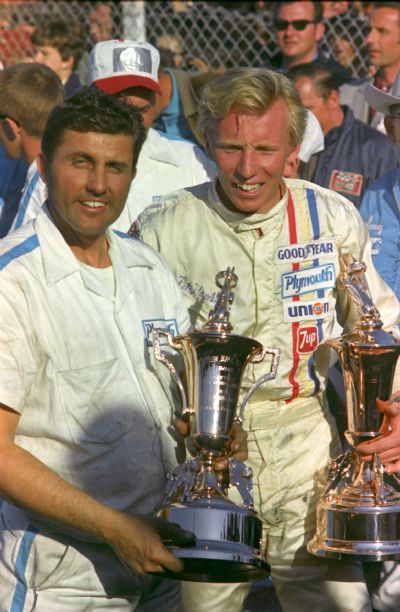
February 22, 1970: Pete Hamilton from Dedham, Massachusetts - yes, MASSACHUSETTS - wins the Daytona 500 in a winged Plymouth Superbird.
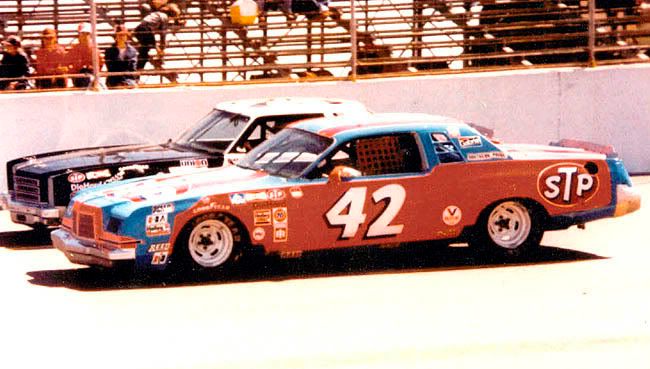
As the 1970 season opened in January, the Pettys fielded a second Superbird at Riverside's road course. But it was for road course ringer Dan Gurney, the car wasn't originally built by Petty Enterprises, and the color and font of the number 42 didn't remind anyone of a Petty entry.
The arrangement with Gurney was a one-race deal. In the same month as the Riverside race, Petty Enterprises and Chrysler Corporation announced the hiring of Hamilton for a limited number of races the rest of the season, and Pete's car was assigned #40 - a number not previously fielded by PE and never used again after Hamilton's single season with the team.
Hamilton won honors as the 1968 NASCAR Grand National Rookie of the Year, but he couldn't land a solid ride in NASCAR's top series in 1969. He was delighted to be hired by the factory-supported Petty team in 1970 and planned to make the most of his new gig. With a team headed by Richard's brother and engine builder, Maurice "Chief" Petty, Pete didn't take long to make his presence known. He laid down a solid qualifying lap, started sixth in his 125-mile qualifying twin, and finished fifth in it - one spot better than his teammate, King Richard. Their finishes in the twin placed them nose-to-tail, 9th and 11th, in the starting line-up for the 500.
Chief was masterful as Hamilton's crew chief with solid pit strategy and keeping the young and relatively inexperienced driver calm as he made each stop. Note the lack of a window net for the driver. Use of the nets didn't come into favor until after The King's violent wreck at Darlington two months later.
Hamilton and David Pearson, the two-time and reigning NASCAR Grand National champion, swapped the lead a couple of times over the last few laps.
Coming to the white flag, Pearson gave it his all to dive under the
40. But his Holman & Moody Ford broke traction, his tires went up in smoke, and the Silver Fox did an incredible job regathering the wheel and regaining his pursuit. Hamilton pulled away for three-quarters of the lap. Pearson shoved his accelerator through the firewall in an effort to catch the Superbird. But Pete had too much and beat Pearson to the line by about 3 car lengths.
Photo courtesy of Richard Guido
To the victor belongs the spoils such as:
The congratulatory embrace from your crew chief.
Hardware for the trophy case
Credit: Daytona Beach Morning Journal
And maybe best of all, nice snug hugs from the pretties, including from Miss Hurst Shifter, Linda Vaughn.
Parts of the race including the finish were aired on ABC's Wide World of Sports. Keith Jackson - better known for his Whoaaa Nellie college football calls - was the lead anchor the iconic Chris Economacki from National Speed Sport News on color.
The start of the race - with pole sitter Cale Yarborough setting a fast pace early... and an early departure by The King. He completed only seven laps, broke an engine, and finished 39th in the 40-car field.
And the finish - with the battle between Pearson's Ford and Pete's Plymouth.
Article courtesy of Jerry Bushmire
Pete's surprise win earned him a feature article in the June 1970 issue of Stock Car Racing magazine.
Article courtesy of Jerry Bushmire
Edited 2013-02-26: Here is a photo of the winner's trophy. Its on display at the Georgia Racing Hall of Fame in Dawsonville.
I continue today with round two of what is likely now a four-part blog series about the expected and realized great times enjoyed by many - including me - during four days in
Charlotte for the Coca-Cola 600, the 20th anniversary of the founding of the Schaefer racing experience, and all related trappings.
Thursday evening, we ripped a mighty Whoooo! upon seeing the two Richard Petty Motorsports Fords sweep front row. On Friday morning, Schaefer Hall of Fame co-founder Philly, Schaefer Ring of Honor member Brian "200WINZ" Hauck, WINZ' son, and TMC spent several hours at ground zero of where the Petty racing family began - in Level Cross, North Carolina.
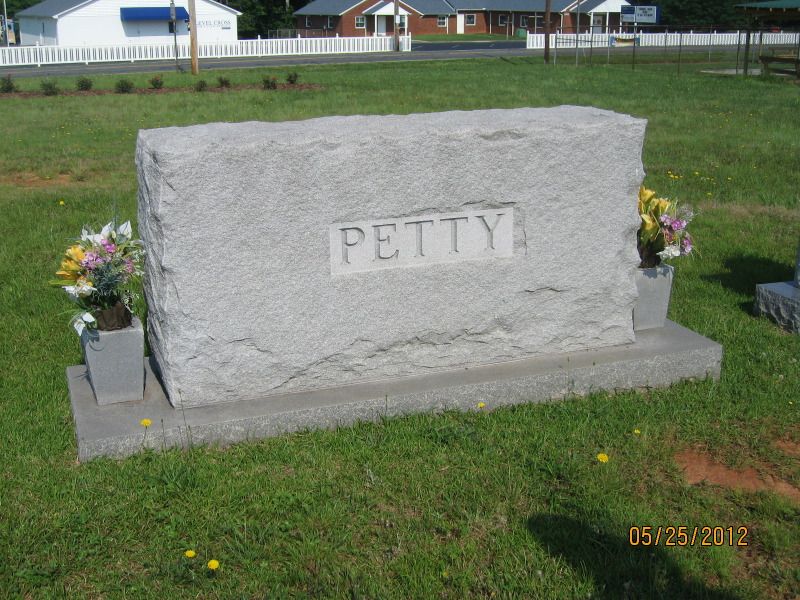
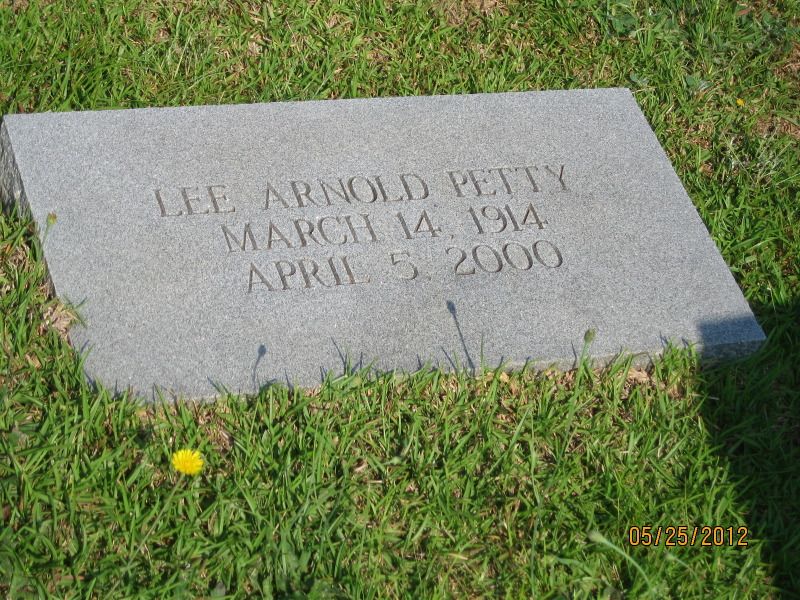
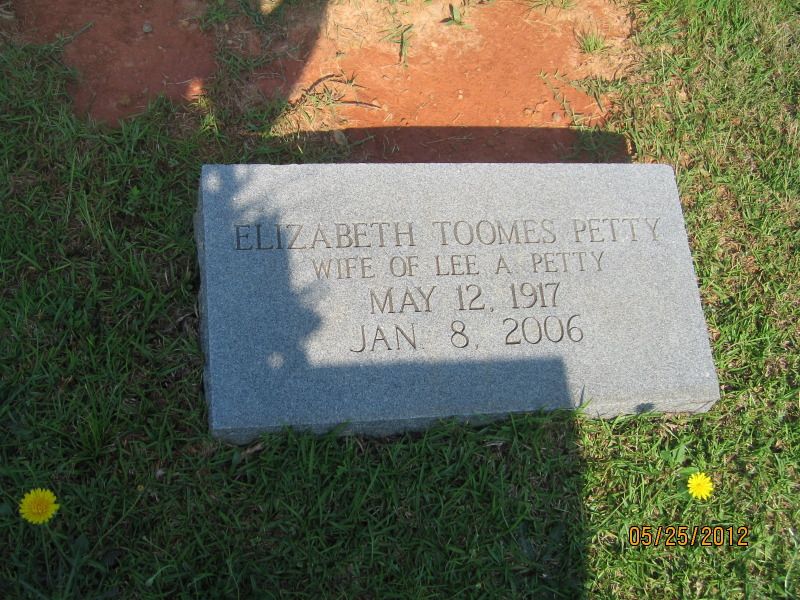
The first stop for Philly and TMC was at the Level Cross United Methodist Church cemetery to pay our respects. Buried there are the parents of Richard and Maurice Petty - NASCAR Hall of Famer, 3-time Grand National champion, and 54-race winner Lee Petty and his wife, Elizabeth.
Mrs. Petty's maiden name was Toomes so I suppose her grave marker could technically be referred to as a Toomes Stone.
In front of the Petty plot was one for another Toomes family. While I didn't take pictures of it, we did study the dates and names. The husband Toomes was born within a couple of years of Elizabeth Toomes Petty leading us to believe he may have been her brother and Richard's uncle. Next to him lay his wife whose maiden name was Staley. My mind began to wonder. Is it possible she was related to NASCAR driver, Gwyn Staley? Gwyn was from Burlington, NC - not terribly far from either Greensboro or Level Cross. Lee and his brother Julian were originally from Greensboro, and Lee later moved to Level Cross. Gwyn drove a few NASCAR convertible races for Julian. So with racing bringing folks together on a personal and professional level, I suppose my hypothesis may have some merit. And yes, feelers have already been extended to someone in the area to see if I can glean new info.
Leaving the church, Philly and I made the short hop to the Level Cross Volunteer Fire Department - Station No. 43 of course. The department was in the processing of installing a a brand new sign just as we arrived. We'd like to think this may have been the first (or near it) photo taken of it - complete with a recognizable font for their station number.
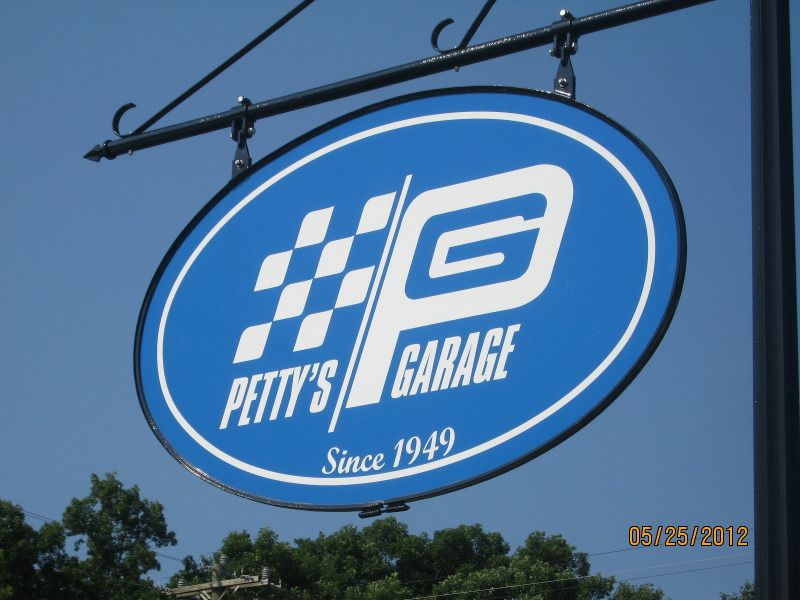
With only a brief stop to watch the sign installation and say hello and thanks to the fireman, we re-loaded for the ride down Branson Mill Road to Petty's Garage. I visited Petty's Garage (blog entries) and the Richard Petty Museum (blog entries) about a year ago - but immediately hoped for the opportunity to return.
Upon arrival, we were told we could look around the main 'showroom' (the red-floored shop of what used to be the Petty Enterprises race shop) and peek a bit at the projects. But we were also cautioned that we shouldn't be out on the floor getting in the guys' way as they worked on cars and prepared for the next day's Petty Fest.
Acknowledging the basic 'rules', we browsed around the main room. I won't recap all of the stuff we saw because a lot of the cars were the same ones I mentioned in my blog a year ago. However, we did note a couple of standouts.
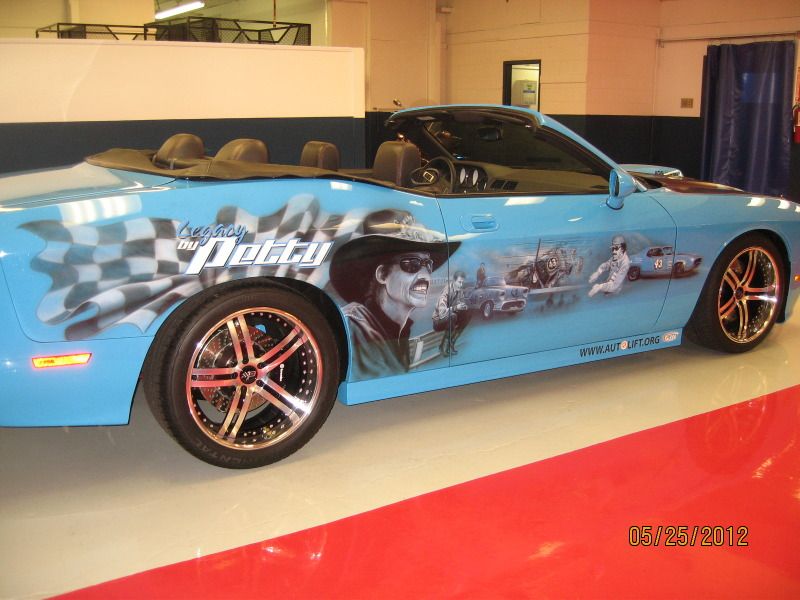
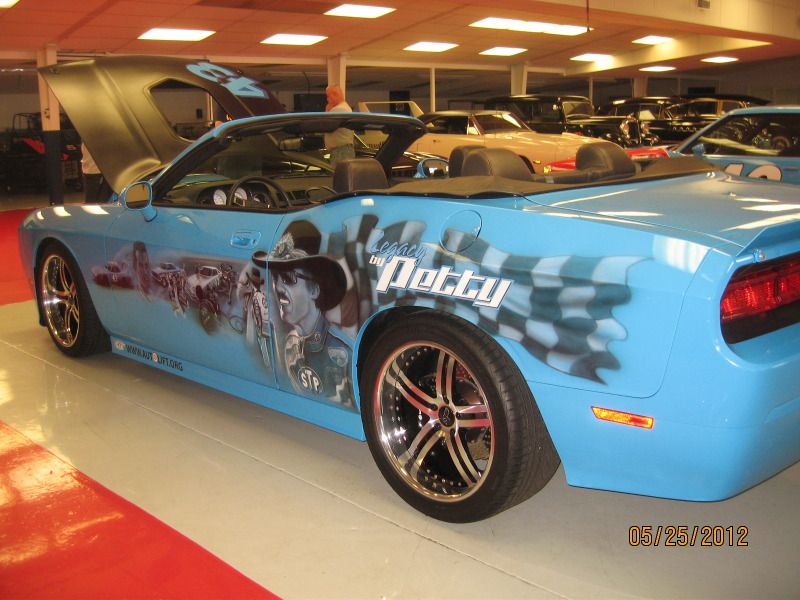
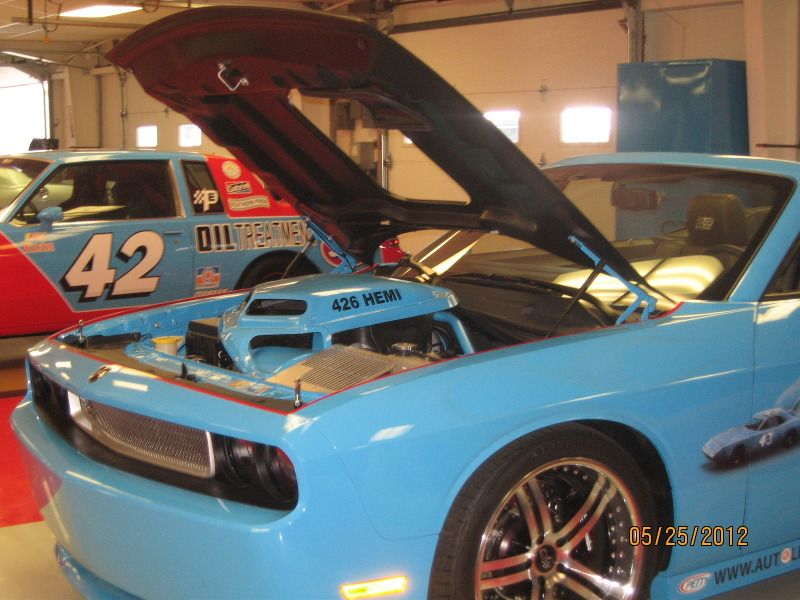
I got a much better view of the Legacy By Petty custom-built convertible this year. This thing is just sick. You can't fully appreciate the detail of the hand-painted collection of Petty images on both sides without standing right next to the door.
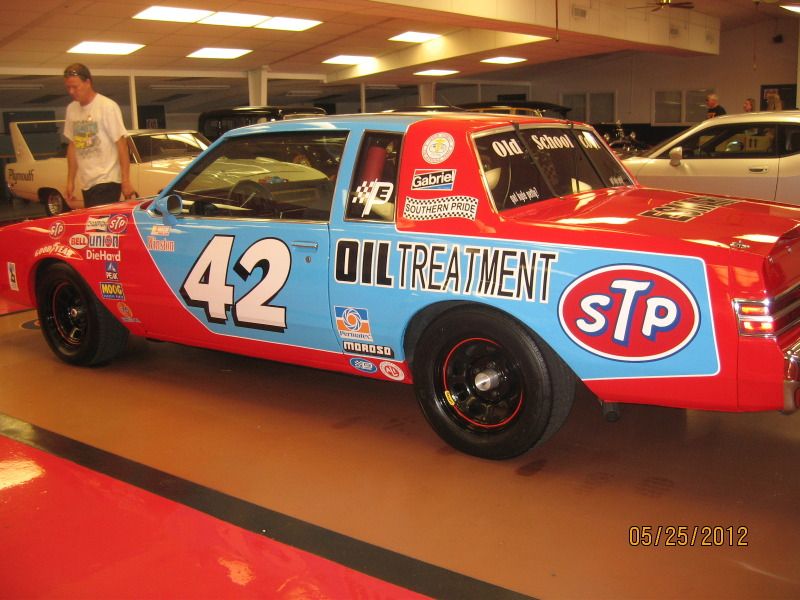
I was also taken aback when I spotted Old School Cool. This street version 1981 Buick Regal with Kyle Petty replica paint scheme is owned and was restored by Jim "Member #77" Boyle. Jim is a fellow Petty fan who posts regularly on a couple of Petty-themed message boards I frequent. Petty's Garage helped him with fabrication and installation of a few of the pieces on the car. It was a true pleasure seeing Jim's work up close. You can see a few more photos of his project here and an article about his restoration here.
After browsing around a couple of minutes, however, I began to get the itch. We wandered towards the shop floor with the hopes of spotting Doug Murph who'd been kind enough to give me a two-hour tour last year. We found him, and I reminded him of my visit and his courtesy a year ago. As expected, he really didn't have any recall of me. The more I talked about the good time I had, however, I think he began to have some slight recall. I told him I wanted to show Philly some of the same legendary yet abandoned rooms of Petty Enterprises. He looked at us, smirked, and said "You know your way around. Go wherever you want to." With that, we were off.
A handful of restoration projects were underway on the floor including:
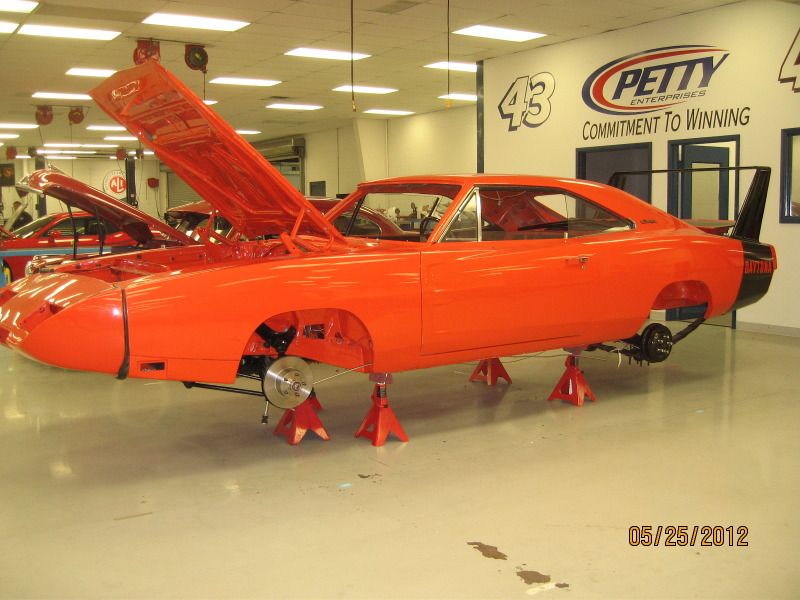
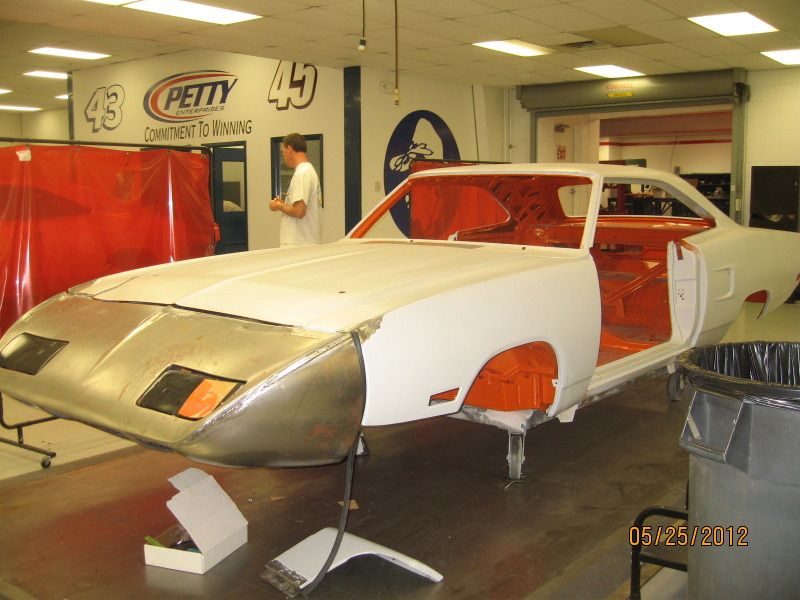
A 1969 winged Dodge Daytona...
A 1970 Plymouth Superbird
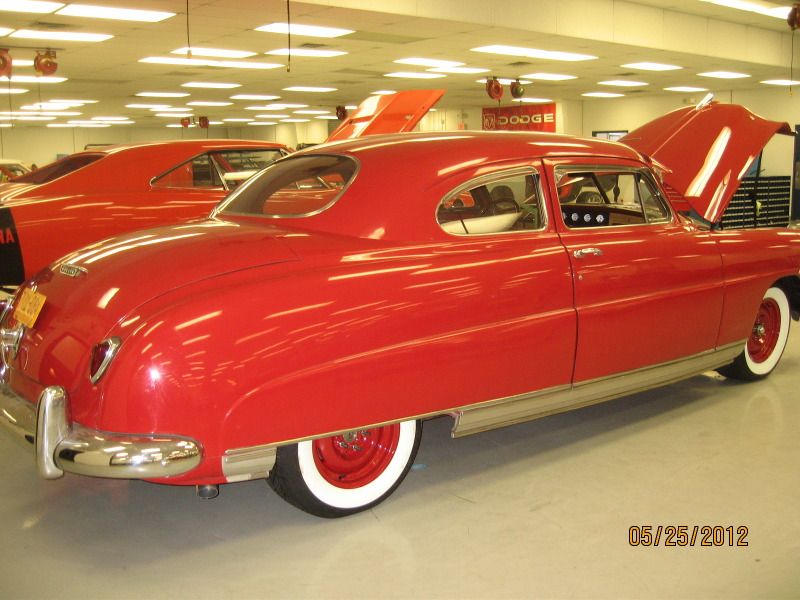
A Hudson Hornet...
...whose engine I'm quite sure isn't a stock one from the 1950s era. Vroom!
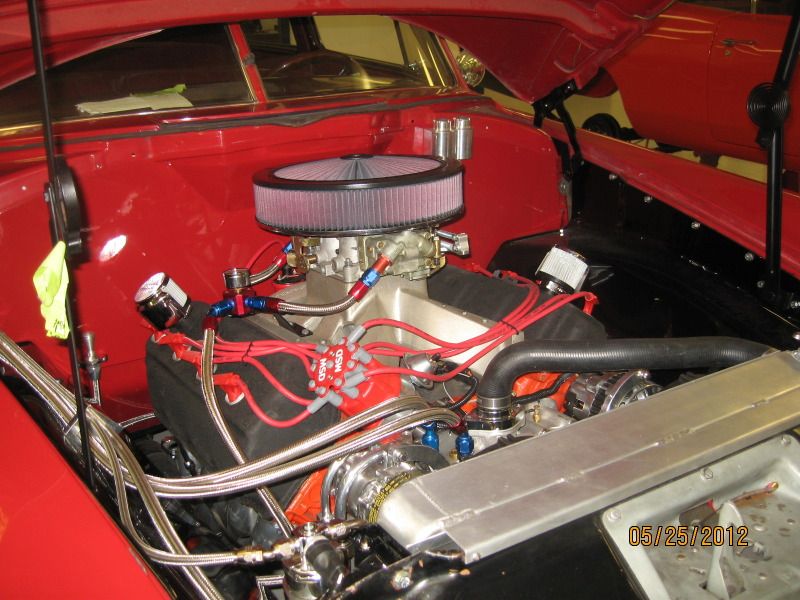
A Ford pick-up truck 'shoebox' project. This is going to be be a long, tedious, expensive restoration.
We then wandered throughout other rooms of the shop finding nary a locked door. Fans of Petty Enterprises likely know the shop was essentially built one room/shop at a time over the decades as needs arose. Floor elevations and thresholds from one room to another don't always align. There isn't a natural 'flow' throughout the buildings as is found in contemporary race shops. Yet these buildings are where magic happened for about 50 years.
Championships for Lee and Richard.
More than 250 wins for Lee, Richard, Kyle and Adam Petty.
Victories by hired guns such as Pete Hamilton, Jim Paschal, Joe Millikan, Buddy Baker, Bobby Hamilton, Marvin Panch, and others.
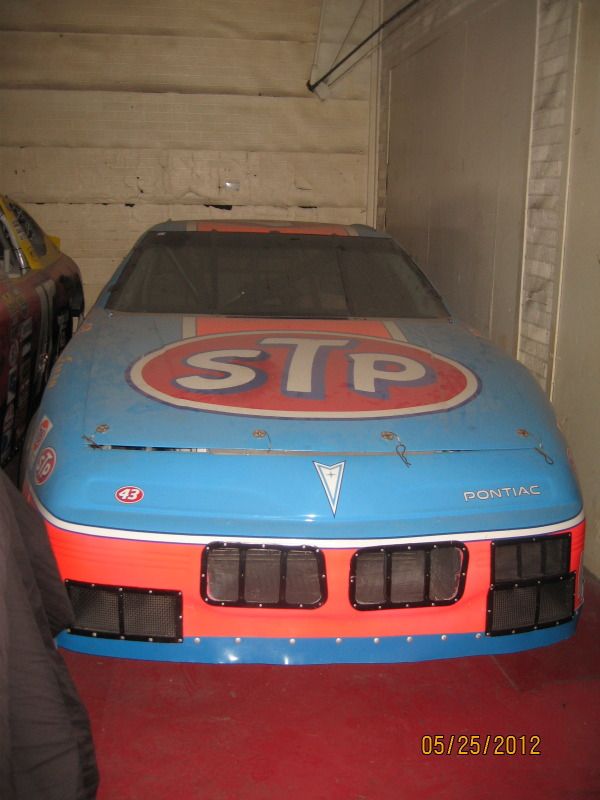
I again found Maurice Petty's old dyno room, PE workbenches, racks of mounted tires, etc. The musty, dust-laden air smelled richly of racing history. Then opening another door, we stumbled across a room packed with old Petty cars previously driven by more contemporary drivers such as Kyle Petty, John Andretti, Jeff Green, and Bobby Hamilton - including this mid-90s STP Pontiac.
We then opened a door, received a greeting of sunlight, and realized we'd exited the back of the shop. Doug toured me back there somehow last year. However, we stood a good ways' back from the back of the property then. He described some of what we saw, told some funny and memorable stories, and then led me back into the shop.
I wanted to explore more during this trip. For the next few pictures, many may think the old vehicles look like hunks of junk. But for me, the rusting bodies screamed racing history and questions of "wonder what this one is all about?"
Some of the neat finds spotted were:
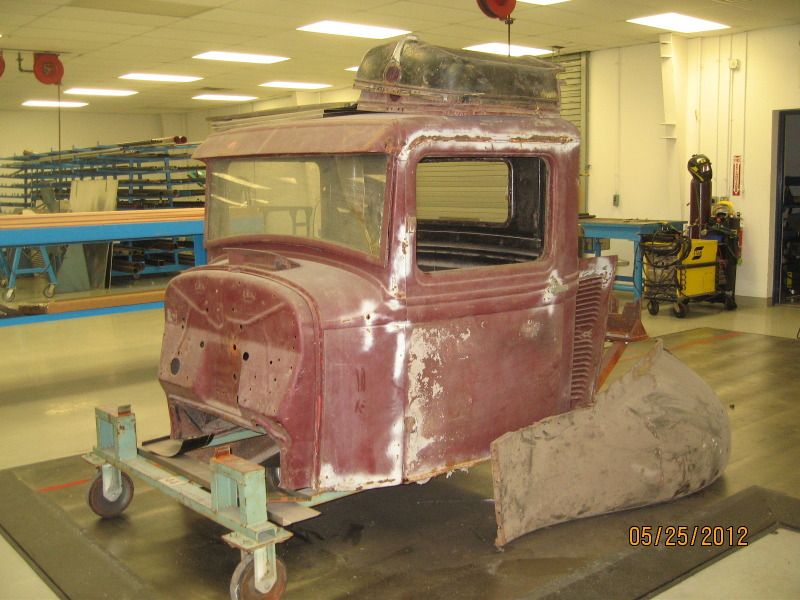
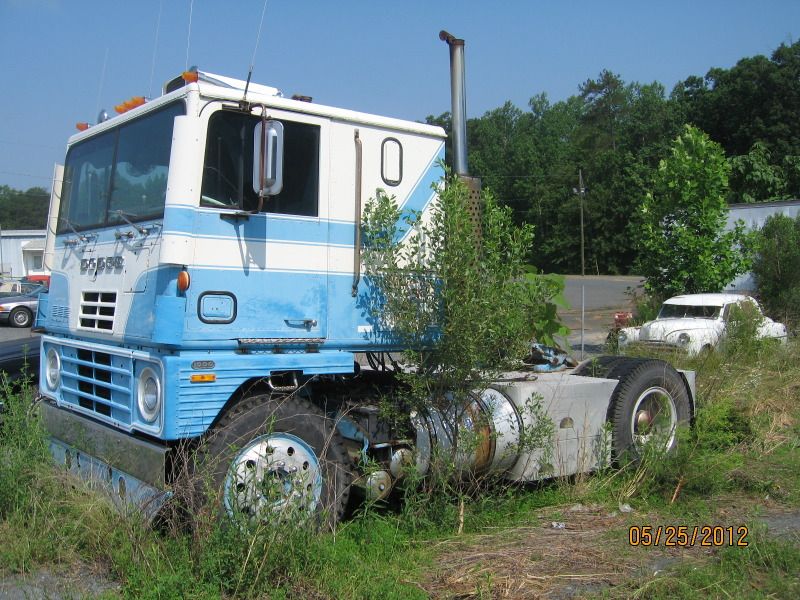
An old Dodge tractor cab that once hauled the famous Dodge by Petty 43 Chargers of the 1970s.
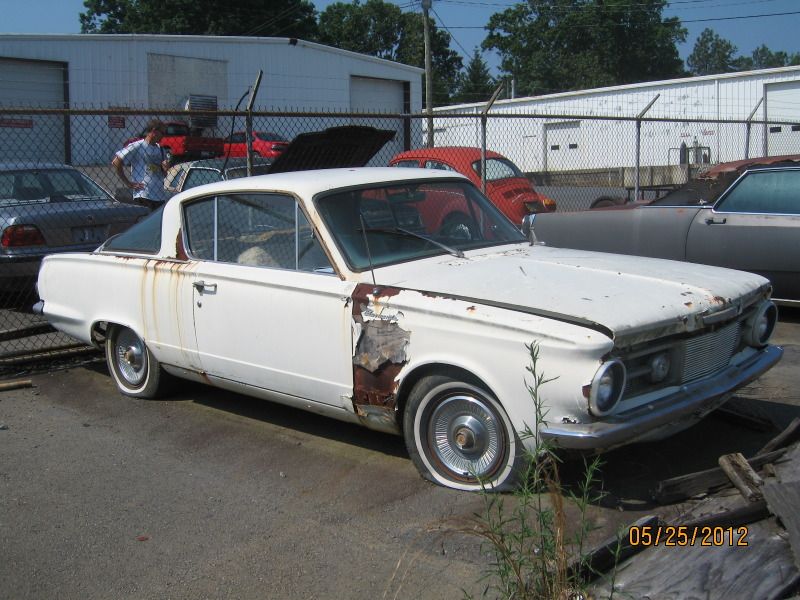
A mid 60s Plymouth Barracuda
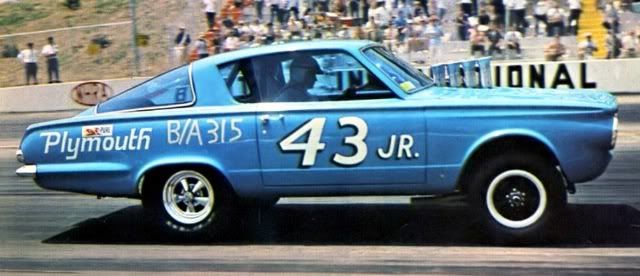
Newer racing fans may not realize the King drag raced a Plymouth Barracuda in 1965 while a boycott by Chrysler Corporation kept the Petty's factory-backed Plymouths off the NASCAR circuit for several months.
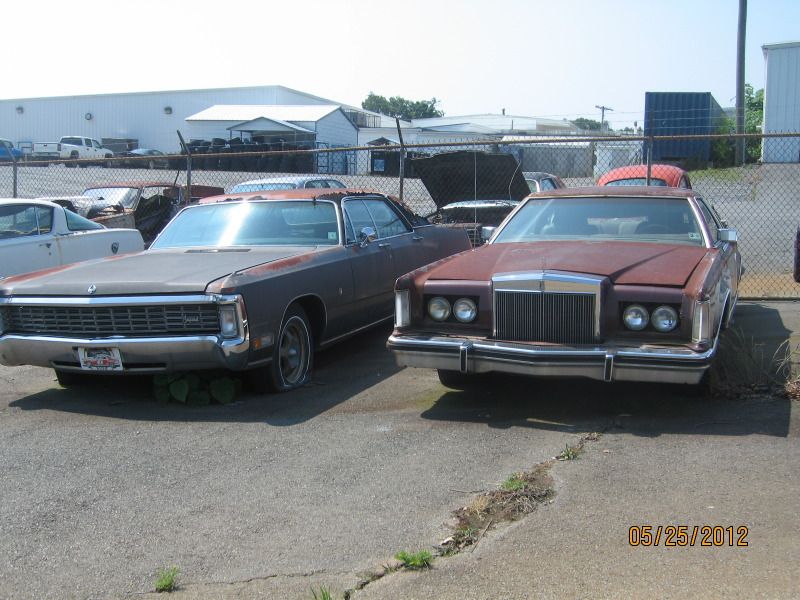
An old Chrysler Imperial and Lincoln parked side by side. One of my uncles introduced me to racing in 1974. I still remember a huge Chrysler he drove - probably not too far in body year as this one. It was more of a powder blue vs. a Petty blue. But he definitely tried to get one colored as close as possible to his favorite driver's car color. The hoods on these things were longer than a drive across a Kansas prairie.
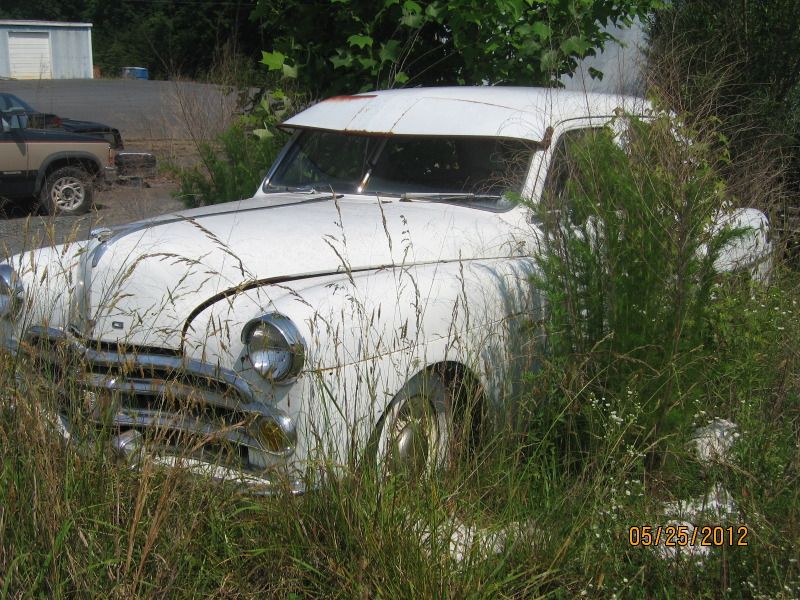
An old 1940s era Dodge languishing in the weeds.
I've got a Racing Champions die-cast of Lee Petty's car I think was designed based on a similar era Dodge Lee drove.
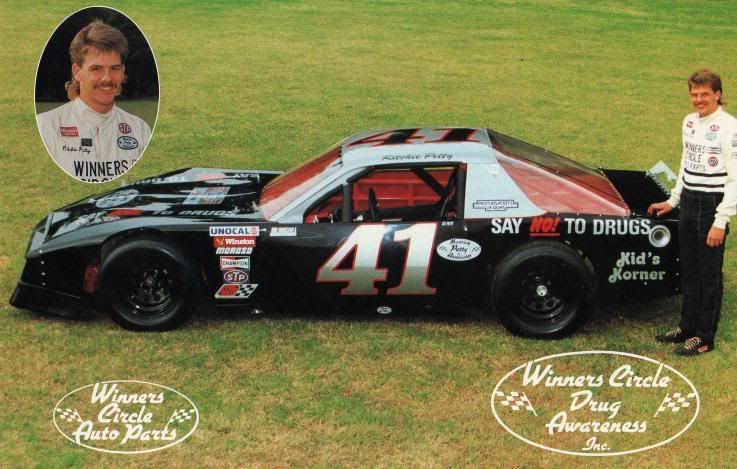
In the early 1990s, Maurice Petty's sons, Mark and Ritchie gave racing a shot just as their cousin, Kyle Petty, did. (Today, Mark and another brother Tim are involved with NASCAR as engine tuners with Richard Childress Racing.) Mark and Ritchie started with late models with limited sponsorship from a Winner's Circle Auto Parts. The company was a fly-by-night operation for whom Maurice was a spokesman.
We noticed this old box truck likely used to tow the late model to area short tracks.
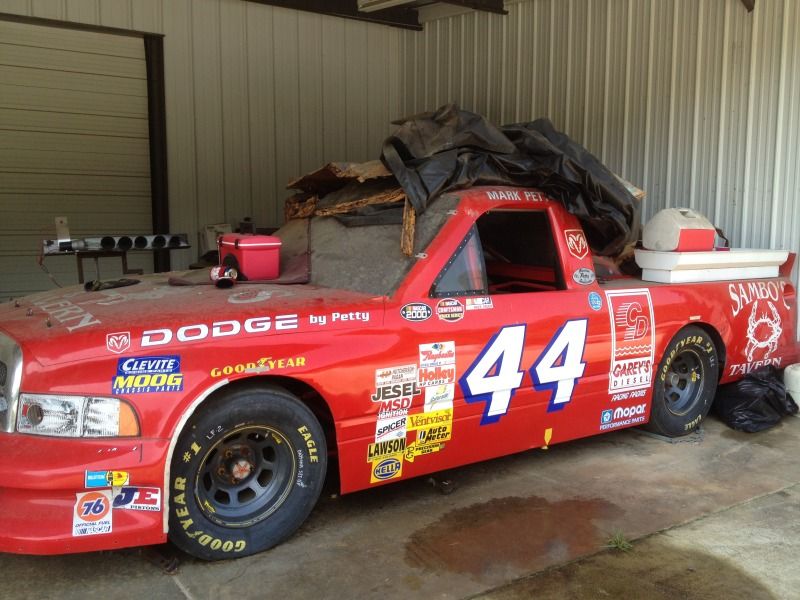
Mark Petty made nine starts from 2000-2001 in the NASCAR Craftsman Truck Series (now sponsored by Camping World). Parked close to the back building under a roof was his Dodge Ram from the 2000 Dover race.
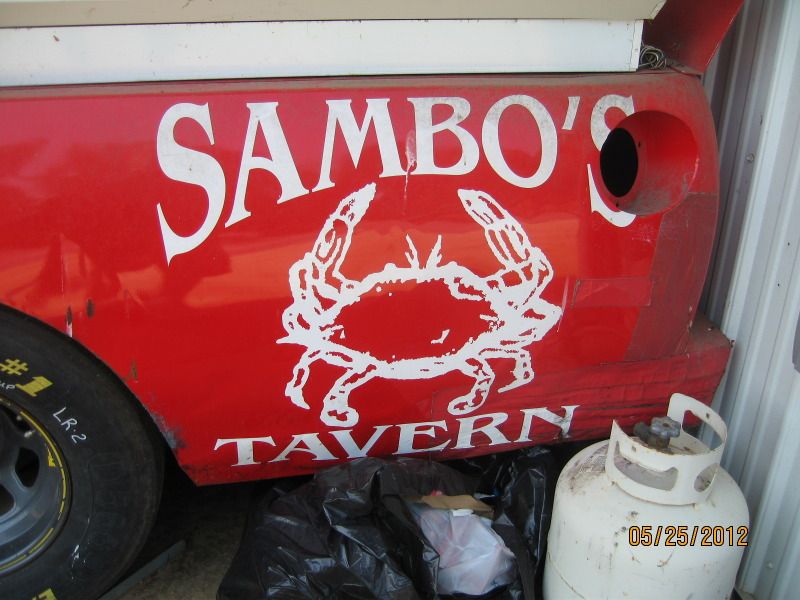
A couple of clues helped me hone in on the specific race for the truck. One, the NASCAR 2000 decla by the A-post. Two, Sambo's Tavern is the place we ate dinner last fall near Dover where we met King Richard. Of Mark's starts, only one was at Dover in September 2000.
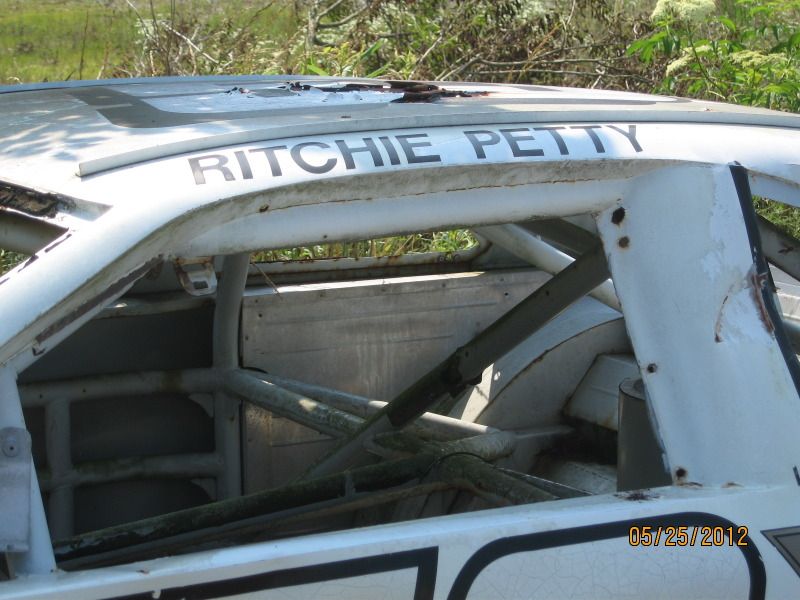
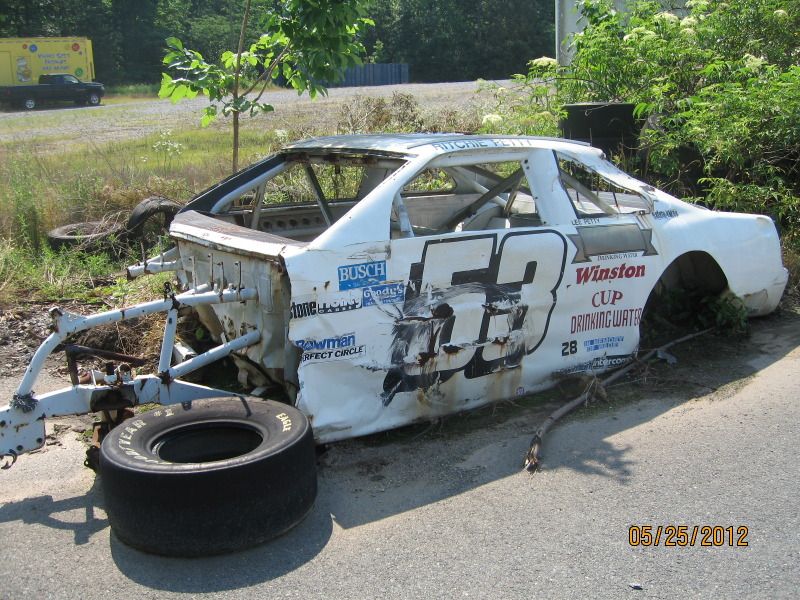
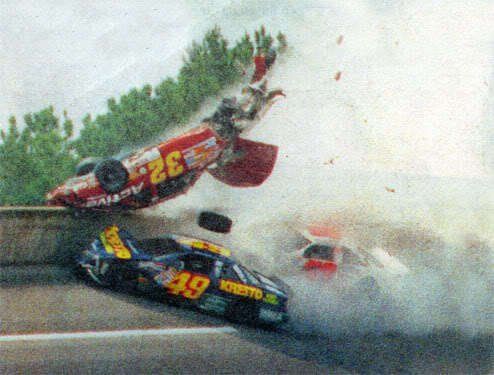
At the edge of the paved lot sat the remains of Ritchie Petty's #53 Ford. As best we can tell, this is the car involved in the multi-car, turn one wreck during the 1993 DieHard 500 - one at which Philly and I attended.
Here is a better view where Ritchie's car can clearly be seen along with Jimmy Horton as he leaves the yard and Stanley Smith who took an impact angle similar to Dale Earnhardt's crash at Daytona in 2001. Safety crews arrived almost too late to Smith. Suffering a tremendous blood loss in the crash, he nearly became a fatality at the track. Fortunately, the safety crew was able to reach him, stabilize him, and get him to the hospital for surgery and recovery.
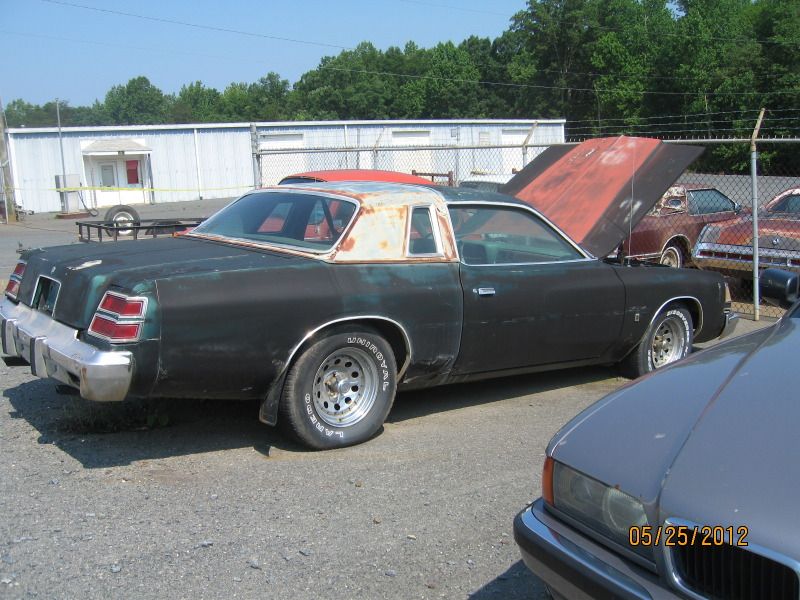
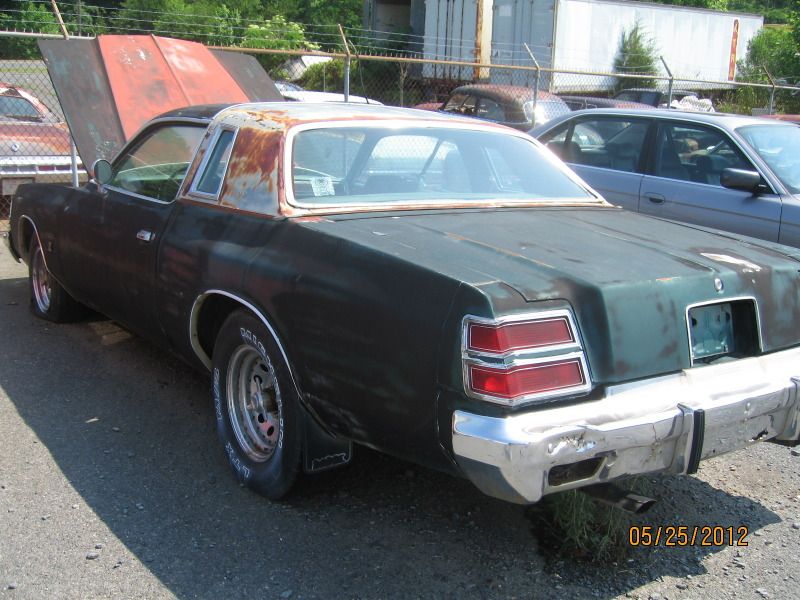
An odd-colored Dodge Magnum from the late 70s.
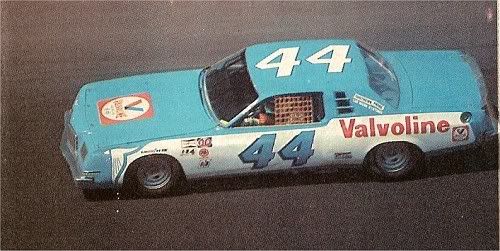
The King drove a Dodge Magnum for about two-thirds of the 1978 season. He finished third driving the Magnum in the first Cup race I saw at Nashville. Taken as a whole, however, the Dodge simply wasn't consistently competitive. Petty switched to Chevrolet as the season wound down and stayed with General Motors until 2000.
The boxy Magnum figured prominently in the early phase of Kyle Petty's career. Kyle won the 1979 ARCA 200 at Daytona in his very first race start driving a hand-me-down, discarded Magnum from Richard.
The team prepared another Magnum later that season as a Winston Cup car, and Kyle drove it to a ninth place finish in his first career Cup start in the 1979 Talladega 500.
Some Plymouth by Petty sheet metal.
We then went back inside the shop to meet up with 200WINZ and his son who had just arrived. The four of us explored a storage building where several additional treasurers awaited us. Among the things we found were:
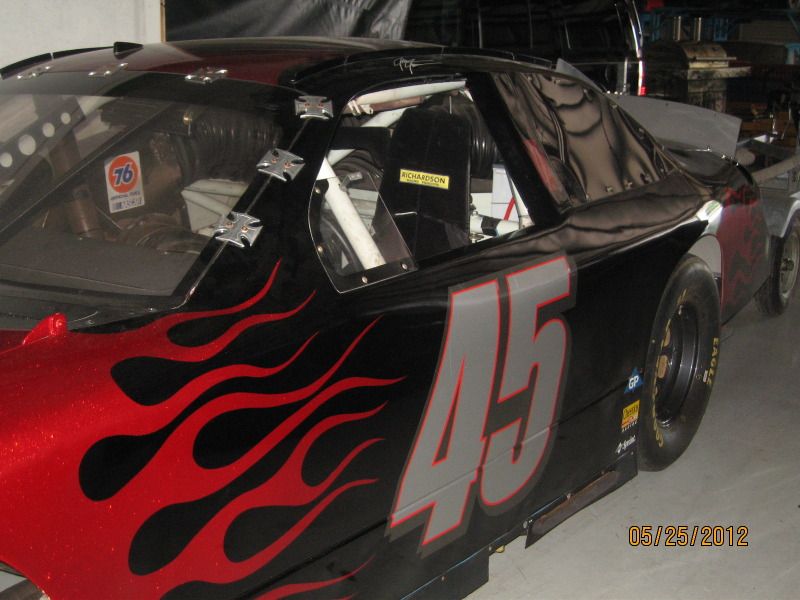
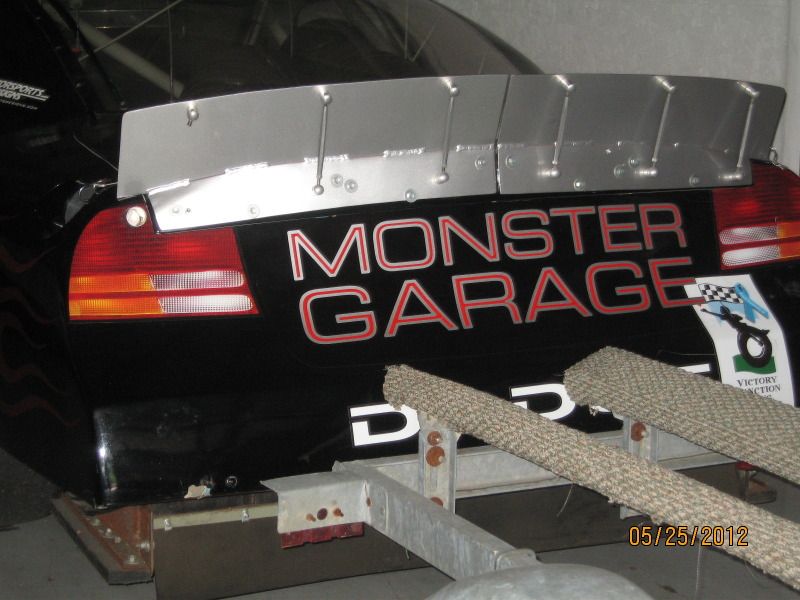
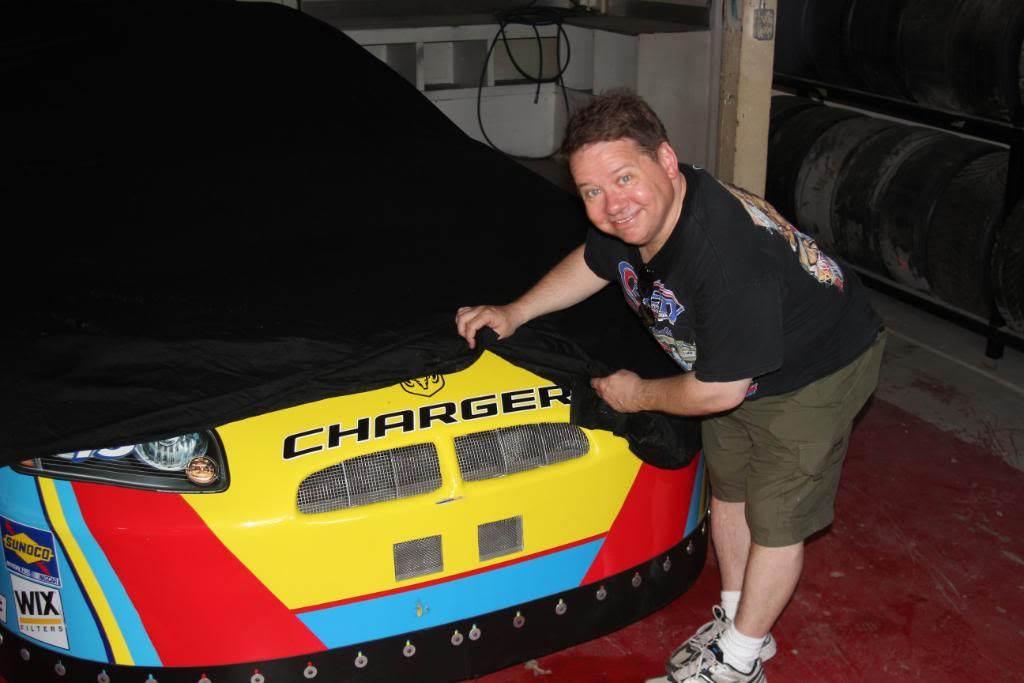
The NASCAR street sweeper built from a Kyle Petty Dodge Charger by Jesse James during the first season of his show Monster Garage. If you didn't see the episode back in early 2000s, here is an article about the build and a few photos from it.
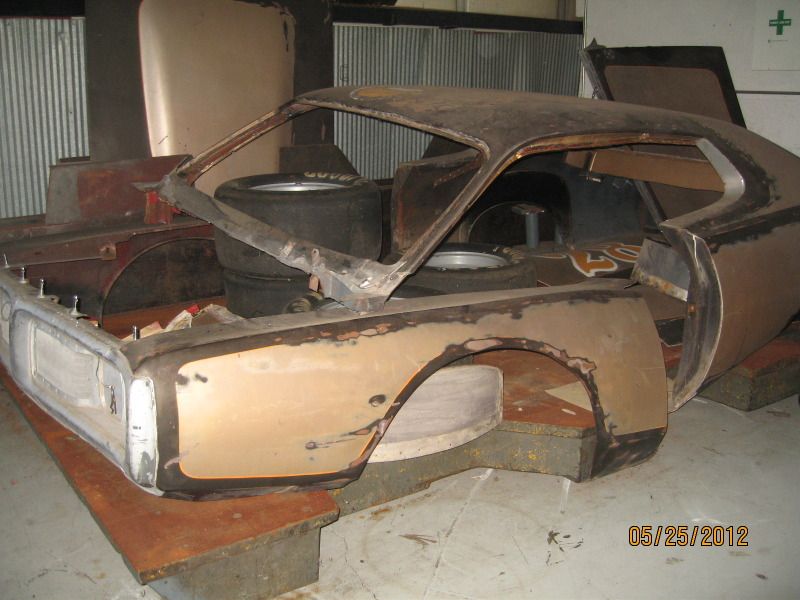
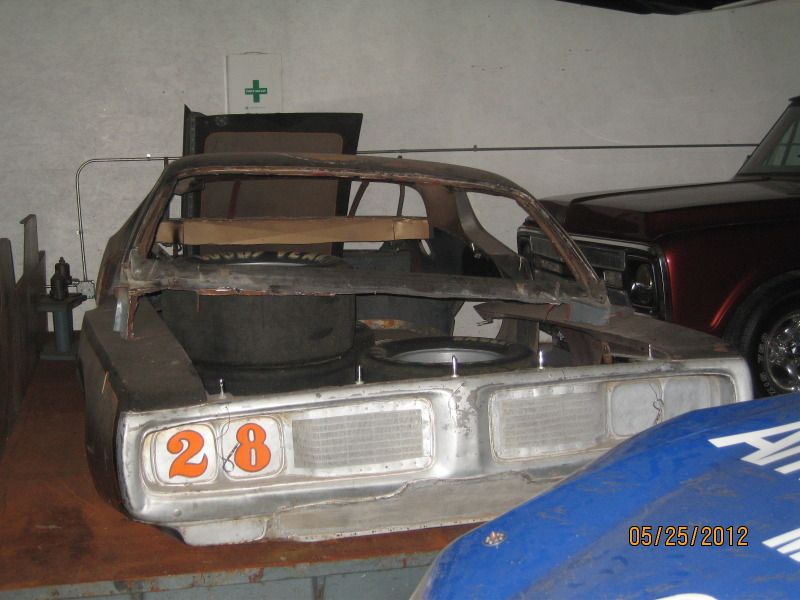
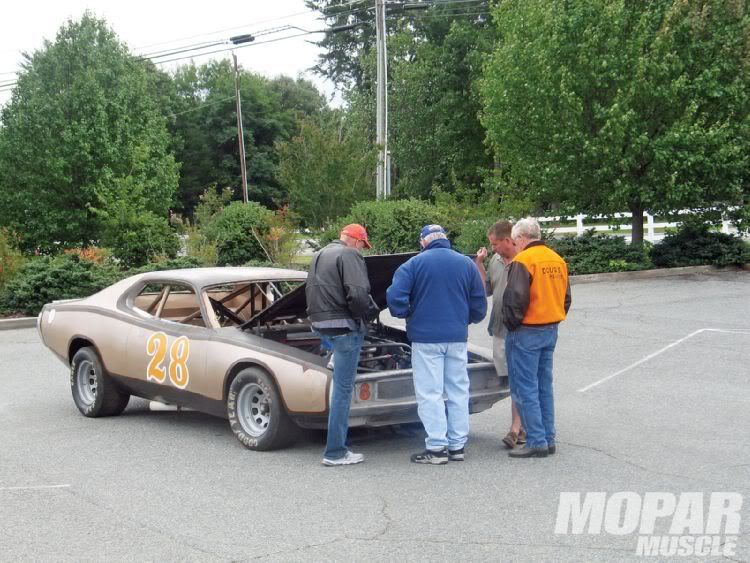
In the corner, we stumbled across an interesting but puzzling pile of body panels. Piled up were a grill, front and rear quarter panels, roof, and rear deck from a 1974 #28 Dodge Charger.
I began to rack my brain thinking of any Cup team from the 70s that may have raced a #28 Dodge. I recalled Hoss Ellington fielding a #28 Chevy for drivers such as A.J. Foyt and Donnie Allison - but that was it.
In discussing the car with 200WINZ, he had a vague memory of reading something on the web about the car. With a few Google searches, we honed in our answer.
One of the early - and coolest - projects by Petty's Garage was the restoration of the Petty Enterprises - built 1970 Plymouth Superbird driven by Pete Hamilton to victory in the 1970 Daytona 500. I knew about the PG project, but I didn't realize the old car had been re-skinned as a 1974 Dodge Charger, repainted and raced as a #28 late model along the west coasts. The body panels we spotted were apparently the discards after the #40 'Bird was re-skinned to its original Plymouth look.
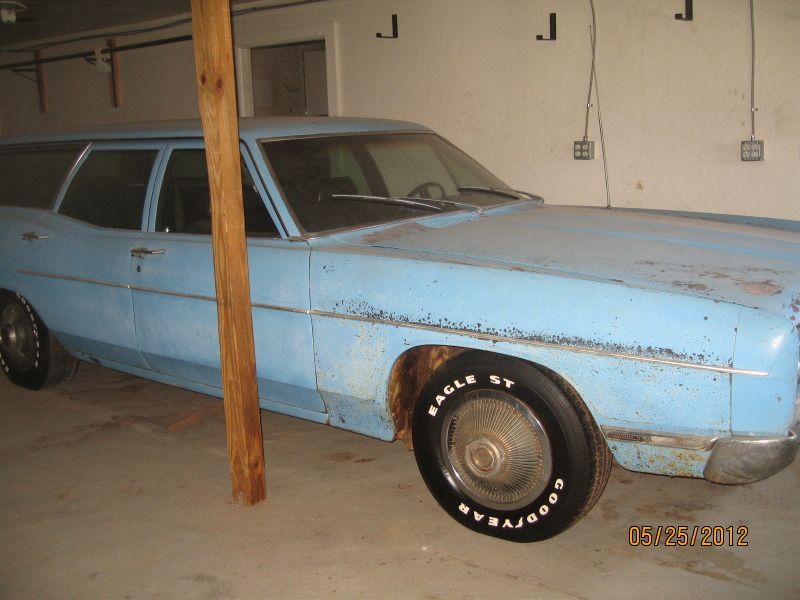
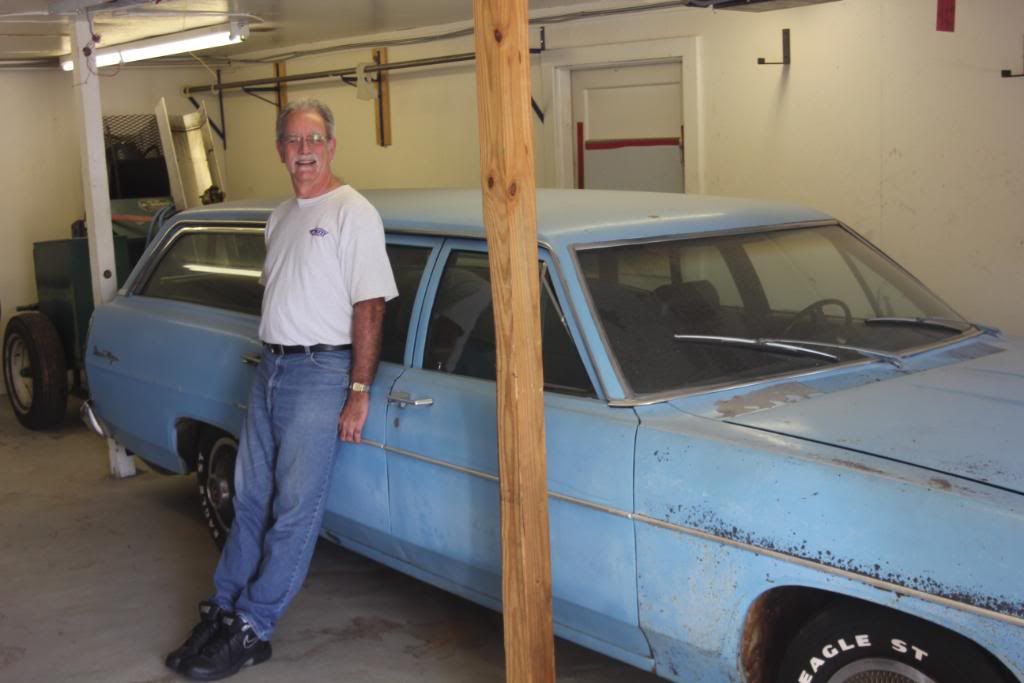
Our final find had all sorts of relevance. Stored inside the original, single-car, 'reaper shed' built by Lee Petty as he began his racing career was a 1969 blue Ford station wagon.
The wagon was originally driven by Lynda Petty, Richard's wife. Richard later sold the station wagon to someone in Randleman area. Amazingly, the man held onto the car over the years, and Richard recently re-purchased it. Presumably, the car will be restored back to its original factory look.
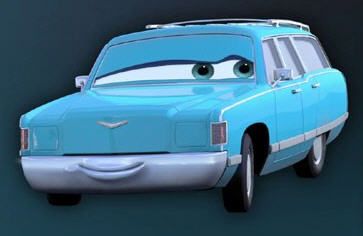
Fans of the Disney/Pixar movie Cars may recall the character of Mrs. The King (voiced by Lynda) was ... a blue station wagon.
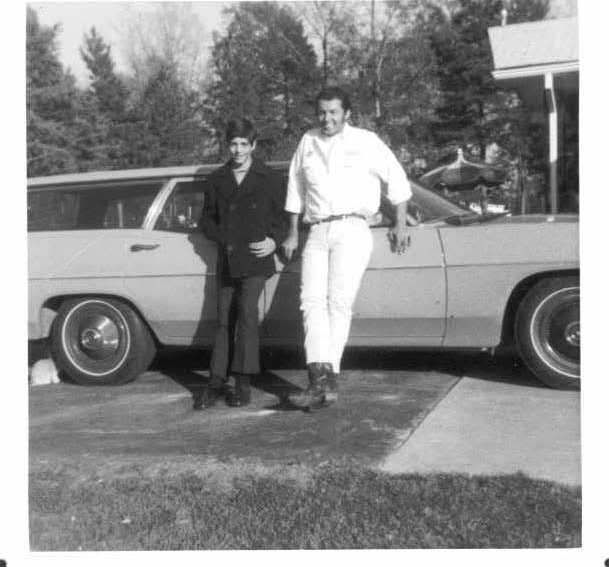
In addition, 200WINZ had his photo taken as a kid by the same station wagon the first time he met The King in 1969.
Roger Penske announced earlier this year his team will switch to Ford beginning in 2013. Since then, questions have been asked, and rumors began to fly. Who would become the new Dodge team(s)? Who will build the engines. Will Front Row Motorsports jump? What about Ganassi? And as many Petty faithful have suggested "I hear Petty's teams will make the switch."
So who knows - what was once old may become new again.