Showing posts with label curtis turner. Show all posts

Saturday, April 3, 2021

April 3, 1966 - Hickory 250

NASCAR's Grand National drivers arrived in Hickory, North Carolina in the spring of 1966 for the Hickory 250, the first of two races at the 4/10-mile dirt track that season.

Through the early part of the schedule, David Pearson led the points despite not having won in the first eight races of the schedule. The big...err, mild storylines for Hickory, however, surrounded two surprise entrants.

A few days before the race, Petty Enterprises filed an entry for Richard Petty and the blue #43 Plymouth. Having missed a couple of races for hand surgery following his second Daytona 500 win in February, the Pettys thought about focusing mainly on the larger purse races and skipping many of the short tracks. Instead, the Level Cross bunch opted to race at Hickory - and all but a handful of races the remainder of the season.

The other entrant who turned some heads was Curtis Turner. Ford planned to introduce the Fairlane as a comparative car to their standard-bearer Galaxie. The Fairlane was to have debuted with Turner at Asheville-Weaverville before Hickory; however, snow postponed the race until June. The next planned outing was to have been at Bristol in March, but NASCAR DQ'd the car because its wheelbase was too wide. The third attempt at Hickory turned out to be the charm. Holman Moody built the #41 white and red-lettered Fairlane though history seems to note Turner's car was fielded by the Wood Brothers on race day.

Source: Asheville Citizen-Times
Independent Elmo Langley won the pole - the only one of his career. Many recall Langley's post-driving career as NASCAR's pace car driver for the Cup series in the 1990s. Pops plopped his Fairlane on the front row alongside Langley. Ned Jarrett's Ford and Pearson's Dodge made up the second row.

Turner got the jump on Elmo at the start and led the first three laps before Langley rallied back to lead a single one. Jarrett's slate blue Ford then took over as the lap bully by leading the next 138 consecutive laps. Unfortunately for Jarrett, he led them in the mid stages of the race before spinning off the nose of Turner's Fairlane late in the race as Ned tried to throw a block-pass. He had to settle for a third place finish.

As Jarrett's lap-leading streak ended, Pearson took over the top spot in Cotton Owens' Dodge. He led nearly two dozen laps before Petty took his Plymouth to the point for a few laps. The King - who was uncertain about even entering the race - may have second guessed himself for doing so. In addition to not holding the lead, Petty looped his car a couple of times and had to settle for a 10th place finish, 14 laps down to the winner.

As tough a day as Petty experienced, Buddy Baker had an even tougher Oh yeah? Hold my beer day. He survived to see the checkered flag but was FORTY-EIGHT laps down to the winner after three spins. At most short track local shows these days, a driver spinning three times to bring out a caution usually gets parked by track officials.

As the race entered its final 80 laps, Turner shoved his Fairlane back to the lead. The Blue Oval camp had to be loving life as the wily veteran slid his brand new Ford through the clay corners. 

With fifty to go, however, Pearson decided it was go time. He dispatched of Turner and set sail. He pretty easily held off Curtis to notch his 14th career win, and Mopar fans cheered as the Ford contingent left scratching their dirty noggins about what might have been. 

 
Source: Spartanburg Herald
TMC

Saturday, August 27, 2016

August 27, 1966 - Myers Brothers Memorial

On August 7, 1966, Richard Petty won the Dixie 400 at Atlanta International Raceway. The primary storyline from the race involved Junior Johnson's infamous Yellow Banana Ford driven by Fred Lorenzen and Smokey Yunick's black-and-gold Chevrolet driven by Curtis Turner. Both cars had all sorts of questionable parts and body shaping, yet both were allowed to race. Many were upset at the spectacle though the fact neither car won helped settle folks down a bit.

Following Atlanta, Turner agreed to what was expected to be a one-race deal in Junior's Ford at the next race in Winston-Salem, NC. Though his career had started to wind down, he wanted to give the fans and fellow competitors a fair night of racing if they felt they didn't get that at Atlanta.

The Myers Brothers Memorial 250 at Bowman Gray Stadium was scheduled for Saturday, August 13th - the weekend following Atlanta.

Persistent rain scuttled everyone's plans, and the race was postponed until Saturday, August 27th. So instead of the Turner-Johnson venture starting at Bowman Gray, fans got to see Pop finish third at Columbia Speedway.

When the teams returned to Bowman Gray for the rescheduled race, two drivers who eventually claimed the greatest number of wins in GN/Cup racing - Richard Petty and David Pearson - claimed the front row. Petty won the pole in his '66 Plymouth with Pearson qualifying second.

Everyone, however, had their eyes on the second row starters. GN noob Bobby Allison plunked his trusty red and white #2 Chevelle in third spot, and Turner lined up fourth in Junior Johnson's Ford. Apparently, the two of them decided to join forces again for a second race following Columbia.

Turner was the good-time-having, natural-talent, racing veteran. Allison was a relative upstart. Though he'd had success with racing throughout the southeast, Allison started only a handful of GN races prior to the 1966 season. Though he lacked experience racing against the Big Dawgs, the one thing he did not lack was confidence.

Source: Kannapolis NC The Daily Independent
Kim Chapin included a recap of some fan-stirring action during the Myers Brothers Memorial in his November 28, 1966, Sports Illustrated article about Bobby Allison's arrival in Grand National racing.
Winston-Salem is not an important race on the NASCAR Grand National calendar. The purse is not large, the points toward the driving championship are not many, but everybody shows up, as they had nine days before that at Columbia, SC, for a bit of fun at 100 miles around a half-mile dirt track. At that one, Allison, racing in his own red-and-white 1964 Chevelle, sat on the pole, and Turner, in a yellow 1966 Galaxie owned by Junior Johnson, started beside him. Just before the starter's green flag dropped, a strange announcement came over the track loudspeaker. An unidentified person had just offered Turner $500 if he could lead the first lap. Turner went over to Allison and said, in effect, that if Bobby would let him by, $250 of that was for Bobby.

"I didn't think the first lap would mean too much," Allison said, "and so I agreed." But almost immediately the race turned into a seven-car scramble with a whole lot of fender-slapping going on, heavily involving Allison, Turner and David Pearson. "A lot of people thought the Turner thing started right there," Allison said, "but that wasn't so." (The $500 wasn't so, either. Turner did lead the first lap, but later discovered the offer had been a prank.)

At Winston-Salem, Turner got on Allison's tail and started shoving him all around the track. Allison did the only thing he could. He let Turner's Galaxie get past his Chevelle and began bumping Turner, a natural action but a violent breach of etiquette, which states quite clearly, although as informally as the English constitution, that rookies shall not tangle with their elders, especially if that elder happens to be Curtis Turner. It was now Turner's move, and when he got the opportunity he moved in under Allison and hooked him - spun him out. Again Allison retaliated in the only way he could. He spun Turner out. That ended the preliminaries.
Source: Southern MotoRacing
By now Turner was a bit more than unhappy with the way the evening was going. He waited on Allison and, when he got the chance, clobbered the little Chevelle broadside. Allison limped to the infield with a dead engine. Dead engine? Not on your life. Turner came around again, this time following slowly behind the safety car, which was leading the pack, yellow caution flags fluttering, while the track maintenance crews cleaned up the debris. By now it was difficult to find an unmarked piece of metal on either car. Allison's "dead" engine suddenly roared to life and - bop-po - he returned Turner's compliment by slamming him broadside. Both drivers got out of their wrecked cars and without a word returned to the pits.
Source: Southern MotoRacing
"I didn't want to do what I did," Allison said, "but I felt I had to. I wasn't happy about it. In fact, I was nervous all the time I was doing it. We really did a job on each other."

That race started and ended the Allison-Turner trouble, apparently with no hard feelings. But NASCAR was not convinced. On the Saturday before Darlington's Labor Day Southern 500, Allison and Turner were paged over the track loudspeaker for an audience with Lin Kuchler, NASCAR executive manager, and Johnny Bruner Sr., a tough old-timer who is the field manager for NASCAR. Kuchler, young and sincere, made a couple of bad jokes and said something like I'm sure there aren't any hard feelings left but if there are let's not tell anybody about them. We love a good image. Now let's shake hands and that will be $100 each, please, for your trouble. Bruner added, "Yeah, I don't imagine there are any hard feelings left, either, but just in case there are, the next time one of you guys tries something like that you both get suspended for the year." 
While all had their eyes on Turner and Allison, Pearson and Petty kept their focus on the race. When the green flap fell, Pearson got the jump on Petty's 43 to take the lead. He stayed there for almost the first 100 laps.

With Pearson hitting the pits for service, Turner took over the lead for a few laps before the fireworks intensified between him and Allison. After the two hot heads found themselves on the sidelines, Petty found his groove. Ol' Blue grabbed the lead when the race went green again, and the King towed the field around Bowman Gray's quarter-mile track for 113 laps.

Pearson followed Petty's tire tracks the entire time. Then with about 30 laps to go, Pearson passed Petty and led the rest of the way to sweep the Bowman Gray's two 1966 GN races. (Pearson also won the track's 200-lap Easter Monday race over Tiger Tom Pistone and Petty in April 1966.) The race was the 16th of 63 times the two drivers finished in the top two spots.

Turner raced yet again for Junior the following week in the Southern 500 at Darlington. After a sponsor-mocking performance at Columbia, the run-in and wreck with Allison at Bowman Gray, and another wreck at Darlington, Junior had seen enough. He fired Pop, pulled himself out of retirement, and drove his own car the rest of the season.

TMC

Thursday, August 18, 2016

August 18, 1966 - Sandlapper 200

NASCAR's Grand National drivers arrived in South Carolina on August 18, 1966, for some short-track racing on a hot, summer, Thursday night. The Sandlapper 200 was scheduled as a 200-lap race on the half-mile, dirt Columbia Speedway.

Eleven days earlier, Richard Petty won the Dixie 400 at Atlanta International Raceway. The big storyline from the race - even more so than Petty's win - involved two tricked-out cars by legendary innovators and car owners Junior Johnson and Smokey Yunick. Fred Lorenzen raced Junior's infamous Yellow Banana Ford, and Curtis Turner belted into Smokey's Chevrolet. Both cars had all sorts of questionable parts and body shaping, yet both were allowed to race. Many were upset at the spectacle though the fact neither car won helped settle folks down a bit.

Turner felt like folks took life and racing a bit too seriously. Following Atlanta, he agreed to what was expected to be a one-race deal in Junior's Holly Farms-sponsored car at the next race at Bowman Gray Stadium. Though his career had started to wind down, he wanted to give the fans and fellow competitors a fair night of racing if they felt they didn't get that at Atlanta. The Bowman Gray race was postponed a couple of weeks because of rain. Turner agreed to stick with Junior at the next race anyway which turned out to be at Columbia.

In his book Silent Speedways of the Carolinas, author Perry Allen Wood describes Turner's arrival in Columbia with his good faith gesture:
Holly Farms wanted Curtis to look good and told him for the race he had to wear a suit. And he did...a business suit. "I dipped this one in the fireproof stuff this morning," Turner explained to the throng of onlookers glued to his every move. He loosened the tie a bit, hiked up the long sleeves some, and sans jacket, stuck that baby on the front row to everyone's delight. ~ p. 66
Turner's show and front-row qualifying run upstaged the pole winner. Bobby Allison was all business, and he laid down a track record lap to nab the pole. Petty, David Pearson, and Elmo Langley rounded out the top five starters.

Wood continued in his book with a recap of the night's racing action:
When the big field roared off, Turner bulled his way past [Allison's] little Chevelle and took the lead. It was very tentative, but he held it for 134 laps with Allison, Pearson, Petty, [James] Hylton, [Dick] Hutcherson and [Buddy] Baker beating and banging away behind him.

Other fun took place on lap 17 when a furiously-racing Tom Pistone was passing them as he got to them and lost it entering turn one. Tiger struck the railing at the perfect angle to launch the two-tone blue '64 Ford over it and into the lighted sky, then into darkness. It nosed harmlessly down, settling among the small trees and shrubs fringing the backside of the first turn embankment. ~ p. 66
Turner made his only scheduled stop, but it didn't go according to plan. An excruciatingly slow stop pinned Turner deep in the field - but it also gave the fans plenty to watch as Pop picked his way back through the field.
Petty was out for a couple until pesky and popular number 2 scooted under and Allison had the lead. The Hueytown Hustler held the point for 30 laps until his 327 cubic inches started wilting.

On lap 167, unstoppable David Pearson powered past Petty and ambushed Allison for the lead... With Turner screaming past a rapidly fading Allison and closing on the others, a three-car Armageddon was at hand.

With less than five to go, [J.D.] McDuffie got crossed up and ditched his Ford along the backstretch for 12th, bringing a caution flag that doused a surely explosive finish. Under the yellow, Pearson rolled to the checkered flag with Petty and Turner lined up right behind. Even though nearly 10,000 enthusiasts did not get to see the incredible race to the wire that was inevitable, no one felt cheated. ~ p. 67 

Pearson claimed his fourth consecutive Columbia win in the '66 Sandlapper 200. Also, the race was the fifteenth of 63 times Petty and Pearson finished in the top two spots.

TMC

Thursday, August 7, 2014

August 7, 1966: A day of Blue and Yellow

Three years ago, I began a year-long project of blogging about each of Richard Petty's 200 wins. As I routinely reference many of the entries, I realize how little detail I included about the races as I began the series as compared to my content as I started winding down the series 10-12 months later. I've continued to tweak many of the blog posts as I learn new info, correct errors, find another photo or two, etc. - but I leave the original posted date "as is".

One of my posts was for Petty's win on August 7, 1966 in the Dixie 400 at Atlanta International Raceway. The victory was the King's 48th of his career but his first at Atlanta. I've got much more info I now want to include and decided to blog an entirely new post.

Source: Motor Racing Programme Covers
The combo of blue and yellow at the race track could be interpreted in a few ways such as...
  • The blue flag with yellow stripe move-over flag often displayed to slower drivers as leaders approach them
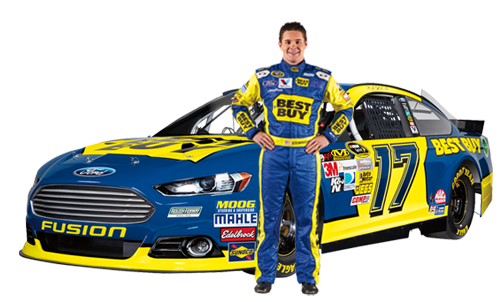
  • Ricky Stenhouse's Best Buy Ford in contemporary times
  • Jim Vandiver in the good ol' days. 
But on August 7, 1966, the two primary storylines at Atlanta were Richard Petty's Petty Blue Plymouth and Junior Johnson's infamous Yellow Banana Ford driven by Fred Lorenzen.

NASCAR made several rules changes to slow Chrysler's hemi engine that dominated many races in 1964. As a result, Chrysler parked its Dodge and Plymouth teams for over half the 1965 season. With stars such as David Pearson and Richard Petty on the sideline, NASCAR finally compromised so the money drawing starts would return.

The compromise didn't sit well with the brass at Ford Motor Company so they sat their factory-supported teams for much of 1966. Cooler heads again prevailed, negotiations were held, some backs were scratched I'm sure, and eventually Ford returned to the series.

Meanwhile, FoMoCo clearly wanted cars on the track to help sell ones in the show room. While the finer points of the rule book were discussed behind closed doors, John Holman of Holman-Moody apparently approached independent car owner and retired driver Junior Johnson about building a car for H-M superstar Fred Lorenzen to race. Junior built a Ford alright - but it didn't measure up against its street counterpart at all.

Source: Ray Lamm collection
Long-time NASCAR journalist Tom Higgins wrote in 2012 for ThatsRacin.com:
Junior and his crew arrived at the track with a car that immediately ignited a barrage of fireworks and howls of protest from rivals. The car was supposed to be a Ford, but its profile looked like nothing that had come out of Detroit.

The front sloped downward, the roof was cut very low and the rear end was raised. Because the car carried sponsor Holly Farms’ yellow paint scheme, it was likened to a banana. 

Smokey Yunick, another imaginative car builder, had brought an equally strange-looking Chevelle to Atlanta for driver Curtis Turner.

A ruckus raged over both cars, but they were cleared to race by NASCAR, which rejected three other machines, including those of Ned Jarrett, Bernard Alvarez and Cotton Owens, fielding a Dodge for David Pearson. Owens’ car was rigged with a device to lower the vehicle from the cockpit after the race started.

Turning away Jarrett, Alvarez and Owens – while clearing the cars of Junior and Smokey – further fueled an already incendiary situation.

“I realize that Lorenzen and Turner are valuable drawing cards,” said an irate Owens. “But that doesn’t make what’s happening right.”

The discord doubled, both among fans and competitors, when Turner won the pole at 148.331 mph. Lorenzen qualified third fastest.

“I built the car because John Holman was a friend and he asked me to help him out,” a smiling Junior Johnson said years later. “He said, 'Build me something that will run,’ and I did.

“We had a heck of a time getting through inspection. We took that car to body shops all around Atlanta, making changes before we got it close enough for NASCAR to approve.”

Read more here: http://www.thatsracin.com/2012/03/08/83199/junior-johnsons-one-off-draws.html#storylink=cpy
Though the two primary storylines may have been the Petty and Lorenzen cars, they weren't the only ones. As referenced in Higgins' article, Curtis Turner won the pole in Smokey Yunick's #13 Chevrolet. Earl Balmer in Nord Krauskopf's Dodge timed second. The Banana started third - right behind Turner's car.


Turner had raced only a limited GN schedule since Bill France reinstated Turner in 1965 from a 'lifetime ban'. And Smokey had fielded cars in less than a dozen Grand National races - total - since 1961. Yet here was the pairing with the quickest lap at Atlanta. Many believe Holman wanted that Junior Johnson specially-built Ford to run as a counter to what was expected to be a similarly tricked-up Chevy out of Smokey's Best Damn Garage in Daytona Beach.

The race had a double-helping of Petty Blue as Marvin Panch drove a second Petty Plymouth. It was Pancho's second of four starts for the Pettys in 1966. Unfortunately he lost the clutch, ended up in the fence, and finished 28th.

Ol' Blue and the Yellow Banana side by side - albeit in Black and White.


Schaefer Ring of Honor member "Bruton" (also known to many as as GaPettyFan) recalls:
The 1966 Dixie 400 - my first race and I had yet to even turn three. I don’t remember the events prior to the race, but my grandfather told me later that on the pace laps he picked up one of us while my Dad hoisted my twin brother. They pointed out Ol’ Blue and told us, “See that blue car? That’s Richard Petty. That’s who we pull for.” The King won my first time out! He started fifth, led 90 laps, and earned $13,525 for his efforts. [TMC: dang good memory for a kid who was three at the time!] My Dad had a brand new, bright red ’66 Chevelle that was gorgeous. He got good and drunk that day. After the race some poor schmoe backed into it. My Dad immediately jumped out of the car (my Grandfather was driving) and wanted to fight the guy. Yes, I come from impressive stock. I was so scared I peed all over myself. Sadly, I remember that part.
The big personalities of the race, however, didn't deliver. Turner lost a distributor in Smokey's engine around the halfway point of the race. Then a few laps later, Lorenzen blew a tire, slipped on a peel, and wrecked Junior's Yellow Banana. After starting first and third, the two cars finished 23rd and 24th.

Meanwhile, who spent the most time up front? The Mopars - the brand that dominated in 1964 - routinely flexed its muscle again in 1966. The Petty Blue 43 Plymouth paced the field for 90 of the race's 267 laps, and Buddy Baker led 62 laps en route to a second place finish in Ray Fox's Dodge.

Petty flashes across the finish line as he takes the checkers.


Time in victory lane never sucks - especially when you're the King.

Source: The Tennessean
Article courtesy of Jerry Bushmire
TMC

Friday, June 28, 2013

June 28, 1958 - Lee Petty Horse Collars Hickory

June 28, 1958:  Starting ninth, Lee Petty wins the Buddy Shuman 250, a 250-lap, 100-mile race at Hickory Speedway in Hickory, NC. Records weren't maintained about lap leaders, so its unclear how much of the race Lee led.

Greg Fielden writes in Forty Years of Stock Car Racing - Vol. 1:
Lee Petty pushed his Oldsmobile across the finish line a single car length ahead of Junior Johnson to win the 100-mile race at Hickory Speedway. Speedy Thompson came in third, right on Johnson's bumper ... Officials were forced to wave the red flag in the 25th lap when heavy dust conditions made driving unsafe. After utility trucks toured the .4-mile oval for 15 minutes, the the race was restarted. ~ p. 309
Julian Petty, Lee's brother, fielded three cars for the race. In what must have been a genuine facepalm race, none of the three had quality finishes. Possum Jones, Bob Welborn, and Ken Rush finished 19th, 27th, and 29, respectively, in the 31-car field.

Buddy Shuman was a pioneer of NASCAR's early years. He was among the few dozen individuals invited to the Streamline Hotel in Daytona Beach, FL by Bill France Sr. in 1947. The meeting resulted in the formation of NASCAR. In an abbreviated career, he won once in a 29-race Grand National career. His one victory came in the first of only two GN / Cup races outside of the United States - a 1952 win near Niagara Falls on the Canadian side of the border. (Coincidentally, Lee Petty won the second, non-US race at Toronto in 1959 in which Richard Petty made his first Grand National start.)

Sadly, Shuman perished from smoke inhalation in a hotel room fire at the age of 40 in 1955. Hickory Speedway honored Shuman's legacy by renaming one of its annual Grand National races the Buddy Shuman 250. The name was continued from 1956 through the final Grand National race run at Hickory in 1971.

NASCAR also established the Buddy Shuman Award to be presented annually for "outstanding contributions and loyalty to automobile racing." Past winners of the award include:
  • Herb Thomas
  • ESPN
  • Dr. Jerry Punch
  • Dick Beaty, longtime NASCAR inspector
  • TV and radio announcer Ken Squier
  • Richard Petty 
  • John Holman (of famed Ford car builders Holman & Moody)
  • Bob Bahre, founder of what is now New Hampshire Motor Speedway
  • Dr. Joe Mattioli, founder of Pocono Raceway
  • Bud Moore
  • Smokey Yunick
  • Lee Petty
  • Goodyear
  • Benny Phillips, longtime writer for High Point Enterprise
  • Richard Childress
Source: Spartanburg Herald via Google News Archive
While many of the Grand National drivers were racing in Hickory Saturday night, one of NASCAR's true characters - Curtis Turner - was in Charlotte filing a police report on Saturday morning.While this news clipping is short on details, Curtis' reputation for hard partying makes this news long on speculation and laughter.

Source: Spartanburg Herald via Google News Archive
Hickory Motor Speedway still operates today with a regular slate of local, late model racing. The track can be found on the web and on Twitter.


TMC

Saturday, March 2, 2013

March 2, 1958 - Lee Petty Challenges Curtis in Concord

March 2, 1958:  Lee Petty wins a 200-lap, 100-mile race at Concord Speedway in Concord, NC. Or did he?

In his book Full Throttle: The Life and Fast Times of NASCAR Legend Curtis Turner, Robert Edelstein writes:
... [Turner] starts 1958 driving mostly Grand National races for Holman-Moody. In the first six races he runs in the premier series, he wins twice but there are about twelve thousand fans in Concord, North Carolina who believe he's won three times. The hundred-mile race there in March ends in controversy as Turner takes the checkered flag only to lose four days later when a complaining Lee Petty claims he's won, and presents his wife Elizabeth's scorecards as evidence. After days of studying the cards, Petty is declared the victor, even though Turner had seemed to lead every lap. "That Mama Elizabeth," he says, "has the fastest pencil in NASCAR." ~ p. 114
Fans, Turner, and the press left the track believing Turner had indeed won the race. 

Source: Spartanburg Herald-Journal via Google News Archive
Four days later, however, NASCAR modified the finishing order of the race and declared Petty as the winner.

Source: Daytona Beach Morning Journal via Google News Archive
TMC

Tuesday, August 14, 2012

The (almost) return of Curtis Turner

As I've noted before, I really enjoyed blogging over the last year or so about each of Richard Petty's 200 wins. Not only did I learn a tremendous amount about Petty history, but I also stumbled over some other meaningful minutia and NASCAR nuggets. One example soon to follow...

My memories of 1965 are pretty fuzzy - well, let's just say non-existent. I'm pretty sure its because that was the year I was born. Sleeping, eating, filling my diapers and crying took up the majority of my time. But from what I later learned as a Petty fan, 1965 is remembered as the year The King went drag racing because of Chrysler's boycott of NASCAR. For the first six months of year the year, that's about right. For the second half of the year, differences were resolved, the boycott was rescinded, the Plymouths and Dodges returned, and Petty resumed his winning ways in NASCAR.

By the time I was introduced to Richard Petty, he had over 150 wins and five NASCAR championships. I didn't know about other larger-than-life NASCAR legends such as Fast Freddy Lorenzen, Fireball Roberts, and Curtis Turner. But I learned.

Turner and Roberts were arguably the most iconic NASCAR heroes in the early 60s. Sadly, Fireball lost his life in July 1964 - about six weeks following a gut-wrenching accident and fire in the World 600 at Charlotte. I've heard some suggest his death was felt more acutely by the NASCAR fan base than the passing of Dale Earnhardt - albeit in fewer numbers.

Curtis Turner was a timber man first, a good-time-haver second, and a damn fine race driver third. Legend has it that Curtis could fly over a forest and nail an estimate of how many board feet he could yield from harvesting it. Several stories have also been published about his partying days with fellow driver Joe Weatherly. I only wish I could share a beer with someone who knew about the unpublished stories.

What many don't realize is he was the lead force behind the building of Charlotte Motor Speedway. Bruton Smith will claim otherwise, but Curtis brought that track to life. Bruton tried to build a competing track nearby but was unsuccessful. He eventually partnered with Turner to complete, open and operate CMS.

Curtis had the vision for the project and a name and the stones to get it rolling. What he didn't have as much as was needed was cash. He needed loads of it to operate the track and re-pay construction loans. He apparently signed a deal with the Teamsters Union to invest in the track. In exchange for the cash infusion, Turner agreed to do what he could to help organize drivers into the union. Bill France, Sr. was livid and banned Turner "for life" in 1961.

Four years later, the "life" sentence was rescinded. With the deaths of Roberts and Weatherly and the Chrysler boycott that sidelined the two new superstars - Richard Petty and David Pearson - France needed help.

From the mid-1950s until he was banned in 1961, Curtis was generally known as a Ford driver. He drove other makes in the early 1950s and near the end of his career, but he was most associated with Ford. When his banishment was rescinded by France, he quickly proclaimed he would resume his racing at Piedmont Interstate Fairgrounds in Spartanburg, SC driving ... a Plymouth ... fielded by Petty Enterprises.

Richard had been sidelined from stock car racing himself because of Chrysler's boycott of NASCAR. When he was ready to return, Lee Petty contracted long-time NASCAR car builder Red Vogt to build a Plymouth Fury for Richard to race in the Firecracker 400. For reasons unknown to me, the Pettys didn't make the trip to Daytona. Instead, Richard returned three weeks later at Bristol and then won at Nashville a week later in the Vogt-built Plymouth.

The Spartanburg race scheduled for August 14, 1965, conflicted with a drag racing event Richard in which he had agreed to participate before Chrysler's stock car racing boycott was lifted. Lee Petty and Turner agreed to have Curtis race Richard's Vogt-built, Nashville-winning Plymouth for his return to NASCAR.

Credit: Spartanburg Herald via Google News Archive
One criticism of today's racing is that its too bland. Few legitimate rivalries exist. Everyone plays nice to placate their sponsors and NASCAR's TV image. But back in the day before corporate America and TV arrived, feuds were plentiful and often long-lasting. Turner's return to racing also had the potential of re-kindling rivalries from four years earlier.

Credit: Spartanburg Herald via Google News Archive
Perry Allen Wood writes in his book Silent Speedways of the Carolinas:
Promoter Supreme Joe Littlejohn wanted Turner in a first-class ride for the comeback. So Joe got Curtis in the seat of Richard Petty's 1964 Plymouth Fury 43...In the dusty dusk of that sultry Saturday evening, Curtis warmed up for 15 or 20 laps in one of the most electrifying displays of speed and control ever seen on dirt or maybe anywhere for that matter. That Petty-blue Plymouth thundered down the front stretch, clawing the track as Turner cocked the car for the first turn. When he came through, the nose of that Plymouth was all that was visible from the infield. With that hemi howling, Curtis' big bare hands gripped the wheel fully at right lock...With thick red plumes of dust billowing from the right-side tires, he swung wide and tore down the back chute, choreographing it the same way in three and four...The jam-packed house roared its approval with every lap.

Time trials got underway beneath the lights in what was now a hot, sticky summer dusk...Pearson had timed in for second spot when Turner pulled on to the clay. With the same flair he had show in the gloaming, Turner ripped through his warm-up and set what looked like an excellent first-lap time. Before the PA announcer could broadcast the speed, Curtis flew into the first turn determined to improve on his previous clocking and backed hard into the old wooden fence that had been pounded on for years, with the Fury's right rear spinning back around facing the wrong way. It did not look nearly as bad as it was. Curtis fired it up and limped directly back to the crew by going the wrong way down the slope to enter the pit exit as if he had driven in the west gate. It was announced that his first lap was good enough for third on the grid, and all were sure Maurice would beat out the fender and bumper and Turner would assume his spot on the inside of row two. To everyone's horror, Fury 43 was pushed onto its trailer for the trip back to Randleman...A collective moan went up from the stands and infield after time trials when that wooden gate swung open right where Turner landed in turn one. The blue and silver half-ton with Plymouth painted in big blue letters on the side, pulling 43, rumbled, rattled and squeaked up the slope of the bank, over the rim and into the darkness. ~pp. 27-28
So when NASCAR's finest raced in Spartanburg, it ended up as much ado about nothing. After Turner smacked the right rear of the Petty Plymouth on his second qualifying lap, the team simply put the car on the trailer and left. Just another chapter in a long list of Curtis Turner head-shaking, memorable, funny moments.

Credit: Spartanburg Herald via Google News Archive
Curtis finally made his return - probably as he'd truly planned anyway - in the Southern 500 at Darlington a couple of weeks after Spartanburg. And he did race a Plymouth. It was fielded by car owner Sam Fletcher vs. Petty Enterprises. Fletcher entered a grand total of seven Grand National races - all in 1965, and Turner was his driver for the last of those races.

By the way, check out the book Full Throttle: The Life and Fast Times of Curtis Turner if you want to learn more about this larger than life NASCAR character. Nothing in it for me - just recommending a solid book I really enjoyed.

Now if only I could score a picture of Curtis sitting at the wheel of the famed Petty Plymouth...

TMC
Edited August 13, 2014