Wednesday, June 19, 2013

June 19, 1955 - Petty Pockets Plattsburgh

June 19, 1955: Lee Petty wins the pole and the 200-lap, 100-mile race at the half-mile, dirt Airborne Park Speedway in Plattsburgh, New York. Petty's average race speed was greater than his pole-winning, qualifying time - the first of only two times in NASCAR Grand National / Cup history its happened.

The track still operates today (web | Twitter). The 1955 race, however, was the only NASCAR Grand National event ever held there.

The Plattsburgh race was the final of a three-race driving career for Julian Petty - Lee's brother and Richard's uncle. Unfortunately, he finished dead last. Julian hung up his helmet and focused only on fielding Grand National and Convertible Series cars for multiple drivers throughout the 1950s and into the early 1960s.

Finishing one spot ahead of Julian was driver Chick Norris in his one and only Grand National start. Had the third letter in his first name been "u" vs. "i", his career would without question have been unmatched in the annals of stock car racing.

The race at Airbone completed a three-race NASCAR "Northern Tour" for the season. Three days - three races - three upstate New York tracks: June 17 was Rochester, June 18 was Fonda, and June 19 was Plattsburgh.

For all the talk even today about NASCAR being a "southern sport", the sanctioning body and track owners promoted plenty of races up north - including races in upstate New York and near the Canadian province of Quebec. Airborne Speedway is also located near Lake Placid, NY - the site of the winter Olympic Games a quarter-century later.

In a 2011 article published in the Press Republican of Plattsburgh, NY, writer Matthew Hamilton recounts some of the history of Airborne Park.
Maurice Broderick made his living in the automobile business.

So when he saw the success of Moffitt Park race track in Plattsburgh, expanding his living to include automobile racing seemed to make perfect sense.

"It ran in the late '40s and early '50s, and that's what gave Maurice the impetus to put a track together — dirt of course," said Bill Ladabouche, racing historian and catamountstadium.com founder. "He secured a loan for $2,500 for boards for the fences and all that, (though) today I don't believe you could buy the food for the concessions for that amount of money."

In 1954, Airborne Park Speedway was born. With it came a new tradition of short track racing and a history that would follow the ebb and flow of the small town racing industry.

It all began with a half-mile long paper clip of dirt carved into the landscape around the outside of a swamp on Route 22. Photos of the early races show drivers with no fire suits, often without gloves, driving small coupes that had the headlights taken out so they could be driven back home.

"There's one story where one driver had punched someone, and the official came over and said, 'That's going to cost you $50,'" Ladabouche said. "The driver looked at him and said, 'Well then it's worth it,' and punched him again and said, 'Well here's the $100.'"

Though some drivers gained reputations off the track, others gained fame for their prowess on the track. The early days were dominated by Bushey, Dick Nephew, Bob Bruno and others who raced from the track's inception until, in some cases, 30 or 40 years later.

But locals like Nephew and Bruno and Vermonters like Bushey weren't the only legends that gained fame at Airborne. In 1955 Broderick developed a relationship with NASCAR that would last until the mid 1970s. At the time, the NASCAR Grand National Series (Sprint Cup Series) was just as rag tag as the competition in Plattsburgh, but national prominence followed none-the-less. NASCAR legend Lee Petty, who won the first Daytona 500 and whose son is seven-time NASCAR champion Richard Petty, was the winner of the first NASCAR race at airborne, which included the first factory team car ever to race in NASCAR.
I was unable to find a race recap from an old, archived newspaper for this race. Greg Fielden's race recap in his book Forty Years of Stock Car Racing - Volume One once again provided some insight to a race whose coverage is otherwise limited or missing.
Lee Petty topped off the Northern swing by taking the win in the 100-mile Grand National event at Airborne Speedway. Its was his fifth victory of the year. Buck Baker finished in second place, and Tim Flock was third. Flock was handling the controls of the Hubert Westmoreland Chevrolet normally driven by Gwyn Staley.

Petty led the first 25 laps after starting on the pole. Baker forged the front for 37 laps before Petty got back in to the lead for good.

Julian Petty, the winner's brother, finished last in the 16 car field when the fuel pump quit working on his Chrysler after just five laps. ~ p. 185
Edit: Several months after this entry was posted, a reader found my blog and shared a couple of news clippings about the race from the archives of the Plattsburgh Press-Republican.

Credit: Plattsburgh Press-Republican, June 18, 1955
Credit: Plattsburgh Press-Republican, June 18, 1955
Credit: Plattsburgh Press-Republican, June 20, 1955

TMC
Edited June 19, 2014

Tuesday, June 18, 2013

June 18, 1959 - Lee Petty Conquers Columbia

June 18, 1959: Starting third in a #42 Plymouth and leading only the last few laps, Lee Petty wins a 200-lap, 100-mile race at Columbia Speedway in South Carolina.

Perry Allen Wood recaps the race in his book, Silent Speedways of the Carolinas:
Bob Burdick from Omaha captured his second and last career pole in just his fourth start in a T-Bird. ... But it was scar-faced Joe Weatherly from outside row one that jumped away and led the first 43 laps until he and Junior [Johnson] in old 11 roared into the first turn and found G.C. Spencer and Richard Riley tangling. Junior plowed into the rear of Joe's T-Bird and during caution, the indestructible Joe had to be lifted from the 'bird as a hastily recruited Jimmy Thompson took over. ... Buck took over for the next 82 laps until Tommy Irwin battled past in his T-Bird and looked like a winner until 11 to go. That is until Lee Petty, luckless at this place, battled by Irwin with dust flying to take the point. The Old Man rumbled under the checkers by less than a second in his high-finned white '59 Plymouth. ~ p. 52
Finishing 13th driving a #4 Julian Petty-owned Chevy was Ken Rush. Though he never drove for Lee Petty / Petty Engineering, Rush made a substantial number of NASCAR Grand National and Convertible Series starts for Lee's brother, Julian. He also won the first race held at Talladega - the 1969 Grand Touring race held as a preliminary race to the now infamous, inaugural Talladega 500. The 1957 NASCAR Rookie of the Year passed away in October 2011.

Source: The (Columbia) State - Courtesy of Gamecock43
With limited television coverage and no interwebs, newspaper writers had more opportunities to enhance their stories. The description of Junior Johnson's escaping a flaming death reminded me of P.T. Flea's circus in Disney's A Bug's Life movie.


TMC

Friday, June 14, 2013

June 14, 1959 - (A) Petty Wins Lakewood

June 14, 1959: Richard Petty takes the checkered flag at Lakewood Speedway in Atlanta, Georgia for his much anticipated first career NASCAR Grand National win! But a trophy wasn't awarded, victory lane beauties withheld kisses, and presses were stopped paused as an official protest was filed and had to be resolved by NASCAR officials.

Greg Fielden recaps the highlights of the race in his book, Forty Years of Stock Car Racing - Volume 2:
Richard Petty drove his convertible Oldsmobile under the checkered flag first, but dad Lee Petty wound up pocketing first place money in the 150-mile Sweepstakes race at Lakewood Speedway.

Richard... appeared to have won his first big league NASCAR event when he was flagged first in the 150-lapper on the dusty Lakewood oval. However, the runner-up protested and asked that the score cards be checked out. The runner-up was Richard's dad, Lee.

After an hour, Lee was declared the winner, and he nailed down the $2,200 first prize. Richard got $1,400 for second place. Buck Baker finished third and Curtis Turner was fourth... Fifth place went to Tom Pistone who was two laps down.

Lee Petty started 37th in the 40-car field. Time trials were not held due to an early morning rain. Richard drew 27th place. The Pettys charged through the pack as wrecks slimmed down the field. Accidents took out Bob Burdick, Ken Rush, Johnny Allen, Mike Price, Gene White and Harlan Richardson. No serious injuries were reported in any of the incidents. ~ p. 30
Fielden's use of the phrase "no serious injuries" doesn't necessarily mean someone didn't endure a painful injury. In the articles embedded below, the writers note Gene White suffered facial lacerations and lost several teeth in an accident. OUCH! The green flag unfurled - and a hockey game broke out!

J.C. Hendrix, a driver of only six career Grand National races, drew the #1 spot for the pole position. In only his third GN start, he got to start up front - yet wasn't credited for winning the pole. But he held his own and soldiered home to a 13th place finish.

Driving a #73 Ford Thunderbird, Johnny Beauchamp finished second to Lee Petty in the inaugural Daytona 500 a few months earlier. On March 29, Beauchamp won the 1959 season's first Lakewood race - also in the #73 T-Bird. For the June Lakewood race, Beauchamp strapped into the now-legendary #21 Wood Brothers Ford. Good fortune was not with driver or team, however, as JB finished 14th - 18 laps down.

For those unfamiliar with Lakewood Speedway - the original superspeedway of Atlanta - or the disputed Petty win, I encourage you to spend a few moments reading a couple of great columns at GeorgiaRacingHistory.com including this one by Brandon Reed about larger-than-life racing stories and this one by Cody Dinsmore about Lakewood itself.

In this excerpt from Richard Petty's Audio Scrapbook, The King tells his version of the story to long-time MRN announcer, Barney Hall.
And in the video production, Petty Blue, Richard again retells the story (with footage from races other than Lakewood used as the backdrop).

With economics and racer pride prevailing over parental empathy, Lee was awarded the win. The victory was his 42nd Grand National win - one that matched his car number.
Source: Spartanburg Herald Journal via Google News Archive
Source: Daytona Beach Morning Journal via Google News Archive
TMC

Wednesday, June 12, 2013

Nashville Speedway: What's Old Is New Again

Saturday night, I went somewhere for the first time in 30 years - short-track racing at Nashville Fairgrounds Speedway. The track honored the legacy of Marty Robbins, and things worked out for me to go.

End to end view of this great, great track.


The tribute night was actually scheduled for Saturday, June 1. Ray Evernham meticulously restored an old #777 purple and yellow Plymouth, and he was in town last week to unveil it and present it to Marty's son, Ronny.

The original version:

How Evernham found it:

 
And the restored version:

The car was originally built and maintained by Preacher Hamilton - the grandfather of the late Bobby Hamilton Sr. A few stories about Evernham's restoration of the Marty Robbins car were published on:

Nashville City Paper
Tennessean.com
ESPN
Unfortunately, Mother Nature had other plans on June 1. Evernham and his group were able to get the car on the track for a few laps earlier in the day. But by the time the crowds began to arrive, the showers arrived and we were all sent home. Evernham was unable to return this past weekend, but promoter Tony Formosa Jr. forged ahead with Marty Robbins tribute night anyway.

The last time I went to the speedway for a race was in 1999 for the NASCAR BellSouth 320 Busch race - the next to last Busch race at the track. The race was a Who's Who of up-and-coming stars such as Dale Jr., Todd Bodine, Dave Blaney, and Matt Kenseth. The line-up also featured some drivers who were gone too soon: Adam Petty, Tony Roper, and Andy Kirby. Sterling Marlin raced a #14 Chevy sponsored by the University of Tennessee.

 
 Prior to the 1999 Busch race, I'm a bit ashamed to admit the last time I saw the local guys race was in 1983 as companion races to qualifying for the ... Marty Robbins 420 Winston Cup race. I also got to see Sterling race that night - though he had also started racing Cup with Roger Hamby.

 
Quite frankly, I'm rather surprised I got the chance again to see a race at the fairgrounds. The track has been living on borrowed time for the past decade or so. In 2010, I'd read the news, was familiar with local Nashville politics, and went by the track for what I thought was a final time. I even blogged about the track's imminent death in December 2010. But 3 years later - and the track is still managing to deliver some fun times to middle Tennessee.

A friend of mine and I thoroughly enjoyed ourselves. We had a pleasant June evening - no bugs and low humidity. The beer stand selection included Natural Light and Busch. Parking was only $5, and the GA ticket was a 10 spot.

Not being a regular at the track, I've lost touch with all the various divisions they run and the regular drivers that race them. I did know a few of them - Sterling, Clay Alexander (Mike's son), and Steadman Marlin (Sterling's son). Generally speaking, I don't think of myself as old. But it was a bit surreal to see Steadman and Clay race knowing I'd seen Sterling and Mike race in their first season of late models in 1976. (I also watched Mike race in the limited sportsman division on Nashville's quarter-mile inner track in 75.)

A few notable highlights included:

Billy Shaffer won one of the sportsman races. While spelled differently that "Schaefer", it was pronounced the same. He may now be my new favorite driver.

One of the driver's name was Stacie Crain. Seriously. So far, I don't think he has any Allstate soccer moms chasing him like Kasey Kahne had.

Steadman Marlin (in a silver #40 reminiscent of his dad's SABCO Silver Bullet Cup car) won his 50-lap late model race with some nifty intimidating driving. The race included a mixture of sleek cars and boxy trucks! A #3 truck quickly made its way to the front and pulled away. Here is the line-up for the limited late model race with the mixture of cars AND trucks.


Slowly but steadily, Steadman closed in. Then with a few laps to go, the truck started getting loose and drifting a bit through turns 2 and 4. Finally, Steadman forced the issue, tucked up under him, and darted to the inside as the truck got way loose. The truck gathered it back up and tried to get back to Steadman's bumper. But Marlin pulled away for a popular win.

Cars roll off pit road to start pace laps for the 100-lap late model feature.


Pace lap and start of 100-lap late model race. Sterling Marlin (40) started 3rd and Clay Alexander (84) started 7th.


Clay Alexander's night in the final race, a 100-lap late model feature, a was short one. He was riding along in the top 10 when a couple of cars in front on him wrecked coming off 2. Clay had nowhere to go and destroyed his good-looking car.

Sterling started 3rd and moved up to second within the first 15-20 laps. When the big wreck involving Alexander happened, the race was red flagged. Something apparently happened to Sterling's car during the red flag. When the race went back to yellow, he made a quick stop to check something under the hood (looked like they worked on the right front suspension). When the race went back green, he was buried in 11th. My friend and I cringed thinking that wasn't the place to be. Sure enough - about 10 or 15 laps later - Sterling wrecked along the front stretch along with two other cars.

My favorite race of the evening may have been what I think they called the Legends division. Big iron. 70s era Monte Carlos, Caprices, and Chevelles. Plenty of rooting and gouging.

I'm not sure when I'll take the opportunity to get back to the fairgrounds - hopefully sooner vs. later. But all in all, it was a great time to return to see some grass roots racing.

TMC

Friday, June 7, 2013

NASCAR Themed National Doughnut Day

Today, June 7, is the 2013 edition of the annual National Doughnut Day. Don't let anyone kid you. You can't spell doughnut as donut. Taking a principled-stand for the proper spelling of doughnut is a must. Otherwise, just have fun, and celebrate by enjoying doughnuts with those around you - friends & foes, in-laws and outlaws.

I love doughnuts. Fortunately, I've backed away from eating as many of them as I once did - but I still love them. As a kid, our mother treated us occasionally at a local bakery in Donelson, Tennessee - a suburb of Nashville. After she dropped off my dad at work, she would sometimes stop on the way back home and allow the three of us to buy two doughnuts each. More often than not, I'd get a chocolate-topped, glazed doughnut or a lemon-filled one. Sometimes though I'd step forward with an order for an apple fritter. I'm not sure a fritter actually qualifies as a doughnut. But it was the best value for my mother's generous offer, and DADGUM it was good.

NDD got me to thinking about how I could tie racing to doughnuts, and I realized two of my favorites have a pretty close connection.

First, the smell. The scent of a doughnut is hardly the same as a race track. But both are unique and create a lasting impresssion. Nothing is more heavenly than walking into a bakery or doughnut shop at the very time hot doughnuts are coming off the line as a fresh pot of coffee finishes brewing. Similarly, nothing quite gets one's adrenalin pumping and pulse accelerating like the smell of NASCAR fuel and heated Goodyear tires.

Next, the circle. While I've always had a fondness for fritters, eclairs, filled doughnuts, and such, a true doughnut is simply round with a hole in the center.

An analogy can be drawn from a doughnut to certain race tracks such as...

Dover...

Nashville...

Hickory...

And especially the long-lost, one-mile, dirt circle known as Langhorne Speedway.

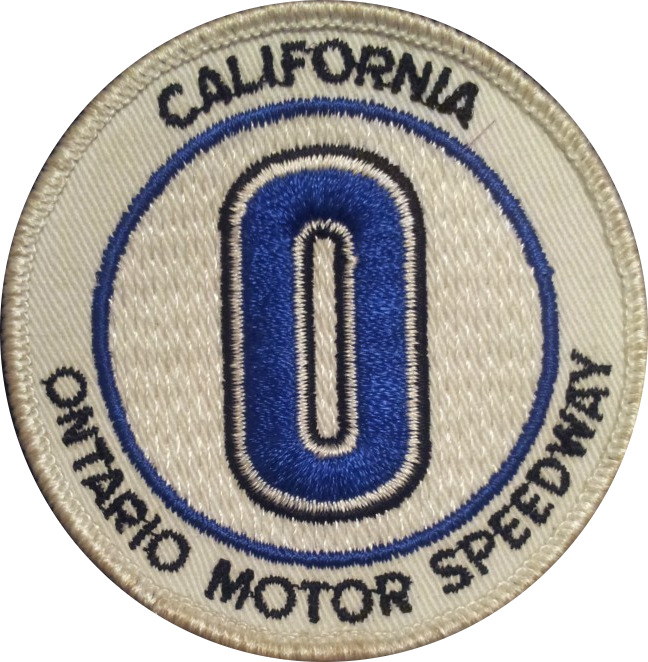
One could even suggest the logo of Ontario Motor Speedway that once stood near the site of today's California Speedway somewhat resembles a doughnut - albeit a smashed one.

A handful of drivers and cars have a loose connection to National Doughnut Day such as...

Young Gray Gaulding who has Krispy Kreme as a sponsor. How awesome would it be to have unlimited access to those glazed sliders.

Delma Cowart - This driver once quipped "I've never won a race, but I've never lost a party."

Dan Gurney - This legendary driver has had a success in just about every form of motorsports. But is it possible his greatest accomplishment was piloting a car with a doughnut-like zero on the side of it?

Credit: Ray Lamm at RacersReunion.com
Ward Burton perhaps?

And these two drivers kind of remind me of my mother's offer of letting my brother, sister and me buy two doughnuts.

David Reutimann...

 ... and Buckshot Jones.

Remember folks - brush those pearly whites, perhaps with Aquafresh, after you eat your doughnuts. There's no sense in ruining National Doughnut Day by developing tooth decay.

TMC

June 7, 1953 - Lee Petty wins in Shreveport

June 7, 1953: Lee Petty wins a 200-lap, 100-mile race on the half-mile, dirt track at Louisiana State Fairgrounds in Shreveport. Accurate records were not kept by NASCAR for qualifying or laps led. It is believed, however, the 1953 Shreveport race is the only NASCAR-sanctioned Grand National  / Cup race held to date in the state of Louisiana.

A couple of trivia nuggets from the finishing order:
  • Three of the top 5 finishers are now in the NASCAR Hall of Fame: Petty (1st), Herb Thomas (3rd), and Buck Baker (5th).
  • The ageless Hershel McGriff finished 14th. McGriff raced in the first Southern 500 at Darlington in 1950 and still makes occasional starts in his mid 80s - including as recently as July 2012.
  • Finishing 13th was a driver from Shreveport whose name sounded more like a disco than a racer: Roxy Dancy. The race was Dancy's one and only career NASCAR Grand National start.
Source: Daytona Beach Morning Journal via Google News Archive
TMC

Wednesday, June 5, 2013

June 5, 1960 - Lee Petty Rumbles in Richmond

June 5, 1960: Driving a #42 finned 1960 Plymouth, Lee Petty leads 18 laps - the final laps - and wins the Richmond 200 at Atlantic Rural Fairgrounds in Richmond, Virginia. Son Richard finished sixth. While I've been unable to land a photo from the Richmond race, the Pettys raced matching Plymouths looking similar to these.

Fellow NASCAR Hall of Famer Ned Jarrett started from the pole for the first time in his Grand National career and led the most laps; however, he ended up third - one lap behind winner Lee and second place Rex White.

Again, I don't have a photo of Jarrett's car from Richmond. However, I suppose it looked a good bit like the Ford he raced earlier in the year in the Daytona 500. That car is shown here racing alongside a driver with only two career starts but perhaps the greatest name in all of racing history: Johnnie Dollar.

Source: RealRacinUSA.com
Lee's victory didn't come without some anxiety and extra effort. About half-way through the race while running second, he blew a right front tire and had to make a quick stop. He fought his way through the field in the second half of the race, battled eventual 1960 Grand National champion Rex White, edged past White with less than 20 to go, and continued on to claim his 52nd of 54 career wins.

Source: Spartanburg Herald-Journal via Google News Archive
TMC