Showing posts with label dale inman. Show all posts

Thursday, July 12, 2012

July 12 - This day in Petty history - part 2

A bit of bonus Petty trivia sprinkled amongst my posts about his 200 wins...

1958 - Driving a #42 1957 Oldsmobile, Richard Petty makes his professional racing debut. He finishes 13th in a 200-lap, 100-mile NASCAR convertible series race at Columbia Speedway in South Carolina. Coincidentally, Bob Welborn wins the race in a Chevrolet owned by Richard's uncle, Julian Petty.

The race is not included in Petty's tally of 1,184 NASCAR Grand National / Winston Cup starts; however, the wheels were set in motion for one heckuva racing career and the eventual coronation of NASCAR's undisputed King.

The man himself spoke about his memories of transitioning from a crewman on his dad's team to being behind the wheel of his own car.


Dale Inman - Richard's cousin, best friend, and crew chief for the vast majority of his starts - tells a funny story about the beginning of Richard's driving career.


Sports Illustrated published an article about Petty's first start in its July 14, 2008 issue - almost 50 years to the day Richard first put on his helmet at Columbia. The article also mentions his first career Grand National start in Toronto, Ontario Canada about one week later.


In Richard's almost 60 years of racing as a driver and now an owner, he has selflessly signed thousands of autographs. Someone had to be the first. Tim Leeming from Columbia - one the great new racing friends I've met at RacersReunion.com - was at Richard's first race in 1958 and apparently got autograph number one from the future King of Stock Car Racing. (begin at 2:38)


A reader and fellow Petty fan from Columbia gave Bench Racing a huge boost. He visited the Columbia library's archives, found the following article from the July 13, 1958, edition of The State (South Carolina's largest newspaper), scanned it, and e-mailed it to me. Simply fantastic.

Credit: The State - but Yeoman's Effort: Gamecock43
TMC

Wednesday, July 4, 2012

July 4 - This day in Petty history - part 200

1984 - Driving for Curb Motorsports, Richard Petty leads 53 of 160 laps and wins his 200th career NASCAR Winston Cup victory in the Firecracker 400 at Daytona International Speedway. Coincidentally, his race winnings that day embedded his car number, Daytona 500 wins, championships, and number of victories needed to break his dad's record for career wins: $43,755.

The Build-Up

After the King scored win number 199 at Dover in May 1984, the hype intensified as he sought the round-numbered, 200-wins milestone. Over the course of the next month, the 43 team finished 34th in the Coke 600 at Charlotte, 23rd at Riverside, 13th at Pocono, and 34th at Michigan - not exactly Big Mo' for the team as the series returned to the beach. But it was Daytona - a track at which the King had excelled throughout his career.

A few weeks before the race, the White House announced President Ronald Reagan would attend the race as part of the nation's Independence Day celebrations.

NSSN cover courtesy of Russ Thompson
Reagan gave the command to start the engines aboard Air Force One. As the race proceeded, his plane landed at the Daytona airport right behind the speedway - providing a once-in-a-lifetime photo-op for a fortunate and skilled photographer.


The Win, The Greeting and The Picnic

As the race wound down, long-time competitors Cale Yarborough and Petty drafted each other and separated themselves from the rest of the field. On lap 157, the caution flew for a wreck in the grass near turn 1. The cars raced back to the start-finish line in that era of racing, and races could end under caution. Both drivers knew it was go-time to race back to the yellow - and ultimately the win.

At the stripe, Petty nipped Cale by *this much* and circled the track two more laps for his memorable and final win.

Immediately after his win, Petty stopped at the start-finish line, exited the car, and was hustled through the crowd up to the press box to meet with President Reagan.

Following the press box introductions, Petty returned to the official victory lane for the traditional trophy presentations and a bazillion photos.

Rather than limit his time in one location, re-board Air Force One and fly to another campaign stop on the nation's birthday, Reagan stayed in Daytona for a post-race fried chicken picnic and other celebrations in the garage area.

The following photo has always made me laugh. Richard Petty and Bobby Allison were rivals on the track. They rarely agreed on much or saw eye-to-eye, but they were unified in their support of Reagan. As a result, it stood to reason they'd flank the President and smile throughout the meal. But I've often wondered what Benny Parsons was thinking as he looked around from the nearby "kid's table".

Controversy or "Petty" Jealousy?

As noted at the opening, Petty won his 200th race while driving for Curb Motorsports. He'd left the family Petty Enterprises team after the 1983 season. After considering offers from other team owners such as Butch Mock's established RahMoc team and a possible start-up organization by (yep) Rick Hendrick, Petty settled on Mike Curb's start-up team. Buddy Parrott was hired as the crew chief, and Curb contracted with DiGard as the engine supplier. (Coincidentally, Buddy's son, Todd Parrott, is crew chief for Marcos Ambrose - driver of the Richard Petty Motorsports #9 Ford.)

Long-time Petty rival (and DiGard's driver) Bobby Allison, had a different take. Chapter 29 of Peter Golenbock's book Miracle: Bobby Allison and the Saga Of The Alabama Gang recaps Allison's memories about Petty's engine built by DiGard. Allison has always struck me as someone who was paranoid about everything and suspicious of everyone. While there are more holes in this story than a piece of swiss cheese, I chose to include it anyway.

An excerpt...
Bobby first had been suspicious of Petty's winning engine the week before the race. From time to time, he would walk through the DiGard engine room to go see Robert Yates, who built his engines as well. When Bobby viewed the engine that he was sure Yates was building for Richard Petty, he thought that it looked significantly oversized. When he asked who it was for, he was told "Don't worry about that. Its for a customer. Get out of here." Allison, suspicious, went back and scratched a little mark on the engine block with a sharp object in a "very inconspicuous place."  Said Bobby "I knew where to look. Before the race, I looked under the hood of Petty's car and saw the mark on the block." ... Adding insult to injury, according to Bobby, NASCAR skipped the post-race inspection, an indication to Bobby that NASCAR was turning a blind eye to what he believed was an oversized engine. ~ pp. 200-201
And all of chapter 29...


Personal Memories

Dave Fulton, Motorsports Coordinator for 7-Eleven Stores in the 1980s (Kyle Petty's sponsor at the time), remembers:
It was an electric moment when President Reagan gave the "Start Engines Command" while in flight to Daytona. Even more electric was the sight of Air Force One coming down out of the blue Daytona sky behind the backstretch just as the blue & red #43 came out of turn 2. Richard Petty and Ronald Reagan literally raced side-by-side the length of the Daytona backstretch!

I was allowed to string many banners throughout the compound where the post race Presidential picnic would take place (in what was the old Busch Series Garage). Somewhere in my archives I still have one of those huge blue banners with white lettering reading "7-Eleven Welcomes President Reagan."

I particularly remember the Secret Service snipers stationed on top of the Daytona Dog Track next door, as well as on the roof of the Speedway. There were guys in suits wearing sunglasses and earphones everywhere that hot Daytona morning. Back then, the race still started at 10:00 a.m. to avoid afternoon thunderstorms. The old Daytona Speedway radio ad promised, "At the track at 10:00, On the beach by 2:00."

STP always had a bunch of rooms at the Indigo resort across International Speedway Boulevard from the Speedway. It was decided the President would go from the track to a room at the Indigo resort and "change clothes" before the post race picnic. To accomplish the security required for the Secret Service, the road in and out of Indigo resort was blocked. During the middle of the night on July 3rd, dump trucks, road graders, and bulldozers were brought in ahead of the President to secure the road. Ralph Salvino, Steve Tucker and Richard's other STP car sponsor personnel almost couldn't get out of their rooms to get to the track on race day morning!

I was very lucky to have been invited to be in the NASCAR suite with my wife that day. When the race ended, all the folks in the infield garage areas were cleared out. All of the fences surrounding the garages had been covered in heavy green fabric preventing "outsiders" from peering in. Those were the same fences where I hung my 7-Eleven banners.

After an appropriate time period, we were escorted through metal detectors manned by the Secret Service at the entrances to the garage. Tables had been set up under the open air garage for the actual picnic. Not a single person who was there that day shall ever forget the sight of Richard and Lynda Petty, seated with Bobby and Judy Allison, eating Kentucky Fried Chicken with the President of the United States.

President Reagan was extremely gracious and cordial to all. He was of course running for re-election. But, I always had the feeling he'd have been just as gracious any other time.

A big stage had been erected in the old Busch Series garage for the festivities. The late Bill France, Sr. was brought on stage to introduce the President. He had endured a lot of talk about his age and the need for him to step completely down and turn all command of NASCAR over to Bill France, Jr. As you may remember, President Reagan had also endured questions about his age. When the ever crusty France, Sr. introduced Ronald Reagan to the picnic guests, he asked the President a question. Mr. President, what is all this Old Man s**t we keep hearing?! Everybody roared!!!

Behind the President a curtain began to slowly raise as an unseen country music band began to play. The electricity in the air was unbelievable. Stepping from behind the curtain was singer Tammy Wynette who broke into her all-time hit song "Stand By Your Man" as she walked forward and hugged the unsuspecting President of the United States. You should have seen the smile on Reagan! That may have been the most dramatic moment I have ever witnessed - at or away from a racetrack!
For me, I spent the summer of 1984 living with my aunt and uncle in Jacksonville, FL as I worked between college semesters. On the 4th of July, my aunt hosted a retirement picnic at their home for her outgoing boss. Like a good husband, my uncle agreed to do all the grilling, keep the beer flowing, and provide a cigarette-friendly porch (my aunt wouldn't and still doesn't allow smoking in the house).

I played the role of the good nephew and house guest by shuffling food from the kitchen to the grill to the table. I continually re-iced coolers, had the opportunity to meet a lot of wonderful folks, nibbled along the way, and occasionally stopped to enjoy a cold one with someone I'd just met. My aunt and uncle always treated me as a young adult rather than as older kid - a level of respect I'll always treasure.

Because of all that was going on, I didn't have an opportunity to check in with the race. When the party ended later that afternoon, I couldn't believe it when I heard the King had won #200. Some time later, my uncle told me a story that made my jaw drop even further. He had been offered a pair of tickets to the 400. Knowing he'd already committed to help my aunt with the party, he knew he wouldn't go. But he assumed I wouldn't go alone. Truth be told, I don't know if I would have gone or not. Petty's finishes in the month of June gave me no reason to believe he'd score a win at Daytona. And my black, high-mileage, 1965 Dodge Dart - without air conditioning - had been having water pump and radiator issues that summer. Yet knowing how things turned out, I can't believe I could have had the opportunity to witness #200.   

Race Coverage

For those of you who may have started following NASCAR in the 1990s or beyond and get frustrated by the coverage by FOX or ESPN, I give you Jim Lampley and Sam Posey. How Lampley drew the assignment is beyond me. By the mid 80s, CBS was knocking it out of the park for its Daytona 500 coverage in February. But the summer Firecracker race was still thought of largely as a second-tier race on the schedule and received little national media coverage.

The race wasn't aired in its entirety on TV. Instead, ABC joined it in-progress, provided updates during the race, and was there for the finish. If you want to fast forward, the real excitement begins around the 14 minute mark.


Yarborough manned-up and gave ABC a post-race interview after he hit pit road a lap early thinking the race was over. Cale's bare-chested interview with Larry Nuber cracks me each time I see it. Though a bit odd, its a visual reminder of how hot the day was and how much it must have pained him to be that close to getting another win. (Having won the Daytona 500 in February 1984, I'm sure Cale really wanted the season-sweep too.)

Source: TMC Archives - The Tennessean
Epilogue

The winning Pontiac was donated by Curb Motorsports to the Smithsonian's Museum of American History in Washington DC. I had the good fortune to see it on display in the early 1990s. My memories of seeing the car there are far greater than my pathetic camera at the time could capture.

Fellow Petty fan and Schaefer Ring of Honor member, Brian Hauck, also had the chance to view the car in the museum. Fortunately, he got a better photo of it than I did.

Courtesy of Brian '200WINZ' Hauck
The King's uniform, helmet and checkered flag used by chief starter Harold Kinder are all on display at the Richard Petty Museum in Randleman, NC.

The King won his 200th race with Buddy Parrott as the crew chief of his Curb Motorsports Pontiac - not NASCAR Hall of Fame crew chief Dale Inman. Early in the 1981 season, Inman made the difficult decision to leave his cousin Richard and Petty Enterprises. He went to work for Osterlund Racing and defending Cup champion Dale Earnhardt.

After J.D. Stacy bought Osterlund's team later in 1981, Earnhardt left. Several drivers turnstile'd through the car with Inman as the crew chief. But in 1984, Inman accomplished something Richard couldn't. As crew chief for Terry Labonte and the Billy Hagan-owned team, Inman helped Terry to his first of two Cup championships and earned an 8th one for himself as crew chief - one more than the King has as a driver.

As noted in the closing paragraph of the above article, the race following Daytona was the Nashville 420. Geoff Bodine won what turned out to be the final Cup race in Nashville driving for Rick Hendrick's relatively new operation. One of the tradeoffs of being in Florida for the summer meant I couldn't go to the race. As a result, I missed the final Cup race at my home track.

Because of funding and personality issues, Mike Curb and DiGard had a significant falling out. After Petty's 200th win, the Curb team ceased getting engines from DiGard. The 43 was rarely competitive the remainder of the season. Petty notched only 2 more top 5's while driving for Curb through the rest of 1984 and the 1985 season. Even after returning to Petty Enterprises, the King scored only 14 top 5s, no poles, no wins, through the end of his driving career in 1992.

Allison's relationship with DiGard didn't improve either. He was bitter about the Robert Yates-built, DiGard-provided engine to the Petty car in 1984. One year later under the direction of creative crew chief Gary Nelson, DiGard fielded a second car in the 1985 Firecracker 400 with driver Greg Sacks. Incredibly, Sacks won in the unsponsored #10 Chevy. While I haven't researched it, I think the race was the last win by a car without a significant sponsor. Allison had seen enough and within a couple of weeks quit DiGard, fielded his own cars for the rest of the year, and joined forces with Stavola Brothers Racing beginning in 1986.

In 2011, Speed Channel and NASCAR Media Group aired a great documentary titled The Day: Richard Petty's 200th Win.


TMC

Wednesday, February 15, 2012

February 15 - This day in Petty history

This post is dedicated to the memory of Adam Kyler Petty who got to enjoy the celebrations of Victory Lane. ~ TMC

 
1981 - Driving a Buick Regal, Richard Petty wins his seventh and final Daytona 500 for his 193rd career Winston Cup victory.

Beginning with the second race of the 1981 season (Daytona), the teams were required to run newer, 110-inch wheelbase cars. The cars more closely matched the models of what the Detroit manufacturers were selling. Gone were the longer, sleeker cars such as the 1977 Chevy Monte Carlo, 1978 Olds Cutlass 442, and 1974 Dodge Charger. Most teams ran models with notch-back windows such as the Buick Regal, Pontiac Grand Prix, a re-designed Monte Carlo, Olds Cutlass, Ford T-Bird and even a Dodge Mirada.

After switching to General Motors' Chevy and Olds cars in 1978 through 1980, Petty Enterprises contemplated a return to Dodge for the 1981 Daytona race. They took a Mirada to January testing.

Courtesy of SROH member and Petty lifer, GaPettyFan

The team wasn't satisfied with the testing results. When Petty Enterprises returned for Speedweeks a month later, they brought two cars skinned as STP Buick Regals. One was for King Richard...

 
... and the other was for son Kyle who was making his first start in the Daytona 500.

 
Bobby Allison's Harry Ranier-owned team noted one eligible model that escaped the view of the other teams - a Pontiac LeMans. The car had a slope-back window vs. a notch-back design. With Robert Yates-built engines and a sleeker aero design, the team had a leg up on the competition.

 
As a result, Bobby Allison dominated Speedweeks. He won the race pole and his 125-mile qualifying race. In the 500, he led 117 of 200 laps en route to what looked to be a convincing win.

On his final pit stop, the 28 team took a full load of fuel and tires. However, when NASCAR Hall of Fame crew chief Dale Inman summoned the 43 to pit road a few laps later, he had a different strategy. Inman called for fuel-only and no tires. In less than 8 seconds, the King was headed back to the track with a big lead on Allison because of the pit-time differential. It was too much for Allison to overcome, and Inman's heads-up call was rewarded with the King's seventh trip to victory lane in the Daytona 500.

Khalifa, a fellow poster at Fans For Richard Petty Motorsports has this memory about the race:
[It was] Richard's last win in the 500 and my first time going there. I was 15. I will never forget it. I saw him pit that last time and take only fuel and I told my dad he was going to win it. He said 'I think you are right'. When he crossed the S/F line I as going absolutely nuts. After that I told my dad we need to get to victory lane. I remember I was wearing one of those puffy vests that was popular back then. We made it to the crossover at the S/F line, and I was walking onto the ladder down to the track. A huge security guard grabbed me by my vest, pulled me back up the steps and said 'I don't think so son'. Awesome memory. I'll always remember that day. The track seemed so huge to me. I've since been to 19 other Daytona 500's ... but none have come close to the excitement of that day.
 From TMC Archives
 Courtesy of Jerry Bushmire
   
 The pivotal pit stops...


The finish, victory lane, and the toll on families...


An eloquent racer's wife and memories of a young Adam...


After 190+ wins and seven championships, Dale Inman resigned from Petty Enterprises a few days after the win. A couple of weeks later, he announced he was going to work for Rod Osterland and reigning Winston Cup champion, Dale Earnhardt.

 From TMC Archives
Article courtesy of Jerry Bushmire
   
TMC

Saturday, October 15, 2011

Dover part 2: Cold Pass access was HOT

Part 2 of a [non-committed mumble] part series on a great trip to Dover International Speedway from September 29 - October 2.
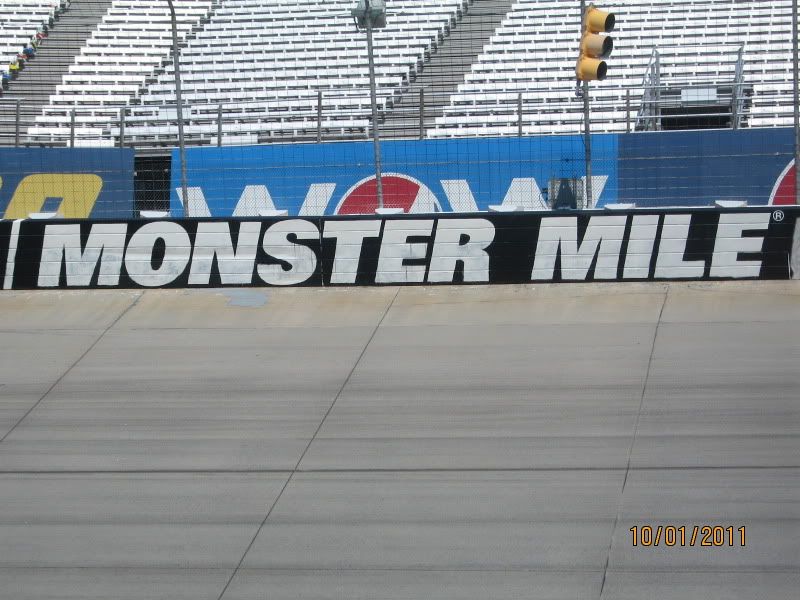
I was introduced to racing as a 9 year-old kid at a late model sportsman race at Nashville's Fairgrounds Speedway in the early 70s. The bug bit me that night, and I'm as fascinated by it today as I was then. I'm older, fatter, and more skeptical. My favorite driver has been retired for 20 years. And the costs to attend today far exceed what they did then (especially when (1) my parents or uncle paid for my ticket back then and (2) I didn't have any Schaefer expenses as a 9 year-old.)
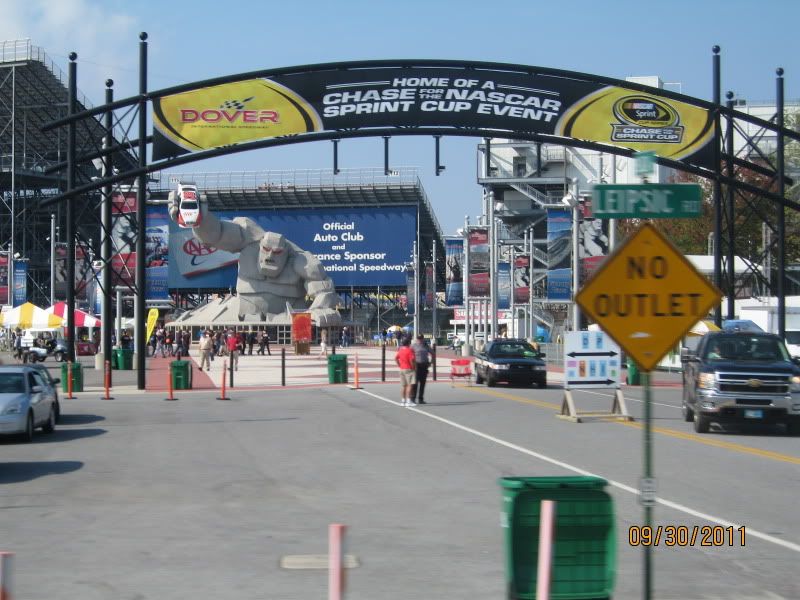
One aspect of racing I really enjoyed in my teen years was going into the garage/pit areas before or after a race. The opportunity didn't present itself often, but it was so eye-opening when it did. Because of how seldom I've had the chance to tour the garage - then and now - I always appreciate and walk around with a dropped jaw at all the action.
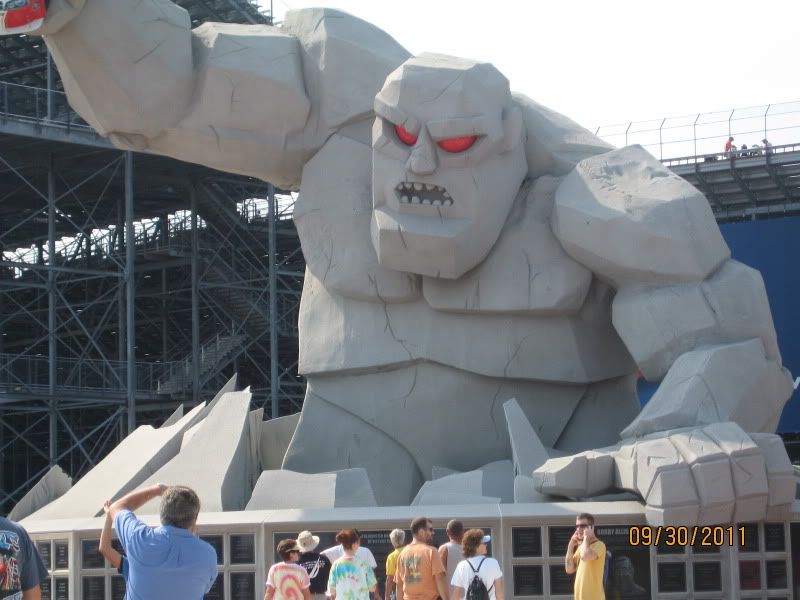
At Dover, we were fortunate to have Cold Pass credentials provided to us. We pretty much had free reign of the Nationwide and Cup garages up until 1 hour before qualifying and race starts and pit access during the events.
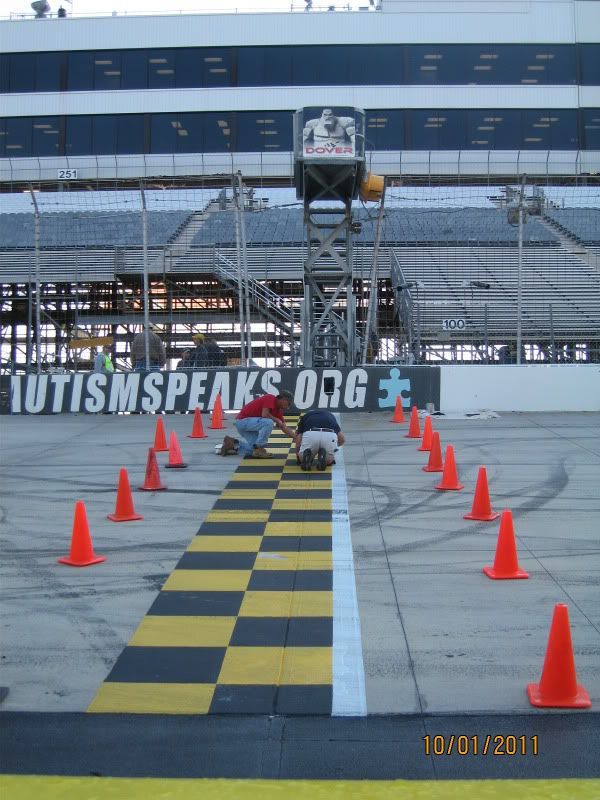
We got to the track too early Saturday morning to tour the Cup garage. But no problem - over to the Nationwide garage we went.

As part of my on-going blog series about each of Richard Petty's 200 wins, I've reached out where I can to folks with first-hand accounts of the days at Petty Enterprises. One of the individuals I've had the fortune of trading messages with is Mike Beam. In the late 70s, Mike was the crew chief for late model sportsman legend Butch Lindley. He was hired by the King as crew chief for Kyle as his Cup career began in the early 1980s. Over the next 30 years, he was crew chief for many Cup drivers. Today, he is the crew chief for Carl Edwards in the Nationwide series.

Mike reconciled who I was after telling him I was 'toomuchcountry'. He then gave me several minutes of his time to talk about Lindley, getting hired by Petty Enterprises, the challenge of setting Carl's car for a green track after overnight rains, model car building, etc. Then rightfully so, he had to get back to work. I'm sure he used the great set-up tips I gave him because later that afternoon, Carl's #60 Ford DOMINATED the Nationwide race.
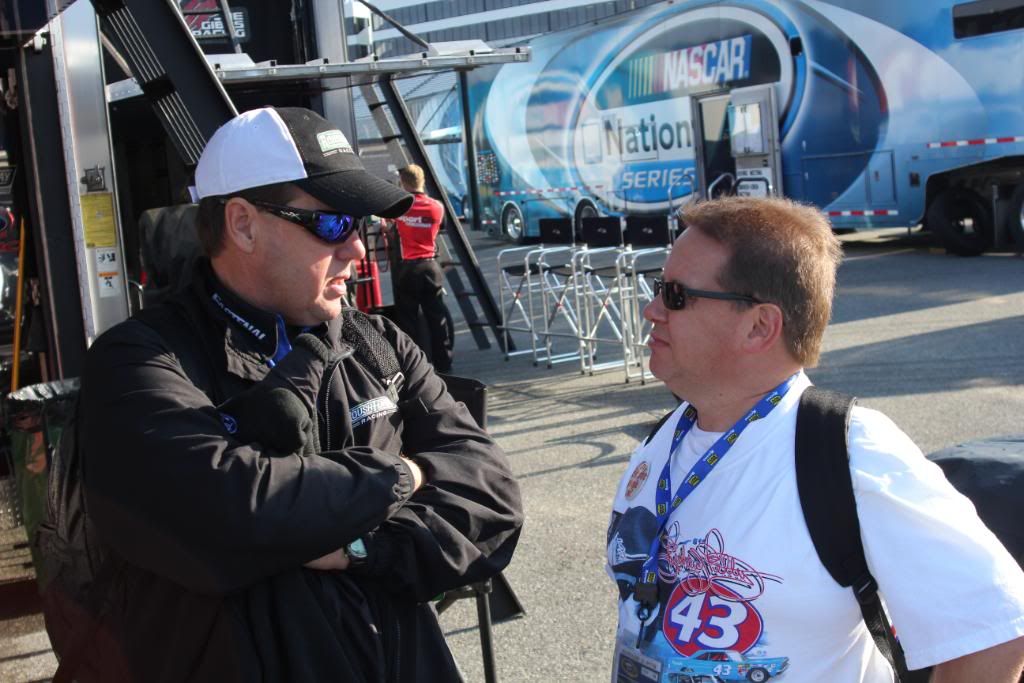
After parting ways from Mike, we roamed around a bit more, watched tech inspection, met the ageless Morgan Shepherd, and talked to the crew from the Jimmy Means-owned Nationwide team. Before Means began a multi-decade as a journeyman Cup driver, he came from Alabama to win the late model championship at Nashville's Fairgrounds Speedway in 1974.

As we circled back to Edwards' hauler, I spotted Jeff 'Hollywood' Hammond. Only word of advice I gave him (or at least wanted to): lose that Boogity guy...please.
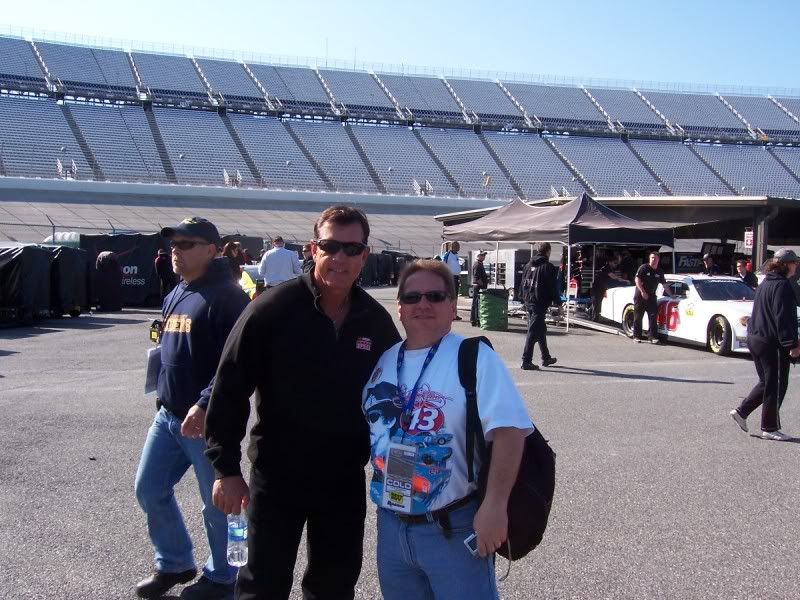
After seeing pretty much all there was to see, we realized the Cup garage was now open. So we strolled from the Nationwide garage housed just below turns 3 and 4 to the Cup garage which is located just below turns 1 and 2.

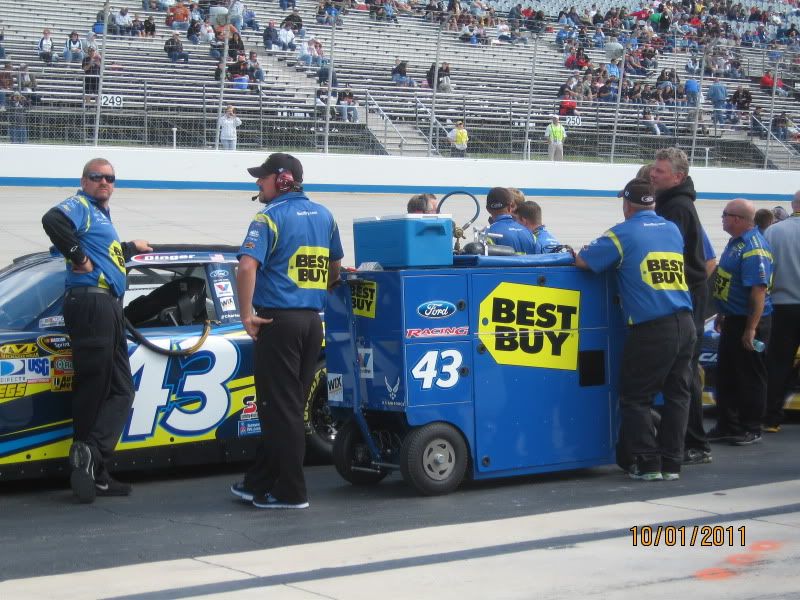
I wanted to make a bee line for the Best Buy Racing hauler of A.J. Allmendinger with the hope of meeting The King again. Just as we arrived, Dale Inman walked out of the back door of the hauler. Everyone should know who Dale is - but I suppose some don't. Dale Inman is:
  • Richard Petty's cousin
  • Richard's crew chief for all of his seven championships
  • the only eight-time NASCAR Grand National/Cup champion by serving as crew chief for Terry Labonte's first championship
  • a veteran of the United States Army, and
  • a member of the 2012 class of the NASCAR Hall of Fame.
I had with me an 8x10 enlargement of a photo I took at Charlotte in 1992. In the photo, Richard's 43 is being pushed to the starting line alongside eventual Cup champion Alan Kulwicki's Ford. Dale took the time to ask where I took the photo, studied it a bit and autographed it for me.
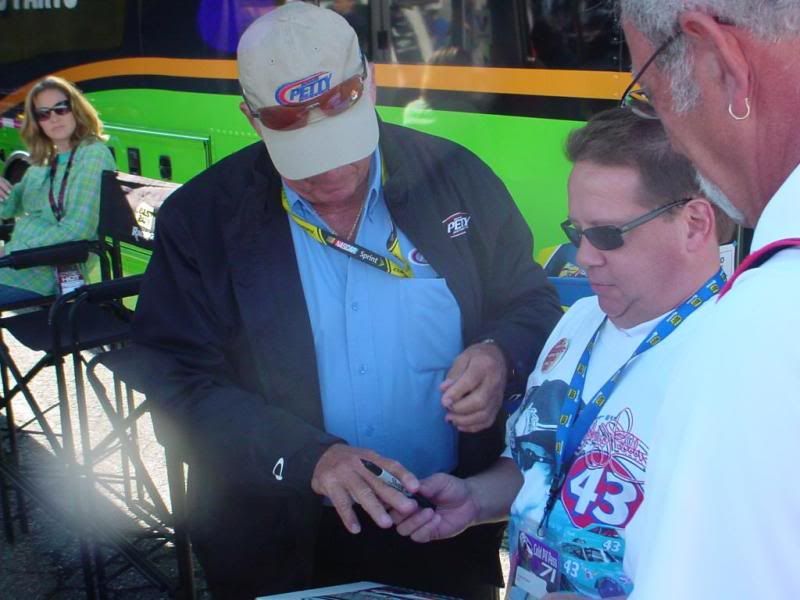
He then realized Robbie Loomis was part of the contingent pushing the car in the photo. I told him it was indeed Robbie, and I was hoping to get his autograph on the photo too. Dale went into the hauler and asked Robbie to come out to see my photo. As with Dale, Robbie studied it, laughed about how much younger he was then, and signed it for me.

Just one more autograph was needed to complete the three I wanted - The King. Dale then told us Richard had gone back to North Carolina to take his wife home. Unfortunately for us, he didn't plan to return. Oh well, c'est la vie. But Dale continued to chat with us. He challenged us to guess his age. He posed for a couple of photos with our crew.
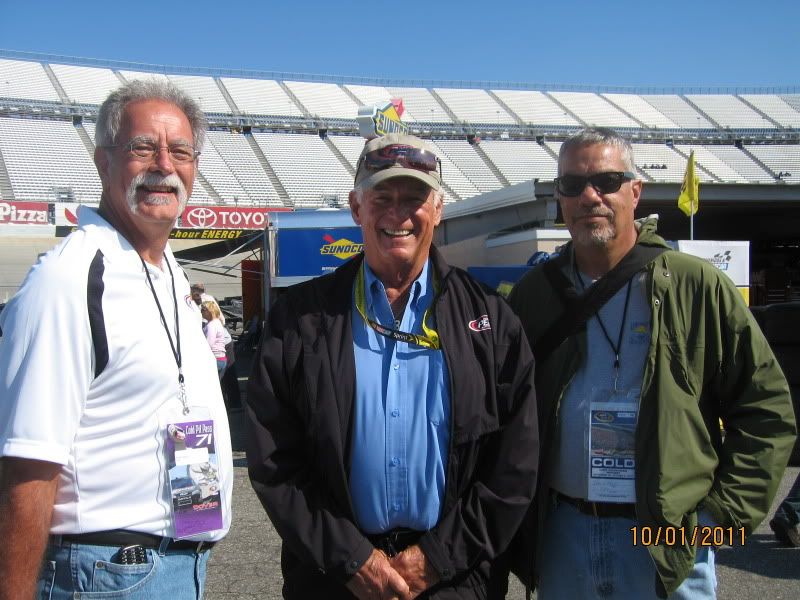
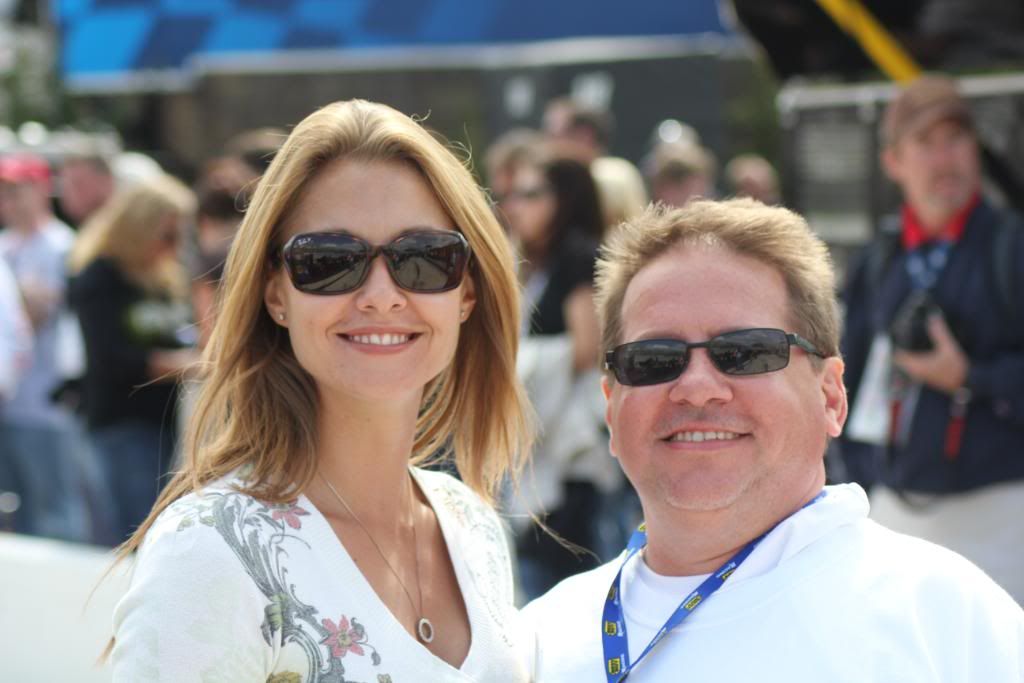
SROH member 200WINZ (L), 2012 NASCAR Hall of Fame inductee Dale Inman (C), & SHOFer Uncle Dave (R).

He gave me the opportunity to ask a few questions about the old days. We discussed Julian Petty (Lee Petty's brother, Richard's uncle, and a NASCAR driver/owner in his own right). We rattled off a few names from the past of Petty Enterprises including Bob Welborn, Tiny Lund, Buck Baker, Gwyn Staley, Red Myler, etc. I tried to remember if Welborn had driven a third Petty car in the inaugural 1960 World 600 (it was actually Bobby Johns). But Dale noted he couldn't remember because "the Army had me then" and wasn't at the first 600.

He finally and cordially let us know it was time to go to work. He climbed aboard the hauler to watch qualifying for the Nationwide race. Fifty years in this sport - and there he was still watching lap times, track nuances, etc.
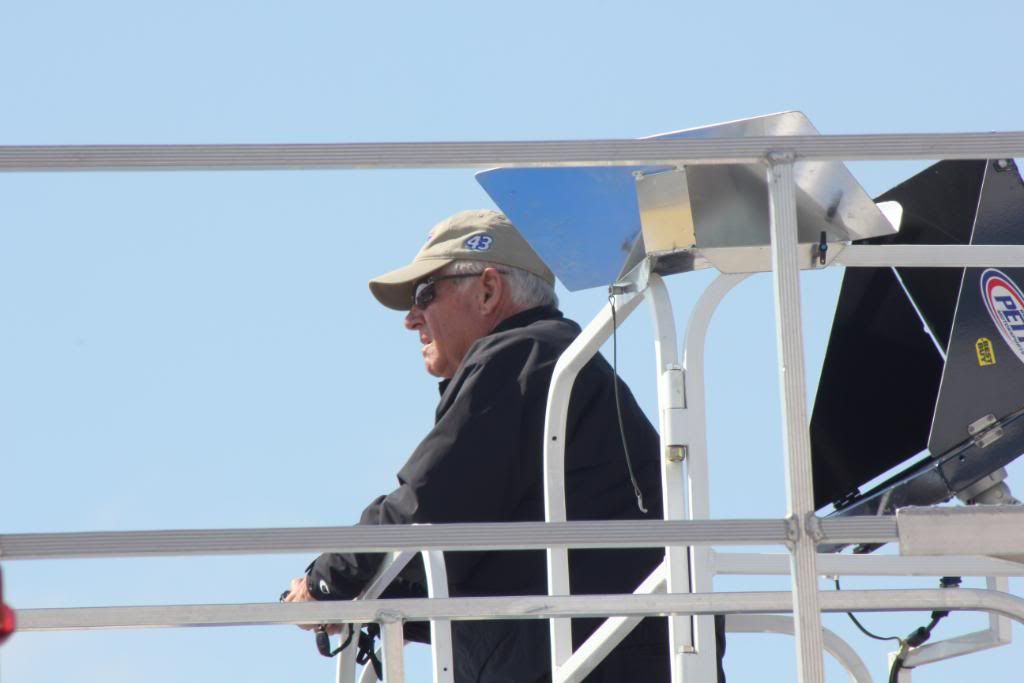
Credit: Brian 200WINZ Hauck


After parting ways with Inman, the four of us set out in the Cup garage area. Unlike the spacious bays of the Neon Garage at Las Vegas Motor Speedway, Dover has a single, covered, tightly-packed garage area. Half the teams are on one side, and the other half is on the opposite side. In the middle of the garage is a pass-through area where NASCAR set up one of its three technical inspection areas.

Like the amateur NASCAR paparazzi we were, the four of us set out snapping pictures willy-nilly, kept our eyes open for possible driver sightings, and maintained our inner radar for Cup cars around us in the hope we weren't run over as the cars were rolled to the tech stations.


After spending a good bit of time in the garage, we spotted Coke 400 winning driver David Ragan. Thinking he may be one of many drivers to walk through the same area, we held our spot for a moment. Shortly thereafter, I spotted Paul, the PR rep for Best Buy Racing and driver A.J. Allmendinger. We had traded messages prior to the race, and he knew I was interested in meeting A.J. Saturday. As Paul and A.J. headed for the 43 hauler, I walked along and nabbed an autograph.

I enjoy taking multiple photos, but I prefer to be behind the camera vs. in front of it. But one photo-op I wanted was to have my picture made with A.J. However, he went in the hauler to change to his driver uni and get his mind right for Cup qualifying. As a neat, runner-up gesture, Paul took my pic next to the 43 and tweeted it to his followers.

Before long, Cup qualifying was scheduled to begin, and an NASCAR official let me know my Cold Pass no longer worked in the 'hot' garage. So off to pit road we headed to watch a bit of qualifying.

The Richard Petty Motorsports teams get ready to qualify...
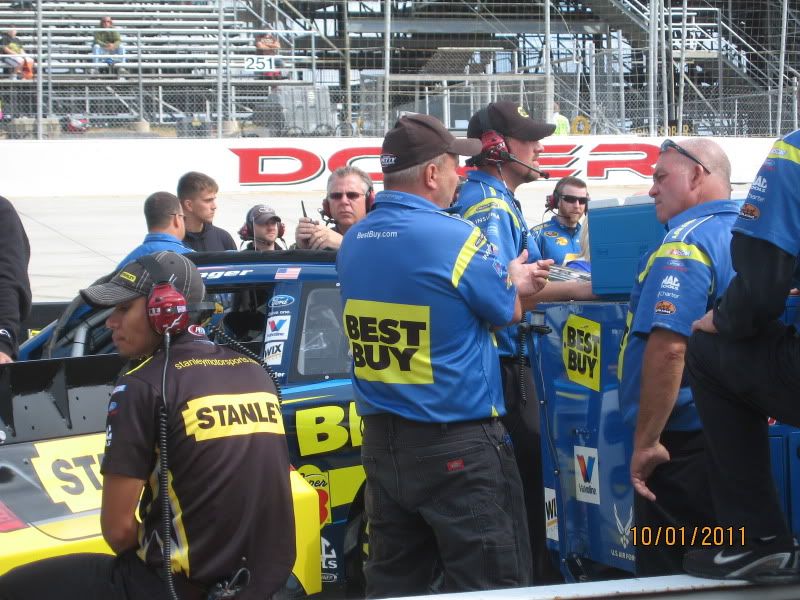
A.J. Allmendinger's 43 Ford shortly before A.J. ripped off a lap to qualify seventh.
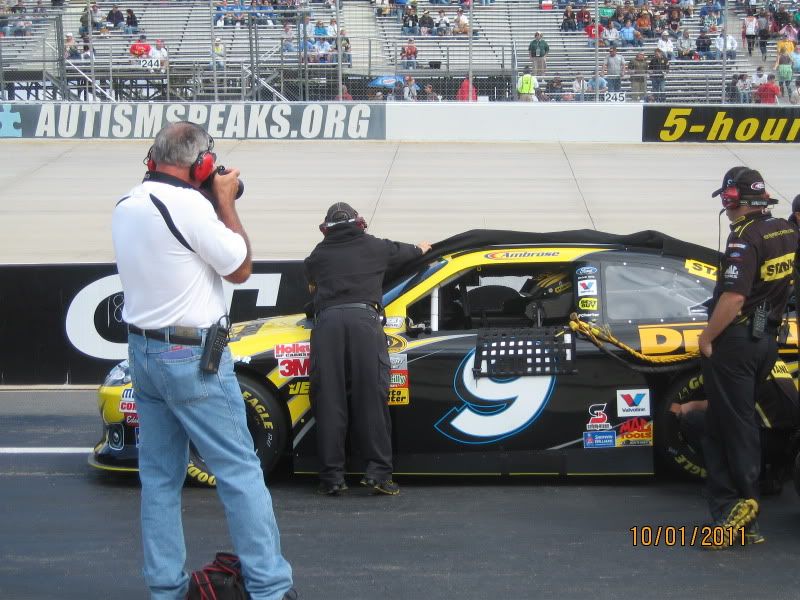
The #9 Stanley Ford of Marcos Ambrose. If only that cat with the camera would get out of the away. Oh wait ... that's SROH member 200WINZ walking around like he owns the joint!
With 200WINZ getting up close and personal on pit road as qualifying took place, he was able to nab some great photos such as these:
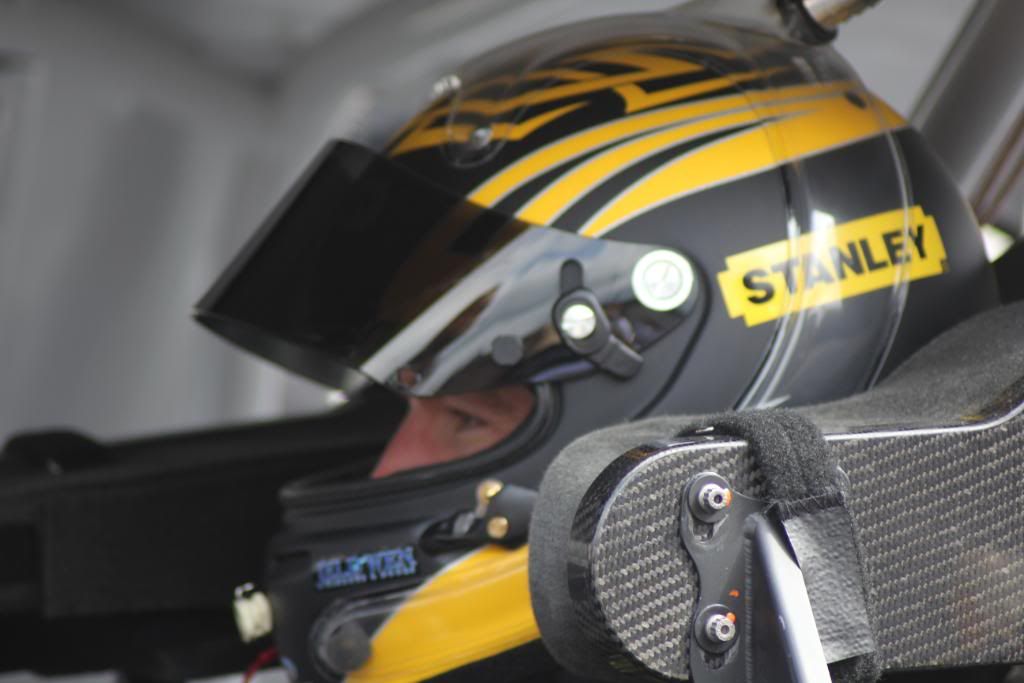
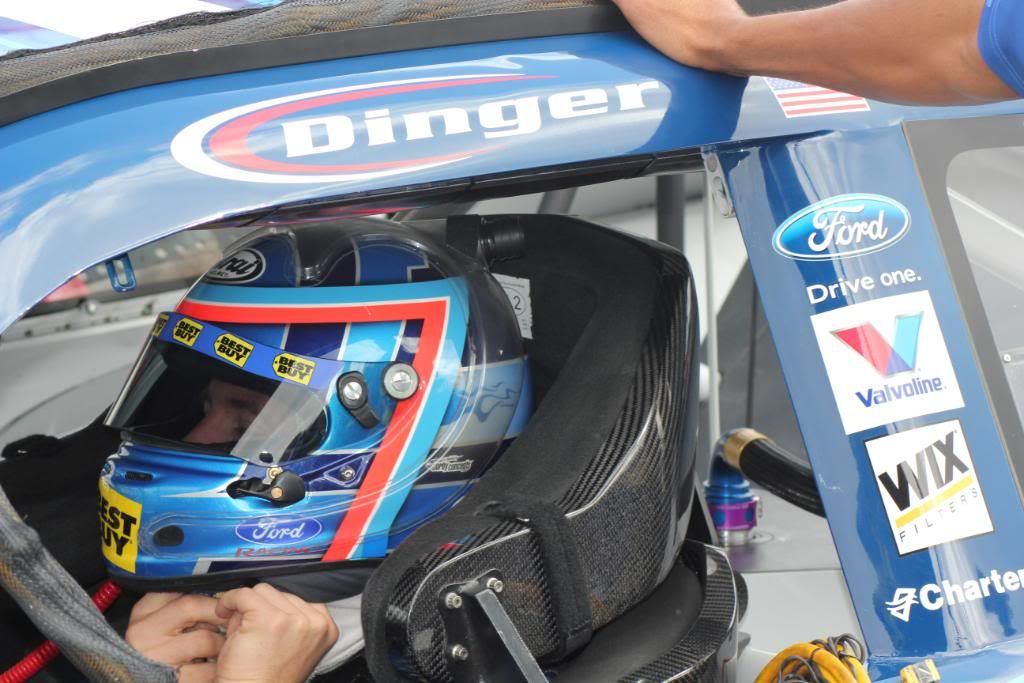
Credit above two photos: Brian '200WINZ' Hauck

I walked back and forth, up and down pit road just to take in the sights. Finally, I just settled in around the RPM cars as they nudged forward one car at a time as the cars with slower practice times banked their qualifying speeds. The fine folks at DingerWorld were kind enough to put in a good word for me with A.J. and Lynne Allmendinger in case our paths crossed. Sure enough, as I was walking behind the pit wall watching the 43 inch down pit road, I was fortunate to spot Lynne. I called her name, and told her nothing more than 'My name is toomuchcountry.' Sure enough, she knew who I was based on the pre-race message from DingerWorld. Lynne could not have been nicer.
Credit: Brian '200WINZ' Hauck

Then it was time to get the party started. With only a few cars in front of him left to qualify, A.J. belted in, the crew readied him for his lap, and the tension of those around him seemed to escalate. As the 43 hit the track, a few key folks took an obvious interest in his lap:
  • Paul (aka @Best_Buy_Racing on Twitter) - PR rep for Best Buy
  • Lynne Allmendinger - A.J.'s wife
  • Robert Miller (talking to Lynne) - VP of Business Development for Richard Petty Motorsports
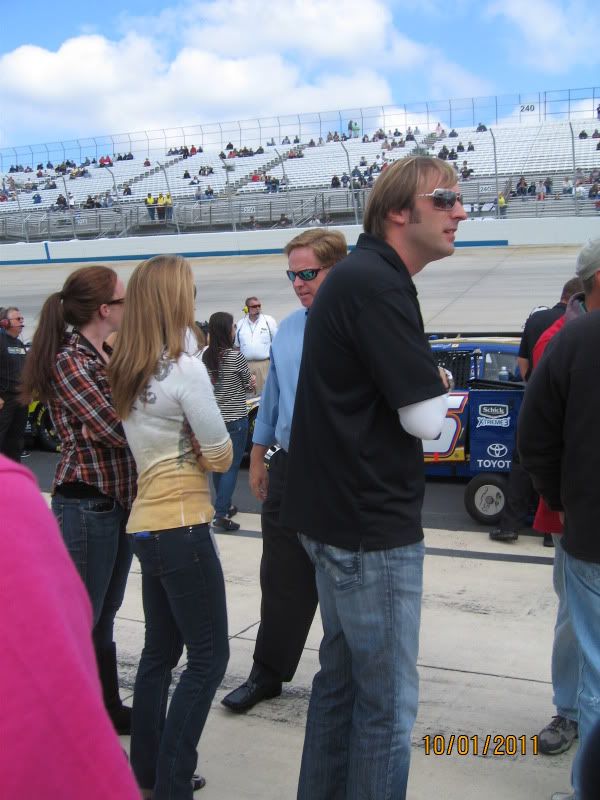
As A.J. took the checkers, his lap was solid enough at the time for the front row. When the dust settled, he had fallen back to seventh. A great run - the best start I was going to see for the 43 in many, many years.

With qualifying completed, we slipped up to the stands to watch Edwards decimate the field in the Nationwide race.

To be continued...

TMC

Friday, January 8, 2010

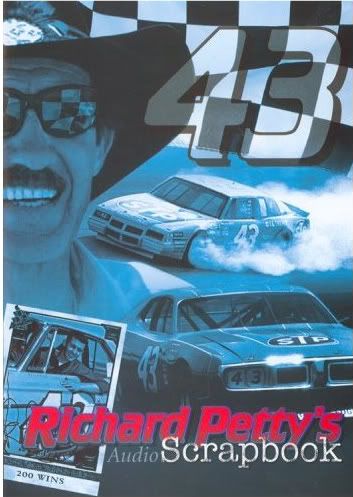
Review of Richard Petty Audio Scrapbook

In 2009, Richard Petty's Audio Scrapbook was released - a 4 CD, 4 hour narrative of the history of NASCAR, Petty Enterprises, and Richard Petty. Petty's cousin and long-time crew chief Dale Inman sat in on the story telling sessions. The long-time voice of MRN Radio, Barney Hall, moderated the script.

As a Petty fan, I wanted to get the CDs as soon as they were released. But I was patient and added the scrapbook to my Amazon wish list. Sure enough, my mother bought it for me for Christmas. God bless her.

If you aren't familiar with the King - particularly his way of speaking - the first thing the listener has to do is simply get used to listening to him. Even after being a fan of his for over 30 years, I've not really had the opportunity to hear him speak for long stretches. If you think today's collegiate and professional athletes have trouble speaking, just wait until you hear the King butcher...well the "kang's Anglish". Between the busted grammar and Richard's verbal-tic phrases such as "yaknowwhatahmean?", "yeah man", and "one of them deals", it takes a while to then really start hearing the stories.

From an overall perspective, its hard to believe how long Richard has been around. He was at the first NASCAR strictly stock race in 1949 where his father ran. And other than a handful of races he missed because of injury or a factory boycott, he was in pretty much every race from 1959 through 1992. Even as a car owner and retired driver, he's still attended the vast majority of the races from 1993 until now.

Having been a fan for as long as I have, the large majority of the stories were already familiar to me. Whoever scripted the scrapbook chose to highlight the most commonly known parts of Richard's career:
  • 1967 season - 27 total wins including 10 in a row
  • 1959 Daytona 500 - won by Lee Petty
  • 1976 Daytona 500 - Petty and David Pearson crash coming to the finish line
  • 1979 Daytona 500 - Petty wins after Donnie Allison and Cale Yarborough crash
  • 1981 Daytona 500 - A fuel-only pit strategy call by Inman gets Richard his 7th 500
  • 1984 Firecracker 400 - his 200th win with President Ronald Reagan attending
  • His sponsor relationship with STP
  • His rivalries with drivers such as David Pearson and Bobby Allison
A great call was made to have Inman sit in with Richard. When Richard truly forgot something or maybe mis-remembered a detail or two, Dale wasn't afraid to jump in with a correction. A couple of other good features are phone interviews with Allison and Pearson while Petty and Inman were listening plus a separate interview Hall did with Junior Johnson.

I've got some criticisms of the scrapbook too. Before I mention them, I don't want to dissuade anyone from getting and listening to the CDs - particularly if you aren't familiar with the history of NASCAR, the impact of the Pettys on racing, the hallmark finishes, the rivalries with other drivers and teams, etc.

My criticisms are the result of my already being a dedicated Petty fan - not a casual one. As I already knew most of the stories, I was hoping for some more in-depth discussion of additional watershed moments in Richard's career. For all the stories, records, and trivia I know, I'm always wanting to learn even more.

To sell the CDs, keep the length of the discussions to a pre-determined length, and - maybe more important than all - get Richard and Dale to talk about certain things, many parts of his career were glossed over. For instance:
  • I wish Dale Inman had spoken a bit more about his decision to leave Petty Enterprises in 1981 to join Osterland Racing and Dale Earnhardt.
  • Why of all teams did Richard choose the start-up Curb Racing as the place to go when he finally decided to leave Petty Enterprises following the 1983 season?
  • Linda Petty, Richard's wife, briefly mentioned the death of her brother Randy Owen while crewing Richard's car at Talladega in 1975; however, Richard nor Dale discussed it at all.
  • Kyle's early career at Petty Enterprises was limited to memories from one race - the 1979 ARCA 200 at Daytona. No other discussion of their father-son relationship was covered - on the track or off it.
  • Petty Enterprises often ran a 2nd car during the 1960s and into the early 1970s. I wish Richard and Dale had offered a few more memories about how the drivers were hired - drivers like Jim Paschal, Paul Lewis, G.C. Spencer, Buck Baker, etc.
  • Richard won 2 races with car owner Don Robertson in the late 1960s. Who was he and how did they get together for a deal?
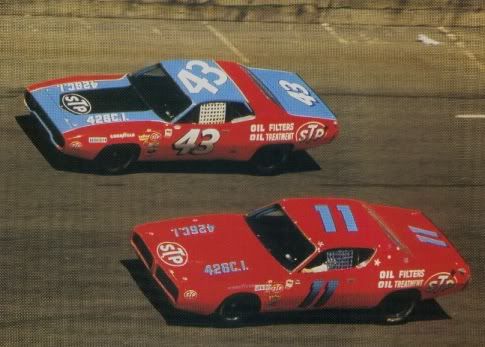
  • Why did Buddy Baker run a 2nd Petty car with #11 vs. a number in the 40s as all other Petty cars had been?

Richard has always struck me as just a laid-back, easy-going, optimistic, glass is half-full, tar heel. Dwelling on negative memories such as driver, crew, and family deaths just isn't his thing. Nor is it mine. However, I think this audio set would have been a good opportunity to capture his thoughts amongst all the other positive memories.

The other criticism I have is Barney Hall's interview with Junior Johnson. It sounds as if it was recorded using a simple recorder without any microphones. Junior is a soft spoken man anyway, and the crude recording made it all the more difficult to hear what he was saying.

In the end, I thoroughly enjoyed the set. If you want to learn more about the history of racing, you should definitely get it - regardless of your thoughts about the Pettys. The concept and organization of the story-telling was solid. I'd love to hear additional audio sets from drivers such as A.J. Foyt, David Pearson, and maybe Cale Yarborough. Had Earnhardt lived, no question I'd want to hear one from him too.

TMC